

Future of Blockchain Technology | Explained Simply
Future of Blockchain Technology
The future of blockchain technology looks promising because it goes far beyond cryptocurrencies. Blockchain is gradually becoming a foundation for trust in the digital world. In the coming years, it will help businesses, governments, and individuals exchange data and value more securely and transparently. As adoption increases, blockchain will move from experimental projects to real-world systems used daily. With better scalability, lower energy usage, and clearer regulations, blockchain is expected to reshape how digital transactions, data ownership, and online interactions work globally.
Blockchain Technology Overview
Blockchain technology is a decentralized system that securely records transactions across a network of computers.Instead of relying on a single authority, it distributes data across a network, making manipulation extremely difficult. Each transaction is verified and stored in blocks that are securely linked together. This structure builds trust without intermediaries. Today, blockchain is used in finance, healthcare, logistics, and digital identity systems. Its transparency, security, and efficiency make it a powerful solution for modern digital challenges.
How Blockchain Works
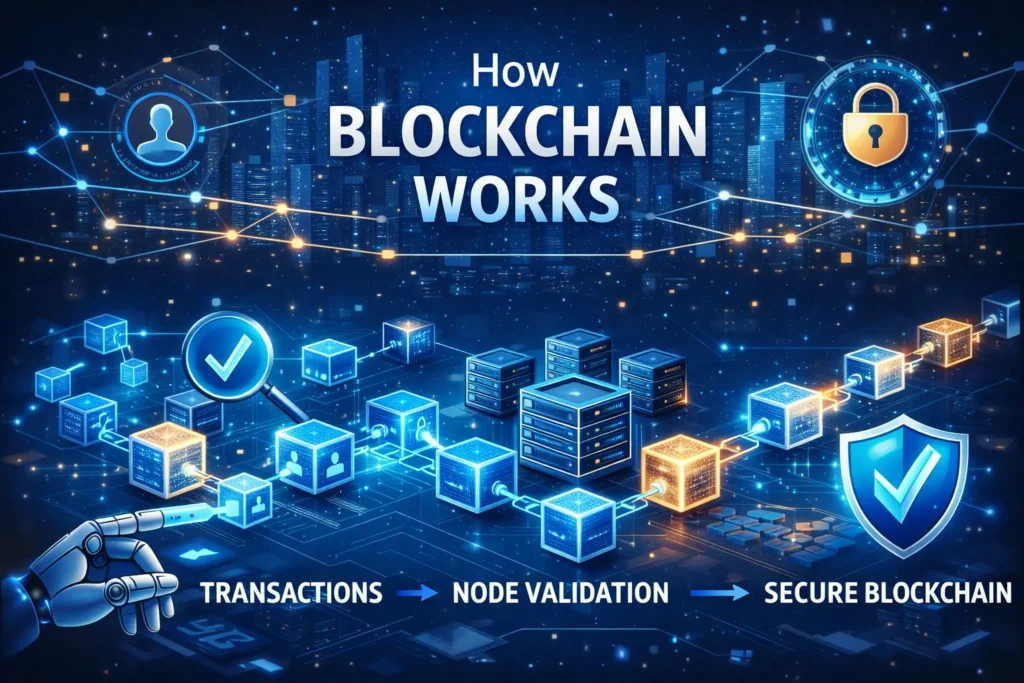
Blockchain works by collecting transactions into blocks and validating them through a network of computers called nodes. Once verified, a block is added to the chain permanently. Every participant has access to the same version of the ledger, ensuring transparency. Cryptographic techniques protect data from being altered. This system removes the need for central control and reduces fraud. The result is a secure, trust-based network where transactions are recorded accurately and can be verified by anyone in the network.
You Might also Like What Is Dympigal?
Core Blockchain Components
The main components of blockchain include blocks, nodes, and consensus mechanisms. Blocks store transaction data, while nodes maintain and verify the network. Consensus mechanisms like Proof of Work or Proof of Stake ensure agreement among participants. Cryptography secures data and prevents unauthorized changes. Together, these components create a reliable system that operates without central authority and maintains integrity across the entire network.
Blockchain Technology Evolution
Blockchain technology has evolved significantly since its early days. Initially designed to support Bitcoin, it now powers smart contracts, decentralized applications, and enterprise solutions. Each phase of evolution has improved speed, scalability, and functionality. Businesses now use blockchain to streamline operations and reduce costs. As innovation continues, newer versions of blockchain aim to solve limitations like energy consumption and transaction delays, making the technology more practical for mass adoption.
Blockchain Generations Explained
Blockchain generations refer to different stages of development. The 1.0 focused on cryptocurrencies like Bitcoin. And 2.0 introduced smart contracts, enabling automated agreements. Meanwhile 3.0 expanded use cases into healthcare, education, and governance. Each generation addressed previous limitations, making blockchain more flexible and scalable for real-world applications across industries.
Importance of Blockchain in the Future
Blockchain is important for the future because it builds trust in a digital environment where data security is critical. It reduces reliance on intermediaries, lowers costs, and improves efficiency. As cyber threats grow, blockchain offers a secure way to protect sensitive information. It also empowers individuals by giving them control over their data. With increasing digitalization, blockchain will play a key role in shaping transparent and reliable digital systems worldwide.
Key Blockchain Trends
Several trends are shaping the future of blockchain technology. These include decentralized finance, cross-chain interoperability, and integration with emerging technologies. Businesses are adopting blockchain for transparency and automation. Governments are exploring digital currencies and blockchain-based records. As tools improve and awareness grows, blockchain is becoming more accessible. These trends indicate that blockchain will continue expanding into mainstream applications across multiple sectors.
AI Integration with Blockchain
Artificial intelligence and blockchain together create smarter and more secure systems. AI analyzes data and makes predictions, while blockchain ensures data integrity. This combination improves decision-making, automates processes, and reduces fraud. Industries like finance and healthcare benefit greatly from this integration. As both technologies mature, their collaboration will unlock advanced solutions for data-driven and trust-based applications.
Blockchain and IoT
Blockchain enhances the Internet of Things by providing secure communication between connected devices. It prevents unauthorized access and ensures data authenticity. With blockchain, IoT networks become more reliable and transparent. This is especially useful in smart cities, supply chains, and industrial automation. As IoT adoption grows, blockchain will play a vital role in managing device security and data sharing.
Blockchain in Financial Services
Blockchain is transforming financial services by making transactions faster, cheaper, and more transparent. Traditional banking systems rely heavily on intermediaries, which often leads to delays and higher fees. Blockchain removes many of these middle layers by enabling peer-to-peer transactions. Payments, cross-border transfers, and settlements can happen almost instantly. Financial institutions are increasingly adopting blockchain to improve efficiency and reduce fraud. As trust in digital finance grows, blockchain is expected to become a core infrastructure for modern financial systems.
Growth of Decentralized Finance
Decentralized Finance, or DeFi, allows users to access financial services without traditional banks. Through smart contracts, people can lend, borrow, trade, and earn interest directly from blockchain platforms. DeFi promotes financial inclusion by giving access to services for those without bank accounts. While risks still exist, ongoing improvements in security and regulation are making DeFi more stable. Its rapid growth highlights how blockchain can redefine financial freedom.
Industry Applications of Blockchain
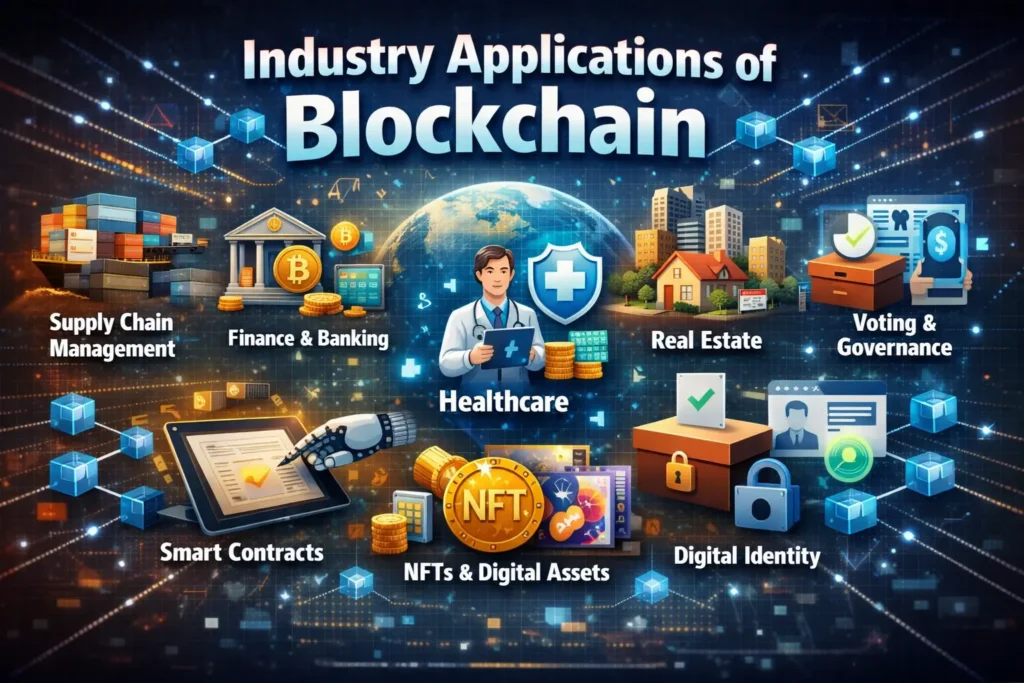
Blockchain is no longer limited to finance; it is being adopted across many industries. Businesses use it to improve transparency, traceability, and operational efficiency. From tracking products in supply chains to securing sensitive records, blockchain offers practical solutions. Companies value their ability to reduce fraud and errors while increasing trust among stakeholders. As industries continue digital transformation, blockchain is becoming a reliable backbone for secure data sharing and automated workflows.
You Might also Like Best Tech Gadgets for Home Office Setup (2026 Guide)
Blockchain in Healthcare
In healthcare, blockchain improves data security and patient privacy. Medical records can be stored securely and shared only with authorized parties. This reduces data breaches and improves coordination between healthcare providers. Blockchain also helps track pharmaceuticals, preventing counterfeit drugs from entering the market. As healthcare systems become more digital, blockchain offers a trusted way to manage sensitive data while improving patient outcomes.
Blockchain in Supply Chain
Blockchain brings transparency to supply chains by recording every step of a product’s journey. From raw materials to final delivery, all data is stored securely and cannot be altered. This helps companies verify authenticity, reduce fraud, and improve accountability. Consumers also benefit by gaining access to product history. As global supply chains grow more complex, blockchain provides clarity and trust across all participants.
Blockchain Scalability Solutions
Scalability has been a major challenge for blockchain networks, but new solutions are addressing this issue. Technologies like Layer 2 networks, sharding, and improved consensus mechanisms help increase transaction speed. These innovations reduce congestion and lower costs while maintaining security. As scalability improves, blockchain becomes more practical for large-scale applications. This progress is essential for supporting widespread adoption across industries and everyday use.
Blockchain Security and Privacy
Blockchain is known for its strong security, but privacy remains a key focus. Advanced cryptography and privacy-focused solutions are helping protect user data. Techniques like zero-knowledge proofs allow verification without revealing sensitive information. These improvements make blockchain safer for businesses and individuals alike. As cyber threats increase, blockchain’s evolving security measures will play a crucial role in protecting digital assets and personal data.
Regulatory Landscape of Blockchain
Regulation plays a major role in shaping the future of blockchain. Governments worldwide are working to balance innovation with consumer protection. Clear regulations help build trust and encourage institutional adoption. While regulatory uncertainty still exists in some regions, progress is being made. As frameworks mature, blockchain companies will operate with more confidence, leading to broader acceptance and integration into mainstream systems.
Long-Term Benefits of Blockchain
Blockchain offers long-term benefits that go beyond efficiency and cost savings. One of its biggest advantages is trust, created through transparency and immutability. Businesses can reduce fraud, automate operations, and improve accountability. Individuals gain more control over their data and digital assets. Over time, blockchain can lower operational risks and simplify complex processes. As technology matures, its long-term value will be seen in stronger digital ecosystems built on security, reliability, and decentralized trust.
Adoption Challenges of Blockchain
Despite its potential, blockchain adoption faces several challenges. Technical complexity makes implementation difficult for many organizations. Scalability issues, high energy consumption, and a lack of skilled professionals slow progress. Regulatory uncertainty also creates hesitation among businesses. Additionally, public understanding of blockchain remains limited. However, ongoing innovation, education, and policy development are gradually addressing these obstacles, making broader adoption more achievable in the coming years.
Blockchain and Web3
Blockchain is a foundational element of Web3, the next generation of the internet. Web3 focuses on decentralization, user ownership, and transparency. Blockchain enables users to control their data, identities, and digital assets without relying on centralized platforms. This shift reduces dependency on big tech companies and promotes fair digital participation. As Web3 evolves, blockchain will support decentralized applications that prioritize privacy, security, and user empowerment.
Blockchain Career Opportunities
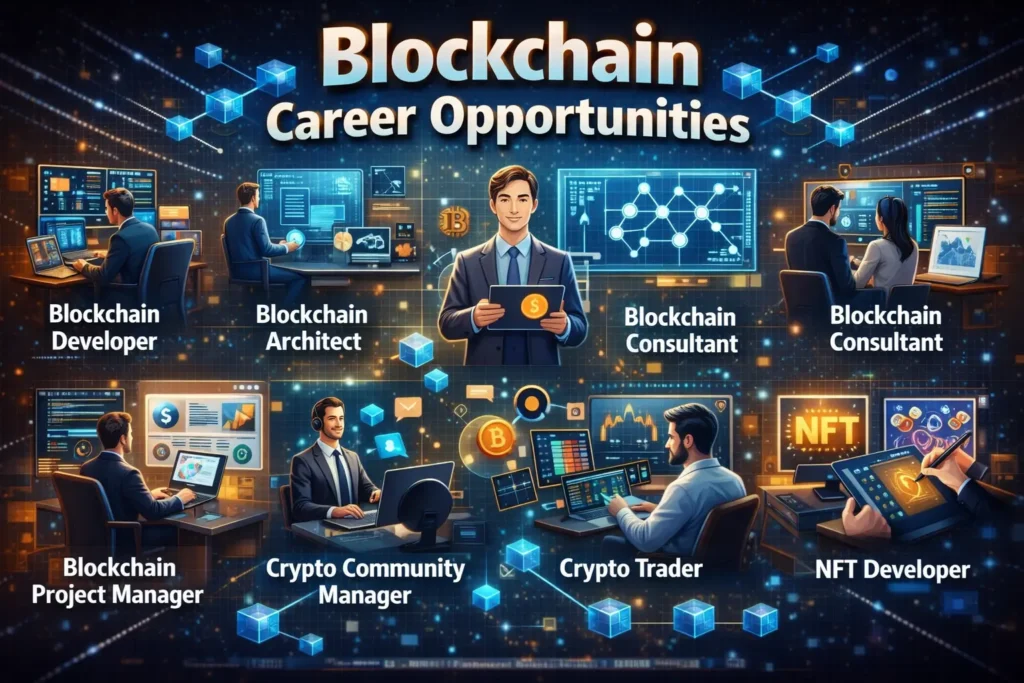
The growth of blockchain is creating strong career opportunities across industries. Roles include blockchain developers, smart contract engineers, analysts, and security specialists. Non-technical positions such as project managers and compliance experts are also in demand. As businesses adopt blockchain solutions, the need for skilled professionals continues to rise. Learning blockchain now can open doors to future-ready careers in technology, finance, and innovation-driven sectors.
You Might also Like Future of Artificial Intelligence in Daily Life
Conclusion
The future of blockchain technology holds immense potential as it continues to reshape digital systems. With ongoing advancements, blockchain is improving how information, assets, and trust are handled online. Although certain challenges still exist, growing adoption and innovation are strengthening its role across industries. From finance to healthcare, blockchain is delivering real-world value. Gaining insight into its future enables individuals and organizations to adapt to a more transparent, secure, and decentralized digital environment.
Frequently Asked Questions (FAQs)
What is blockchain technology in simple words?
Blockchain is a secure digital ledger that records transactions across multiple computers, making data transparent and hard to alter.
Why is blockchain important for the future?
Blockchain builds trust, improves security, and reduces reliance on intermediaries in digital systems.
Is blockchain only used for cryptocurrency?
No, blockchain is widely used in finance, healthcare, supply chains, and digital identity systems.
How secure is blockchain technology?
Blockchain uses cryptography and decentralization to protect data from fraud and unauthorized changes.
Will blockchain create new job opportunities?
Yes, blockchain is driving demand for skilled professionals across technology, finance, and Web3 sectors.
Read More Informative Information At Mypasokey