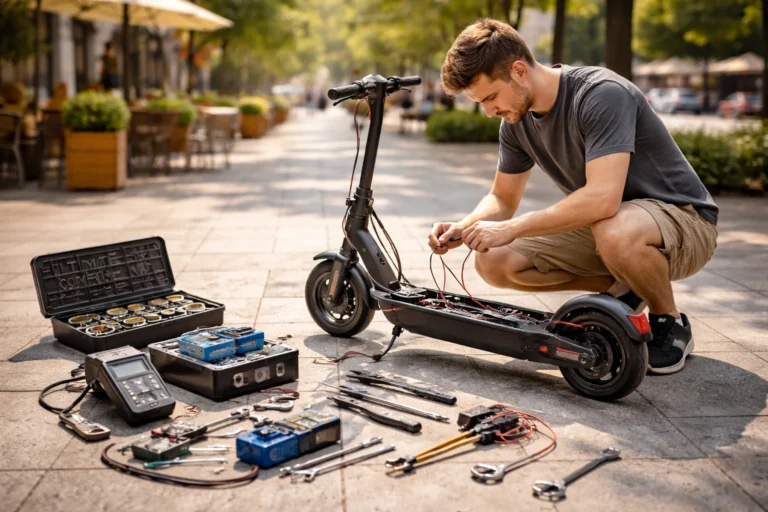
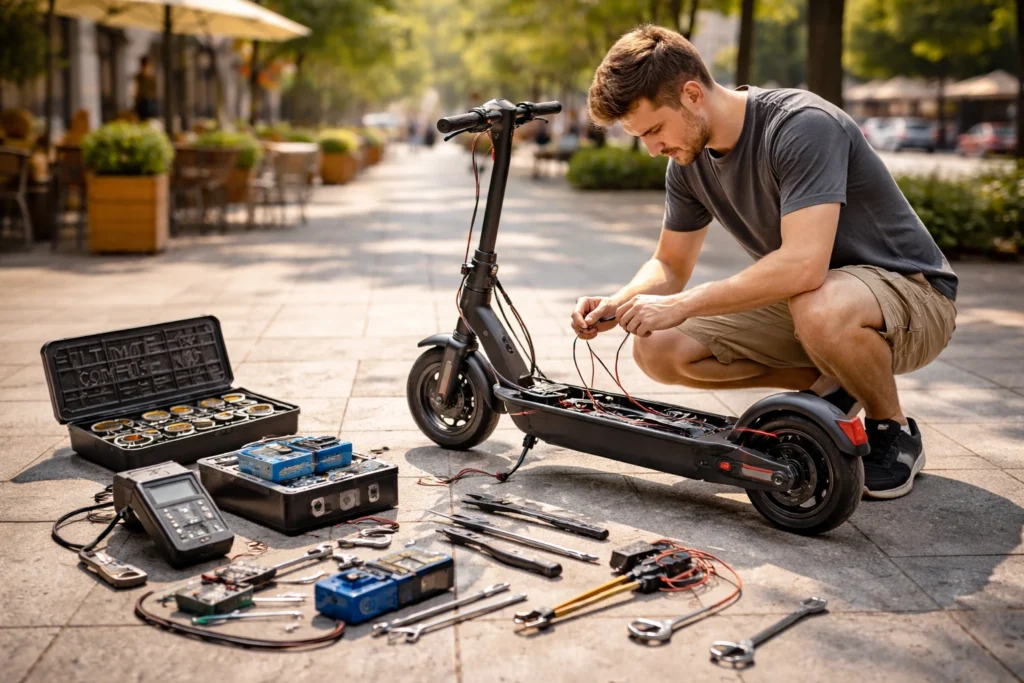

Electric Scooter Engineering Fundamentals
Electric scooters operate through a tightly integrated electrical and mechanical system designed for efficient micro-mobility. At the core, they convert stored electrical energy into controlled mechanical motion. Unlike gas-powered vehicles, electric scooters rely on a battery-powered motor system, eliminating combustion entirely. When a rider engages the throttle, electrical signals activate the controller, which regulates current flow to the motor. This seamless interaction between hardware and software creates smooth acceleration, controlled speed output, and optimized energy usage. Understanding these engineering fundamentals helps riders appreciate how modern e-scooters balance performance, efficiency, and reliability in compact urban transport systems.
Structural & System Architecture
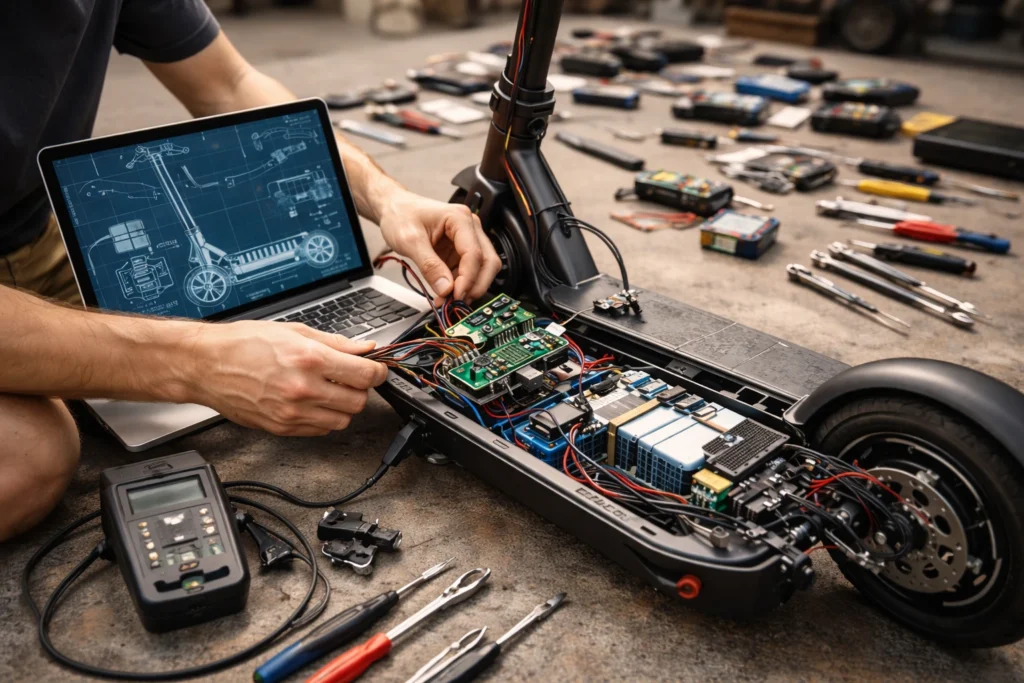
The architecture of an electric scooter is built around a lightweight yet durable frame, typically constructed from aerospace-grade aluminum or reinforced alloy. This structural framework houses the battery pack within the deck, supports the motorized wheel assembly, and integrates wiring channels for safe power distribution. The folding stem mechanism adds portability without compromising structural integrity. Internally, the system architecture connects the battery, controller, throttle, and braking modules through a centralized circuitry layout. This design ensures stable load distribution, impact resistance, and optimal weight balance, all of which directly influence ride comfort, durability, and long-term operational stability.
You Might also Like: Inside FutureTech: Key Innovations Shaping Tomorrow
Integrated Powertrain Components
The powertrain of an electric scooter consists of three primary components: the battery, the motor, and the electronic controller. Together, these elements form a synchronized propulsion system. The battery supplies direct current (DC) power, the controller regulates voltage and current flow, and the motor converts electrical energy into rotational force. Unlike traditional vehicles with complex transmissions, electric scooters use direct-drive mechanisms that minimize energy loss. This integrated design improves torque delivery, enhances efficiency, and reduces maintenance requirements. The simplicity of the electric powertrain is one of the reasons modern scooters are both reliable and cost-effective for daily commuting.
Advanced Battery Systems
Most modern electric scooters use lithium-ion battery technology due to its high energy density, lightweight structure, and long cycle life. These batteries store energy in rechargeable cells arranged in series and parallel configurations to achieve the required voltage and capacity. Energy storage capacity is typically measured in watt-hours (Wh), directly affecting the scooter’s range. Advanced battery systems are engineered to deliver stable voltage output even under load conditions such as hill climbing or rapid acceleration. Compared to older lead-acid alternatives, lithium-ion batteries charge faster, last longer, and provide significantly better performance efficiency in urban riding conditions.
Battery Management & Power Control
A Battery Management System (BMS) plays a critical role in ensuring safety and performance. The BMS monitors voltage levels, temperature, charging cycles, and overall battery health in real time. It prevents overcharging, deep discharging, overheating, and short circuits, all of which can reduce battery lifespan or cause safety hazards. Power control algorithms within the system balance individual cells to maintain consistent output. This intelligent regulation not only extends battery longevity but also enhances ride stability. Without a properly functioning BMS, even the most advanced lithium-ion battery would struggle to deliver reliable and safe power performance.
BLDC Motor Technology
Most modern electric scooters use Brushless DC (BLDC) motors because they are efficient, durable, and low-maintenance. Unlike brushed motors, BLDC systems eliminate physical contact between components, reducing friction and heat generation. The motor typically sits inside the wheel hub, delivering direct torque without requiring chains or belts. When electrical current flows through the stator windings, it creates a rotating magnetic field that turns the rotor. This process converts electrical energy into mechanical motion instantly. The result is smooth acceleration, consistent torque delivery, quieter operation, and improved energy efficiency across different riding conditions.
Electronic Speed Control Systems
The Electronic Speed Controller (ESC) acts as the brain of the scooter’s propulsion system. It receives signals from the throttle and adjusts the current sent to the motor accordingly. By precisely regulating voltage and frequency, the ESC ensures smooth acceleration, controlled deceleration, and stable cruising speeds. Advanced controllers also manage torque output to prevent sudden jerks or wheel spin. Many modern systems include firmware programming that optimizes performance based on riding modes. Without the ESC, power delivery would be unpredictable. This intelligent system is essential for balancing efficiency, safety, and rider comfort.
Throttle & Acceleration Dynamics
The throttle is the rider’s primary interface with the scooter’s power system. Whether it’s a thumb lever or twist grip, the throttle sends an electronic signal to the controller, indicating the desired speed. The controller interprets this input and increases motor output gradually to maintain smooth acceleration. Unlike traditional engines, electric scooters provide near-instant torque, which means acceleration feels responsive yet controlled. Advanced systems include soft-start programming to prevent abrupt launches. This accurate throttle response ensures smoother ride control, maximizes energy efficiency, and allows riders to manage their speed confidently in busy city traffic.
Energy Conversion Mechanism
Electric scooters function by converting stored electrical energy into kinetic motion through electromagnetic interaction. The battery supplies direct current to the controller, which then distributes regulated power to the motor. Inside the motor, electrical energy generates a magnetic field that rotates the rotor, spinning the wheel. This process eliminates combustion, reducing mechanical complexity and energy waste. Because there are fewer moving parts compared to internal combustion engines, efficiency levels are significantly higher. The direct energy conversion mechanism allows scooters to operate quietly, smoothly, and with minimal vibration while maintaining consistent performance output.
Regenerative Braking Systems
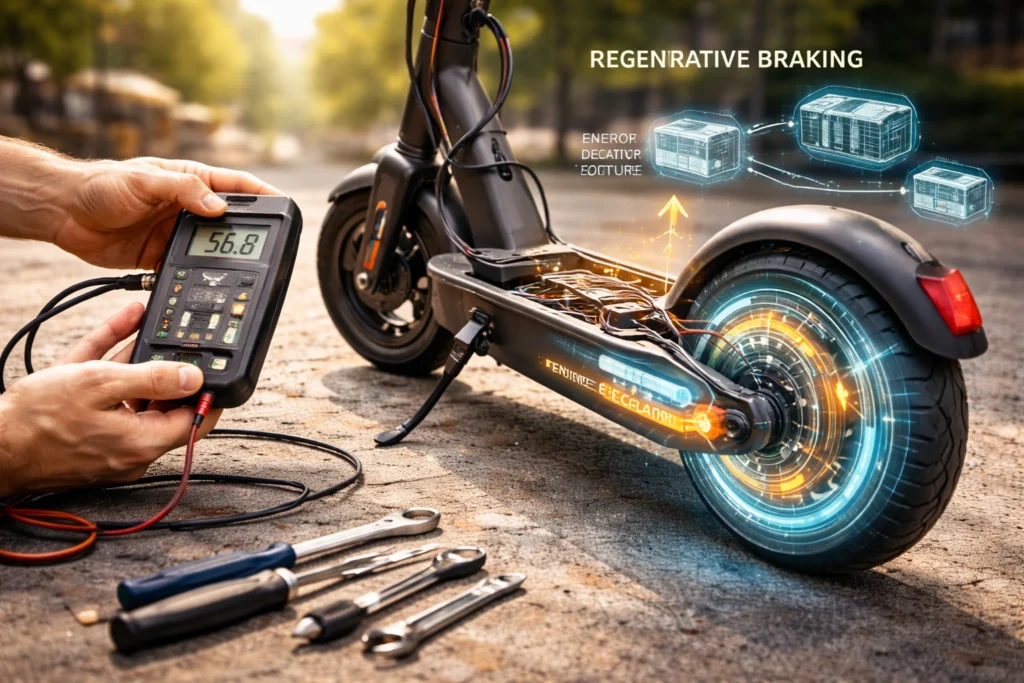
Regenerative braking adds an intelligent layer of efficiency to electric scooters. When the rider applies the brake or releases the throttle, the motor temporarily reverses its function and acts as a generator. Instead of wasting kinetic energy as heat, the system converts part of that energy back into electrical power and sends it to the battery. While the recovered energy is modest, it improves overall efficiency and extends riding range slightly. Regenerative braking also reduces wear on mechanical brake components, contributing to lower maintenance costs and enhanced long-term system durability.
You Might also Like: PCR Machines in Disease Detection | Molecular Diagnostics
Chassis, Suspension & Stability
The chassis forms the structural backbone of an electric scooter, supporting weight distribution, impact resistance, and overall ride stability. Most high-quality scooters use reinforced aluminum alloy frames to balance strength and portability. Suspension systems, either spring-based, hydraulic, or dual-shock, absorb road vibrations and uneven terrain impacts. Tire composition also plays a critical role, with pneumatic tires offering better shock absorption and solid tires providing lower maintenance. Proper chassis engineering ensures balanced center of gravity, improved cornering control, and enhanced rider confidence. Stability is not accidental; it is the result of thoughtful structural design and mechanical precision.
Torque, Wattage & Efficiency Metrics
Performance in electric scooters is often measured through torque output, motor wattage, and energy efficiency ratios. Torque determines acceleration strength and hill-climbing ability, while wattage reflects the motor’s power capacity. Higher wattage typically delivers stronger performance but may consume more energy if not properly optimized. Efficiency depends on how effectively the system converts stored energy into forward motion without excessive heat loss. Manufacturers design modern scooters to strike a balance between power and energy conservation. Understanding these metrics helps riders evaluate real-world performance rather than relying solely on advertised top speeds.
Embedded Electronics & Sensors
Modern electric scooters integrate embedded electronics that enhance safety, control, and functionality. Sensors monitor speed, motor temperature, battery voltage, and braking input in real time. This data feeds into the controller to optimize performance dynamically. Many scooters now feature digital dashboards, LED displays, and smartphone connectivity for diagnostics and ride tracking. Embedded firmware governs acceleration curves, riding modes, and safety cutoffs. These intelligent electronic systems transform scooters from simple mobility devices into smart transportation tools. The integration of sensors ensures consistent operation while preventing system overload or unstable riding conditions.
Thermal & Overload Protection
Heat management is critical for maintaining performance and extending component lifespan. During acceleration or hill climbing, motors and controllers generate heat due to electrical resistance. Advanced scooters incorporate thermal sensors that monitor temperature thresholds and automatically reduce power output if overheating is detected. Overload protection systems also prevent excessive current draw, which can damage battery cells or wiring. By regulating heat and electrical stress, these protective mechanisms maintain safe operating conditions. Proper thermal management not only improves durability but also ensures consistent performance during extended rides or demanding urban commuting scenarios.
Performance Optimization Strategies
Optimizing electric scooter performance involves a combination of smart riding habits and proper system maintenance. Maintaining recommended tire pressure reduces rolling resistance and improves efficiency. Avoiding frequent full discharges extends battery life and preserves capacity. Software updates, when available, enhance controller efficiency and ride modes. Weight management and smooth throttle application also contribute to better range and motor longevity. Manufacturers engineer scooters for balanced performance, but user behavior significantly impacts real-world results. By understanding how each system interacts, riders can maximize range, protect key components, and maintain long-term operational reliability.
Conclusion
Electric scooters function through a precisely engineered integration of battery systems, electronic controllers, brushless motors, and intelligent safety mechanisms. From energy storage to kinetic motion, every component works in coordination to deliver efficient, low-maintenance urban mobility. Modern advancements such as regenerative braking, smart sensors, and thermal protection further enhance reliability and performance. Understanding how electric scooters operate not only helps riders make informed purchasing decisions but also improves maintenance habits and riding efficiency. As micro-mobility continues to evolve, electric scooters stand out as a practical, energy-efficient, and technologically refined transportation solution.
Frequently Asked Questions (FAQs)
1. How does an electric scooter start moving?
When you press the throttle, the controller sends power from the battery to the motor, spinning the wheel.
2. What type of motor do electric scooters use?
Most modern scooters use brushless DC (BLDC) hub motors for higher efficiency and durability.
3. Electric Scooter Battery Lifespan: How Long Does It Last?
Lithium-ion batteries typically last 2–4 years, depending on usage and charging habits.
4. What is regenerative braking?
It converts braking energy into electricity and sends a small portion back to the battery.
5. How far can an electric scooter travel on one charge?
Range usually varies between 15 and 40 miles, depending on battery capacity and riding conditions.
Read More Informative Information At Mypasokey