

Future of Artificial Intelligence in Daily Life
Introduction to Artificial Intelligence
Artificial Intelligence, commonly known as AI, is no longer a futuristic concept it’s already part of our everyday lives. From unlocking phones with facial recognition to getting movie recommendations on streaming platforms, AI works quietly in the background. At its core, AI refers to machines designed to think, learn, and make decisions like humans. What makes AI truly powerful today is its ability to analyze massive amounts of data quickly and accurately. As technology continues to evolve, AI is shaping how we live, work, communicate, and make decisions on a daily basis.
Evolution of Artificial Intelligence
The journey of artificial intelligence has been long and fascinating. Early AI systems were simple and rule-based, capable of performing only specific tasks. Over time, advancements in computing power, data availability, and machine learning transformed AI into something much more intelligent. Today’s AI systems can recognize speech, understand images, and even predict human behavior. Unlike older technologies, modern AI improves continuously through learning. This evolution has made AI more accurate, adaptable, and useful, allowing it to seamlessly integrate into everyday tools and services we now rely on.
Role of AI in Daily Life
AI plays a crucial role in simplifying daily routines and improving efficiency. It helps people save time, make smarter choices, and enjoy personalized experiences. Whether it’s a navigation app suggesting the fastest route or a digital assistant reminding you of meetings, AI enhances convenience. Behind the scenes, AI processes data to understand habits, preferences, and patterns. This allows systems to adapt to individual needs. As AI becomes more intelligent, its role in daily life will continue to expand, making everyday tasks faster, easier, and more intuitive.
AI in Smart Homes
Smart homes are one of the clearest examples of AI in action. AI-powered devices can control lighting, temperature, security systems, and even household appliances. These systems learn user behavior over time, adjusting settings automatically to improve comfort and energy efficiency. For example, smart thermostats analyze usage patterns to reduce electricity bills. AI also enhances home security by detecting unusual activity and sending alerts in real time. As smart home technology advances, homes will become more responsive, secure, and personalized than ever before.
AI in Smartphones and Personal Devices
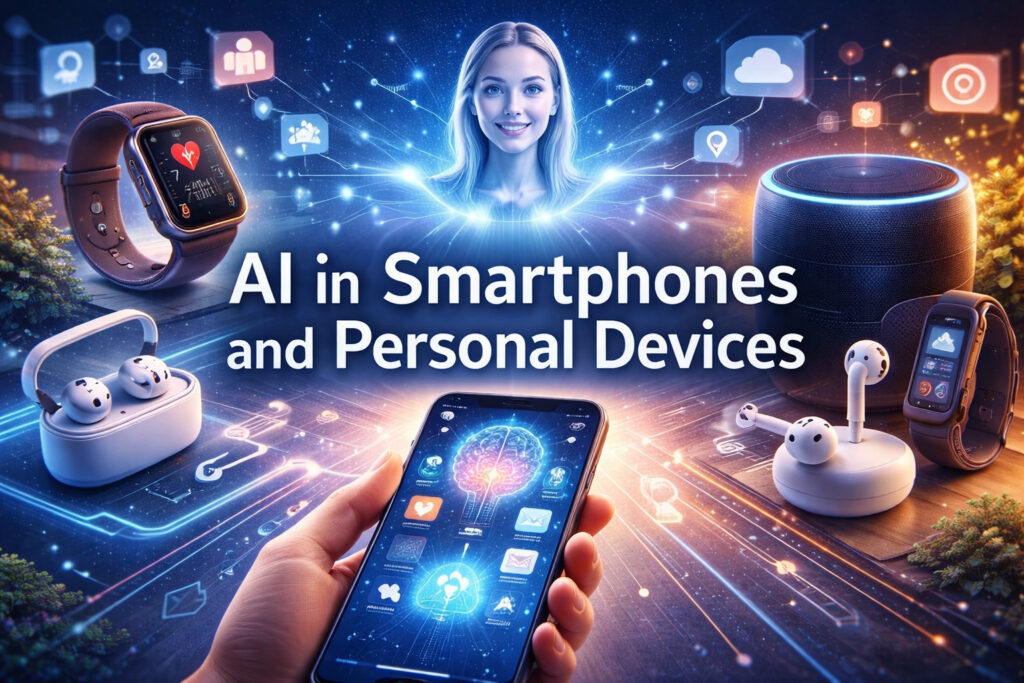
Smartphones rely heavily on artificial intelligence to deliver smoother and smarter experiences. AI powers voice assistants, improves camera quality, and predicts user needs. Features like face unlock, battery optimization, and smart notifications all depend on AI algorithms. Wearable devices also use AI to track health data, such as heart rate and sleep patterns. These technologies don’t just react they learn and adapt. As AI becomes more advanced, personal devices will feel more intuitive, helping users stay organized, informed, and connected effortlessly.
You Might also Like How to Earn Online Using AI Tools
AI in Healthcare
Artificial intelligence is transforming healthcare by improving accuracy, speed, and patient care. AI systems assist doctors in diagnosing diseases, analyzing medical images, and managing patient records. By processing large datasets, AI can identify patterns that humans might miss. This leads to earlier detection and better treatment outcomes. AI also supports virtual healthcare services, making medical help more accessible. As healthcare systems adopt AI, patients can expect faster diagnoses, personalized treatment plans, and more efficient medical services overall.
Medical Diagnosis and Disease Prediction
AI-powered diagnostic tools analyze medical scans, lab results, and patient histories with impressive precision. These systems help identify diseases at early stages, including cancer and heart conditions. By predicting health risks before symptoms appear, AI enables preventive care. This not only improves patient outcomes but also reduces healthcare costs. Doctors still make final decisions, but AI acts as a powerful support tool, enhancing accuracy and saving valuable time in critical medical situations.
AI in Education
Artificial intelligence is reshaping education by making learning more personalized and accessible. Traditional classrooms often follow a one-size-fits-all approach, but AI changes that by adapting content to individual learning styles and speeds. AI-powered platforms analyze student performance and recommend customized lessons, helping learners understand complex topics more easily. Teachers also benefit from AI tools that automate grading and administrative tasks, allowing them to focus more on teaching. As AI continues to evolve, education will become more interactive, data-driven, and student-centered than ever before.
AI in Transportation
Transportation systems are becoming smarter and safer thanks to artificial intelligence. AI helps manage traffic flow, reduce congestion, and improve road safety through real-time data analysis. Navigation apps use AI to suggest faster routes based on traffic patterns and accidents. Public transportation systems also rely on AI for scheduling and efficiency. As urban populations grow, AI-driven transportation solutions will play a key role in reducing travel time, fuel consumption, and environmental impact, making daily commuting smoother and more reliable.
Self-Driving Vehicles and Traffic Control
Self-driving vehicles represent one of the most talked-about applications of AI. These vehicles use sensors, cameras, and AI algorithms to detect surroundings and make driving decisions. AI also supports smart traffic control systems that adjust signals based on traffic volume. Together, these technologies aim to reduce accidents caused by human error. While fully autonomous cars are still evolving, AI-driven traffic management is already improving road safety and efficiency in many cities.
AI in Workplace and Employment
AI is changing how people work by automating repetitive tasks and enhancing productivity. Many businesses use AI to manage data, analyze performance, and support decision-making. This shift allows employees to focus on creative and strategic work instead of routine activities. While there are concerns about job displacement, AI is also creating new roles that require human skills such as problem-solving and innovation. The future workplace will likely be a blend of human intelligence and AI collaboration, rather than replacement.
AI in Business and Customer Service
Businesses are increasingly relying on AI to improve customer experience and operational efficiency. AI-powered chatbots handle customer inquiries 24/7, providing instant responses and reducing wait times. Companies also use AI to analyze customer behavior and predict future needs. This helps businesses offer more relevant products and services. By streamlining processes and improving communication, AI enables businesses to build stronger relationships with customers while reducing costs and improving overall service quality.
AI in Entertainment and Media
Artificial intelligence has transformed how people consume entertainment and media.Social media platforms rely on AI to personalize feeds and suggest content. AI is also being used in gaming, video editing, and content creation. These technologies help deliver more engaging and immersive experiences. As AI continues to advance, entertainment will become increasingly interactive, personalized, and tailored to individual tastes.
AI in E-Commerce
AI plays a major role in shaping modern e-commerce experiences. Online stores use AI to recommend products, predict demand, and manage inventory efficiently. Personalized shopping suggestions help customers find what they need faster, improving satisfaction. AI also enhances pricing strategies by analyzing market trends and consumer behavior. From chatbots assisting shoppers to algorithms predicting future purchases, AI makes online shopping smarter, smoother, and more convenient for both businesses and consumers.
AI in Finance and Banking
Artificial intelligence has become a powerful tool in the finance and banking sector. Banks and financial institutions use AI to process large volumes of data quickly and accurately. This helps improve risk assessment, customer service, and overall efficiency. AI-driven systems can detect unusual transactions, personalize financial products, and automate routine banking operations. For customers, this means faster services, smarter recommendations, and better security. As financial technology continues to grow, AI will play an even bigger role in making banking more secure, accessible, and user-friendly.
AI in Social Media and Communication
AI strongly influences how people communicate and interact online. Social media platforms use AI algorithms to personalize content, recommend connections, and filter spam. Language translation tools powered by AI allow people from different cultures to communicate easily. AI also helps moderate harmful content by identifying inappropriate or misleading information. While these systems improve user experience, they also shape opinions and online behavior. As AI becomes more advanced, communication will become faster, smarter, and increasingly tailored to individual preferences.
Ethical Issues in Artificial Intelligence
As AI becomes more integrated into daily life, ethical concerns continue to grow. Issues such as data privacy, transparency, and accountability are at the center of AI discussions. Many AI systems rely on large amounts of personal data, raising concerns about misuse and surveillance. There is also the risk of biased algorithms making unfair decisions. Addressing these ethical challenges is essential to building trust in AI technologies. Responsible development and regulation will ensure AI benefits society without compromising individual rights.
You Might also Like Best Free Windows Software for Daily Use (2026 Guide)
Privacy, Bias, and Data Security
Privacy and data security are major challenges in AI adoption. AI systems often collect sensitive information, making them targets for data breaches. Bias can also occur when AI is trained on incomplete or unbalanced data, leading to unfair outcomes. To reduce these risks, developers must focus on transparency, ethical data usage, and strong security measures. Ensuring fairness and protecting user data will be critical for the long-term success of AI in everyday life.
Impact of AI on Human Lifestyle
AI has significantly changed human lifestyle by improving convenience and efficiency. Daily tasks such as shopping, communication, and navigation have become faster and easier. AI-powered tools help people manage time better, make informed decisions, and stay connected. However, increased dependence on AI also raises concerns about reduced human interaction and over-reliance on technology. Finding a balance between using AI for support and maintaining human creativity and independence will shape how AI fits into future lifestyles.
Challenges and Limitations of AI
Despite its benefits, artificial intelligence still faces several limitations. AI systems depend heavily on data quality and can struggle in unpredictable situations. High development costs and lack of skilled professionals also limit adoption. Additionally, AI lacks human emotions, creativity, and ethical judgment. These challenges highlight the importance of human involvement in AI-driven processes. Understanding these limitations helps set realistic expectations and encourages responsible use of AI technologies across different industries.
Future Trends of Artificial Intelligence
The future of artificial intelligence looks promising and transformative. Emerging trends include advanced machine learning, emotional AI, and increased automation across industries. AI will continue to integrate with technologies like the Internet of Things and augmented reality. These developments will make AI more context-aware and responsive. As innovation accelerates, AI is expected to become more human-like in understanding and interaction. The next decade will likely redefine how people live and work alongside intelligent systems.
Human–AI Collaboration
Rather than replacing humans, AI is expected to work alongside them. Human–AI collaboration combines machine efficiency with human creativity and emotional intelligence. AI can handle data-driven tasks, while humans focus on critical thinking and decision-making. This partnership will improve productivity and innovation across industries. By understanding AI as a supportive tool instead of a threat, individuals and organizations can unlock its full potential and create a future where technology enhances human capabilities.
Conclusion
Artificial intelligence is shaping the future of daily life in powerful and meaningful ways. From healthcare and education to finance and entertainment, AI continues to improve efficiency and personalization. While challenges such as ethics and data privacy remain, responsible development can address these concerns. The key lies in balancing innovation with human values. As AI continues to evolve, embracing it thoughtfully will allow individuals and societies to benefit from smarter, safer, and more connected everyday experiences.
Read More Informative Information At Mypasokey