
SEO vs Paid Ads in 2026: Which Strategy Delivers Higher ROI?
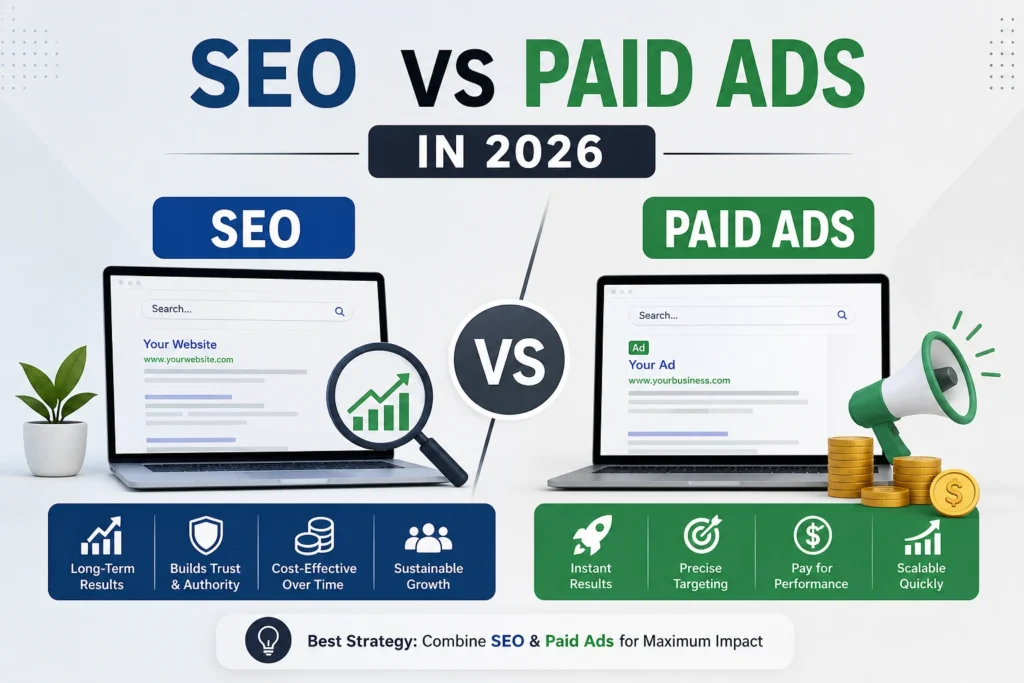
Search Engine Optimization (SEO) and Paid Advertising (PPC) are two core pillars of digital marketing, but they operate in fundamentally different ways. SEO focuses on improving your website’s visibility in organic search results by optimizing content, technical structure, and authority signals. In contrast, paid ads allow businesses to appear instantly at the top of search engine results pages by paying for placement. According to a report by BrightEdge, over 53% of website traffic comes from organic search, while Google Ads can deliver immediate visibility. The key difference lies in sustainability versus speed. SEO builds long-term equity, while paid ads deliver short-term wins.
Search Engine Optimization (SEO): How It Works
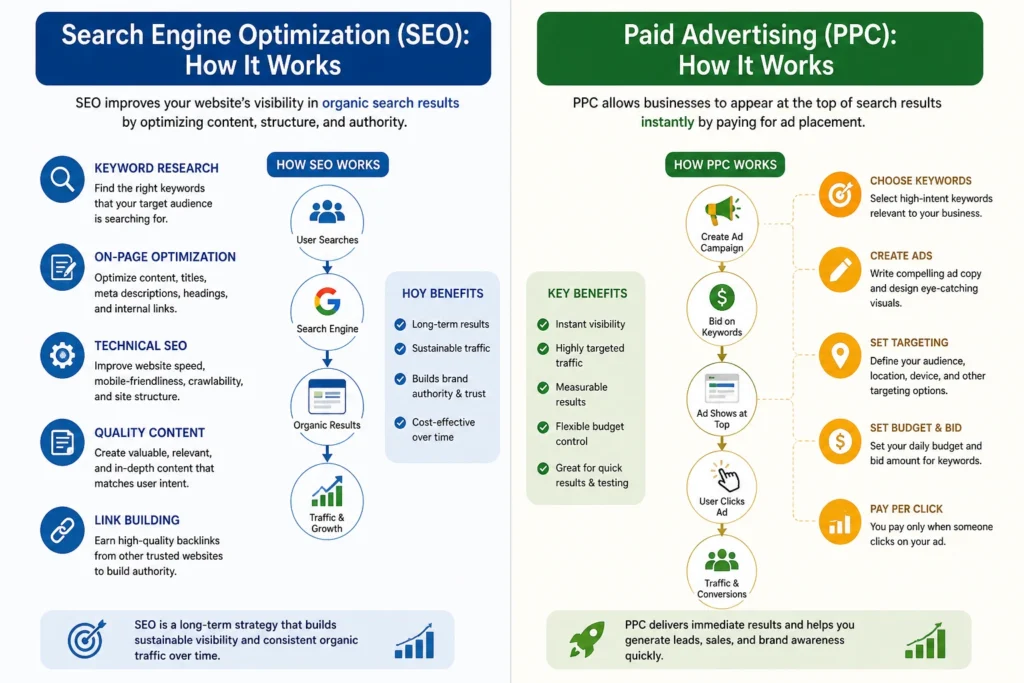
SEO works by aligning your website with search engine algorithms to rank higher for relevant queries. It involves optimizing content, improving technical performance, and building authority through backlinks. Google uses over 200 ranking factors, including relevance, page experience, and trust signals, to determine rankings. Research from Backlinko shows that the first result in Google gets approximately 27.6% of all clicks, highlighting the importance of ranking high. SEO is a long-term strategy that requires consistent effort, but once established, it can generate sustainable, high-quality traffic without ongoing advertising costs.
You might also like: Best Digital Marketing Strategies in 2026 | Ultimate Growth Guide
Core SEO Components
The core components of SEO include on-page optimization, technical SEO, and off-page SEO. On-page SEO focuses on content quality, keyword usage, and internal linking. Technical SEO ensures your website is fast, mobile-friendly, and crawlable by search engines. Off-page SEO involves building backlinks and brand authority. Together, these elements help search engines understand your site’s relevance and credibility, ultimately improving rankings and driving consistent organic traffic.
Paid Advertising (PPC): How It Works
Paid advertising, commonly known as Pay-Per-Click (PPC), allows businesses to bid on keywords and display ads at the top of search results or across digital platforms. Advertisers pay only when users click on their ads, making it a performance-driven model. Platforms like Google Ads and Meta Ads use auction systems where ad relevance, quality score, and bid amount determine placement. According to Google Economic Impact reports, businesses earn an average of $2 for every $1 spent on Google Ads. PPC is ideal for immediate visibility, lead generation, and testing marketing strategies quickly.
Key PPC Channels
Major PPC channels include search ads, display ads, social media ads, and remarketing campaigns. Search ads appear on search engine results pages, targeting high-intent users. Display ads focus on brand awareness through visual placements. Social media ads leverage platforms like Facebook and Instagram for audience targeting. Remarketing helps re-engage users who have previously interacted with your website, increasing conversion rates and maximizing advertising efficiency.
SEO vs Paid Ads: Performance Comparison
When comparing performance, SEO and paid ads deliver results in different ways. SEO typically takes 3 to 6 months to show significant results, but the traffic it generates is consistent and cost-effective over time. Paid ads, on the other hand, can generate traffic instantly but require continuous investment. Studies show that organic results are trusted more, with around 70–80% of users ignoring paid ads in favor of organic listings. However, paid ads often achieve higher conversion rates for transactional queries. The best choice depends on your goals: long-term growth or immediate results.
Cost Efficiency and ROI Analysis
Cost and return on investment (ROI) are critical factors when choosing between SEO and paid ads. SEO requires upfront investment in content, tools, and optimization, but over time, the cost per acquisition decreases significantly. Paid ads offer predictable and scalable results, but costs can rise quickly due to competition and increasing cost-per-click (CPC). According to WordStream, the average Google Ads CPC ranges from $1 to $2 for search ads, but competitive industries can exceed $50 per click. Ultimately, SEO provides better long-term ROI, while paid ads excel in short-term revenue generation.
Short-Term vs Long-Term Impact
In the short term, paid ads deliver immediate traffic, leads, and sales, making them ideal for quick campaigns or product launches. SEO, however, builds momentum over time, creating a sustainable traffic source that continues to grow without ongoing ad spend. Businesses that invest in both strategies often achieve the best results, balancing quick wins with long-term growth.
Strengths and Limitations of Each Approach
Both SEO and paid advertising come with unique strengths and limitations that directly impact your marketing performance. SEO is highly effective for building long-term visibility, credibility, and consistent traffic without paying for each click. However, it requires time, expertise, and ongoing optimization to maintain rankings. On the other hand, paid ads provide immediate visibility and precise targeting options, allowing businesses to reach specific audiences quickly. The downside is that once you stop spending, traffic disappears instantly. According to HubSpot, 61% of marketers say generating traffic and leads is their biggest challenge, making it essential to balance both strategies for sustainable growth.
When SEO Becomes the Optimal Strategy
SEO becomes the optimal strategy when your goal is to build long-term authority, reduce customer acquisition costs, and create a sustainable traffic source. It works best for businesses targeting informational and high-intent search queries over time. For example, content-driven industries like blogging, SaaS, and service-based businesses benefit greatly from SEO. Studies show that companies investing in SEO are 13 times more likely to achieve positive ROI compared to those that don’t. If you have time to invest and want to establish trust in your niche, SEO is the most reliable and scalable growth strategy.
When Paid Advertising Delivers Better Results
Paid advertising delivers better results when speed and immediate outcomes are critical. It is ideal for launching new products, running time-sensitive campaigns, or entering competitive markets where organic ranking takes time. PPC also allows businesses to test different offers, landing pages, and keywords quickly. According to Google, 75% of users say paid ads make it easier to find the information they are searching for. If your goal is rapid lead generation, instant visibility, or scaling campaigns quickly, paid ads offer unmatched control and flexibility compared to SEO.
Business Use Cases and Practical Applications
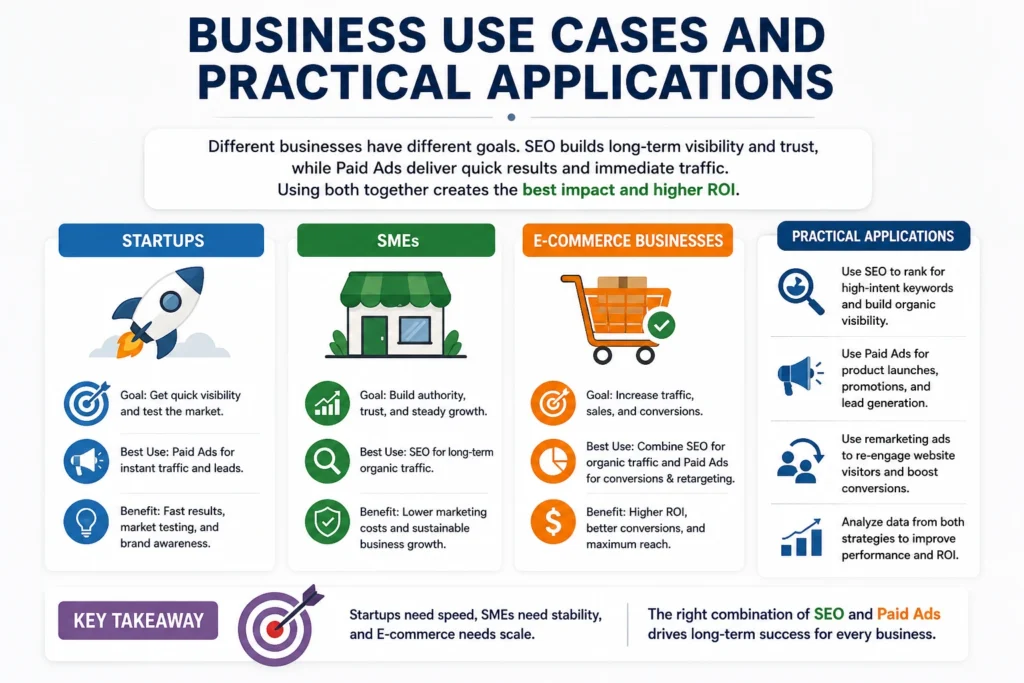
Different business models require different marketing approaches, and choosing between SEO and paid ads depends largely on your goals and resources. Startups often rely on paid ads for quick traction, while established businesses invest in SEO for long-term growth. E-commerce brands typically use a combination of both to drive traffic and conversions. According to Statista, global digital advertising spending is expected to surpass $700 billion, highlighting the growing importance of paid media. However, businesses that integrate SEO into their strategy often achieve higher profitability over time due to reduced dependency on paid traffic.
You might also like: Best AI Tools for Beginners in 2026 | AI Productivity Guide
SEO vs Paid Ads or a Hybrid Approach
The most effective strategy is not choosing between SEO and paid ads but combining both for maximum impact. A hybrid approach allows businesses to generate immediate results through paid campaigns while building long-term organic visibility through SEO. Data from Google shows that combining paid and organic results increases total clicks significantly compared to using either strategy alone. Businesses can use paid ads to test high-performing keywords and then incorporate them into their SEO strategy. This integrated approach ensures consistent growth, better ROI, and a competitive advantage in the evolving digital landscape.
Building a Sustainable Growth Model
A sustainable growth model focuses on leveraging the strengths of both SEO and paid ads. Start with paid campaigns to generate quick data and insights, then invest in SEO to build long-term traffic and authority. Over time, reduce dependency on paid ads while maintaining strategic campaigns for high-converting opportunities. This balanced approach ensures steady growth, cost efficiency, and long-term success.
Conclusion
SEO and paid ads both play essential roles in digital marketing, but they serve different purposes. SEO builds long-term authority, organic traffic, and sustainable growth, while paid ads deliver instant visibility and quick conversions. The best strategy in 2026 is not choosing one over the other but combining both for balanced performance, stronger ROI, and consistent business growth.
H2: FAQs
Is SEO better than paid ads?
SEO is better for long-term growth, while paid ads are better for instant results and quick campaigns.
How much time does SEO usually need to deliver visible results?
SEO usually takes 3–6 months to show strong results, depending on competition and website quality.
Are paid ads good for small businesses?
Yes, they help small businesses get quick traffic and leads with controlled budgets.
Can SEO and paid ads be used together?
Yes, combining both gives faster results plus long-term organic growth.
Which is more cost-effective?
SEO is more cost-effective long-term, while paid ads work better for short-term goals.
Read More Informative Information At Mypasokey