
Introduction
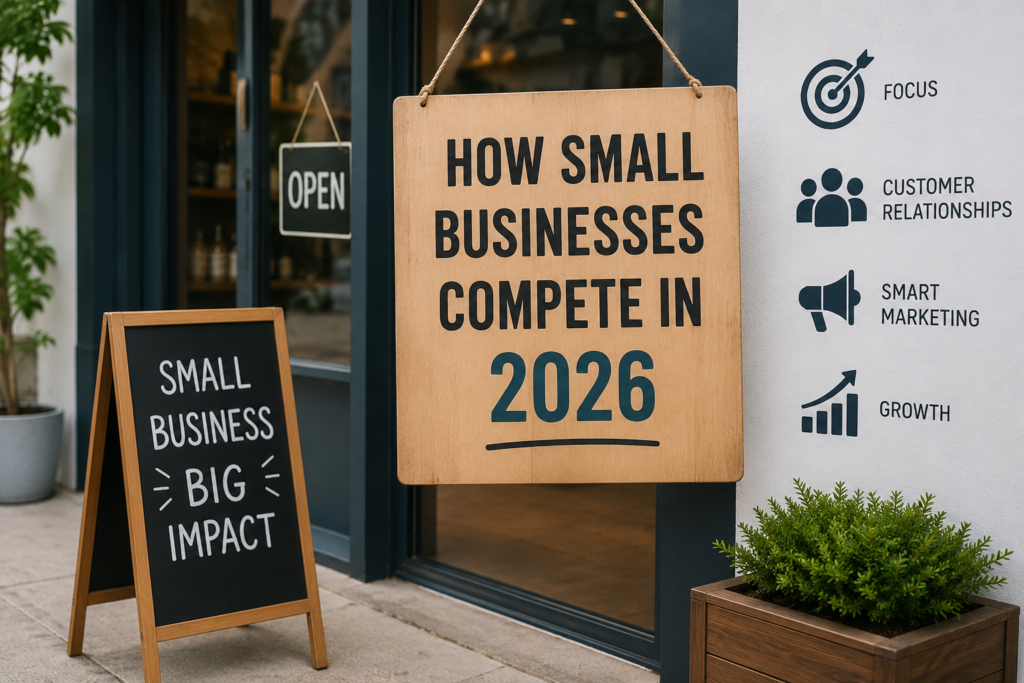
The business landscape in 2026 is more competitive, digital, and customer-driven than ever before. While big brands dominate with massive budgets and global recognition, small businesses are carving out powerful positions through agility and innovation. Consumers today value authenticity, personalized experiences, and trust, areas where smaller companies naturally excel. According to recent market research, over 70% of consumers prefer buying from brands that feel human and relatable. This article breaks down practical, proven strategies small businesses can use to compete effectively, scale smartly, and win customer loyalty without needing enterprise-level resources or massive investments.
Understanding the Competitive Gap Between Small Businesses and Big Brands
The gap between small businesses and large corporations often appears overwhelming, but it is not as one-sided as it seems. Big brands benefit from economies of scale, extensive marketing budgets, and established authority. However, they often struggle with flexibility, personalization, and rapid adaptation. Small businesses, on the other hand, can respond quickly to trends and customer needs. Studies show that smaller companies are significantly faster in decision-making cycles. By understanding both strengths and limitations on each side, small businesses can strategically position themselves where big brands are weakest and create a meaningful competitive advantage.
Key Advantages of Big Brands
Big brands operate with massive financial resources, allowing them to dominate advertising channels, invest heavily in research, and scale operations globally. Their established reputation builds instant trust, and their ability to negotiate lower costs increases profitability. Additionally, they leverage advanced analytics and infrastructure. However, this size often makes them slower to adapt, creating opportunities for smaller competitors.
Hidden Strengths of Small Businesses
Small businesses thrive on flexibility, close customer relationships, and niche specialization. They can quickly pivot strategies, personalize communication, and build stronger emotional connections. Research indicates that customers are more loyal to brands that offer tailored experiences. This adaptability allows small businesses to innovate faster and respond to market changes more effectively than larger competitors.
Focus on Niche Targeting and Micro-Audiences
In 2026, trying to serve everyone is a losing strategy, especially for small businesses. Niche targeting allows companies to focus on specific audiences with precise needs, reducing competition and increasing conversion rates. Data shows that businesses targeting micro-audiences often achieve higher ROI compared to broad-market approaches. By understanding customer behavior, preferences, and pain points, small businesses can create tailored solutions that resonate deeply. This approach not only improves marketing efficiency but also builds stronger brand loyalty, positioning the business as an authority within a defined segment rather than just another generic option.
Why Niche Markets Are More Profitable in 2026
Niche markets reduce competition and allow businesses to charge premium prices due to specialized offerings. Customers in these segments are often more engaged and loyal. Research shows that targeted marketing campaigns generate significantly higher conversion rates, making niche-focused strategies more cost-effective and sustainable for long-term growth.
How to Identify Your Ideal Customer Segment
Identifying the right audience involves analyzing demographics, behavior, and purchasing patterns. Tools like analytics platforms and customer surveys help uncover insights. Businesses should focus on pain points and preferences, creating detailed buyer personas. This clarity enables more precise messaging, improving engagement and increasing the chances of converting prospects into loyal customers.
Building Authority in a Specific Niche
Authority is built through consistent value delivery, content creation, and expertise demonstration. Publishing educational content, solving specific problems, and engaging with the community help establish trust. Over time, this positioning makes the business a go-to resource in its niche, increasing credibility and attracting high-quality leads organically.
Leveraging Personal Branding and Authenticity
Personal branding has become a powerful tool for small businesses competing against large corporations. Consumers in 2026 are more skeptical of traditional advertising and are drawn toward authentic voices. Studies reveal that people trust individuals more than faceless brands. By showcasing the people behind the business, sharing real stories, and communicating transparently, small businesses can build strong emotional connections. Authenticity not only increases trust but also improves customer retention. A relatable brand identity helps differentiate from competitors and creates a loyal community that supports long-term growth.
Why Consumers Trust Small Businesses More
Consumers perceive small businesses as more genuine and transparent compared to large corporations. This trust comes from direct interaction, honest communication, and personalized experiences. Surveys indicate that customers are more likely to support brands that align with their values, making authenticity a key competitive advantage.
Storytelling as a Competitive Advantage
Storytelling helps businesses connect emotionally with their audience. Sharing journeys, challenges, and successes creates relatability. Research shows that stories are remembered far more than facts alone. Effective storytelling builds trust, strengthens brand identity, and encourages customers to engage more deeply with the business.
Building a Human-Centered Brand
A human-centered brand focuses on empathy, communication, and connection. This involves understanding customer emotions and responding genuinely. Personal interactions, behind-the-scenes content, and direct engagement make the brand feel approachable. This approach fosters stronger relationships and increases long-term customer loyalty.
Smart Use of AI and Automation Tools
Artificial intelligence is no longer limited to large enterprises; it is now accessible and affordable for small businesses. In 2026, AI tools will help automate repetitive tasks, improve customer service, and enhance decision-making. Reports indicate that businesses using AI-driven tools can increase productivity by up to 40%. From chatbots to marketing automation, these technologies allow small businesses to operate efficiently without large teams. By integrating AI strategically, small businesses can compete with big brands in speed, accuracy, and scalability while maintaining cost-effectiveness and operational flexibility.
Affordable AI Tools for Small Businesses
There are numerous budget-friendly AI tools available for marketing, content creation, and customer support. These tools help streamline operations and reduce manual workload. Many platforms offer scalable pricing, allowing businesses to start small and expand as needed, making AI adoption accessible even with limited budgets.
Automating Marketing, Sales, and Customer Support
Automation tools handle repetitive tasks such as email campaigns, lead nurturing, and customer inquiries. This improves efficiency and ensures consistent communication. Studies show that automated systems can significantly increase response time and customer satisfaction, giving small businesses a competitive edge.
Competing with Big Brands Using AI Efficiency
AI enables small businesses to deliver faster, smarter, and more personalized experiences. Predictive analytics, chatbots, and automated workflows help match the capabilities of larger companies. By leveraging AI, small businesses can scale operations efficiently while maintaining a high level of service quality.
Delivering Exceptional Customer Experience
Customer experience has become the ultimate differentiator in modern business. While big brands focus on scale, small businesses can focus on quality interactions. Personalized service, quick responses, and genuine care create memorable interactions that drive loyalty. Small businesses can use their size as an advantage by building deeper relationships with customers. By prioritizing customer satisfaction at every touchpoint, they can turn one-time buyers into long-term advocates and compete effectively against larger competitors.
Personalization vs. Mass Marketing
Personalization creates meaningful connections by tailoring messages and offers to individual customers. Unlike mass marketing, it addresses specific needs and preferences. Studies show personalized experiences significantly increase engagement and conversion rates, making it a powerful strategy for small businesses.
Faster Customer Support as a Differentiator
Speed matters in customer service. Small businesses can respond faster due to fewer layers of communication. Quick resolutions improve satisfaction and build trust. Research indicates that customers value fast responses more than perfect solutions, making responsiveness a key competitive advantage.
Building Customer Loyalty and Retention
Loyal customers drive repeat business and referrals. Building loyalty involves consistent service, rewards programs, and strong relationships. Studies show that retaining customers is more cost-effective than acquiring new ones. Small businesses can leverage this by focusing on long-term engagement strategies.
Local SEO and Community Engagement
Local SEO has become one of the most powerful growth channels for small businesses in 2026, especially as “near me” searches continue to rise globally. According to Google data, over 46% of all searches have local intent, making it critical for small businesses to optimize their presence. Unlike big brands, small businesses can dominate hyper-local markets by targeting specific geographic areas and building strong community connections. By combining local search optimization with real-world engagement, businesses can increase visibility, drive foot traffic, and build trust. This dual strategy creates a sustainable competitive advantage that large, less localized brands struggle to replicate.
Dominating Local Search Results
Ranking in local search requires optimizing location-based keywords, consistent business information, and customer reviews. Search engines prioritize relevance, proximity, and authority. Businesses that actively manage reviews and update their listings regularly tend to rank higher. Strong local SEO ensures visibility when customers are ready to purchase.
Google Business Profile Optimization
An optimized Google Business Profile significantly improves local visibility. Businesses should update contact details, add high-quality images, and post regular updates. Research shows that complete profiles receive more clicks and engagement. Customer reviews and responses also play a major role in improving rankings and building trust.
Building Strong Community Relationships
Engaging with the local community builds trust and brand loyalty. Sponsoring events, collaborating with local organizations, and participating in community initiatives strengthen brand presence. Studies show that customers are more likely to support businesses that actively contribute to their local environment and social ecosystem.
Content Marketing as a Growth Engine
Content marketing continues to be one of the most cost-effective strategies for small businesses to compete with large brands. In 2026, businesses that consistently create valuable, relevant, and engaging content attract significantly more organic traffic. Research by HubSpot indicates that companies with active blogs generate over 50% more leads than those without. Content allows small businesses to demonstrate expertise, educate their audience, and build trust over time. Unlike paid advertising, content marketing delivers long-term results, making it a scalable growth engine that helps small businesses compete effectively without requiring massive budgets.
Blogging, Video, and Short-Form Content Strategy
A balanced content strategy includes blogs for SEO, videos for engagement, and short-form content for reach. Platforms like short videos drive high interaction rates. Businesses that diversify content formats can reach wider audiences and improve engagement, making their marketing efforts more effective and dynamic.
SEO Content That Drives Organic Traffic
SEO-focused content targets keywords that users actively search for. By optimizing headings, structure, and intent, businesses can rank higher in search results. Studies show that organic search drives over 50% of website traffic, making SEO content essential for sustainable growth and visibility.
Educating Instead of Selling
Educational content builds trust and positions a business as an authority. Instead of pushing sales, providing value helps attract and retain customers. Research shows that informed customers are more likely to convert, making education-based marketing a powerful long-term strategy.
Social Media Strategies for Small Businesses
Social media platforms have evolved into essential marketing channels where small businesses can compete on equal footing with large brands. In 2026, success on social media is less about budget and more about creativity, consistency, and authenticity. Reports indicate that over 60% of consumers discover new brands through social platforms. Small businesses can leverage this by creating relatable content, engaging directly with their audience, and building communities. Unlike big brands, they can maintain a personal tone and respond quickly. This direct interaction builds trust, increases engagement, and drives conversions without requiring significant financial investment.
Choosing the Right Platforms in 2026
Not every platform suits every business. Success depends on where the target audience spends time. Research shows that focusing on two or three key platforms yields better results than spreading efforts too thin. Strategic platform selection improves engagement and maximizes return on effort.
Going Viral with a Limited Budget
Viral content relies on creativity, timing, and relatability rather than budget. Trends, storytelling, and emotional appeal increase shareability. Studies show that authentic, user-focused content performs better than polished advertisements, giving small businesses an opportunity to reach large audiences organically.
Influencer & Micro-Influencer Collaborations
Micro-influencers often have higher engagement rates than celebrities. Partnering with them allows small businesses to reach targeted audiences cost-effectively. Research indicates that influencer marketing delivers strong ROI, especially when collaborations feel authentic and align with audience interests.
Competing on Value, Not Price
Trying to compete with big brands on price is rarely sustainable for small businesses. Large corporations benefit from economies of scale, allowing them to offer lower prices. Instead, small businesses should focus on delivering superior value. Studies show that customers are willing to pay more for better experiences, quality, and service. By emphasizing unique benefits, personalized experiences, and strong brand identity, small businesses can differentiate themselves effectively. Competing on value not only protects profit margins but also attracts customers who prioritize quality over cost, leading to stronger relationships and long-term business growth.
Why Price Wars Are Dangerous
Price wars reduce profit margins and can harm brand perception. Competing solely on price often leads to unsustainable business practices. Research shows that businesses focusing on value rather than price achieve higher customer loyalty and long-term profitability, making value-based strategies more effective.
Creating Unique Value Propositions
A strong value proposition clearly communicates what makes a business different. It highlights benefits, not just features. Businesses that define and communicate their unique value effectively can attract the right audience and stand out in competitive markets.
Offering Premium Experiences
Premium experiences include personalized service, quality products, and attention to detail. Customers associate these factors with higher value. Studies indicate that businesses offering superior experiences often enjoy higher customer retention and stronger brand loyalty over time.
Building Strategic Partnerships
Strategic partnerships allow small businesses to expand their reach, share resources, and grow faster without significant investment. In 2026, collaboration has become a key growth strategy, especially in competitive markets. Research shows that partnerships can significantly increase brand exposure and customer acquisition. By working with complementary businesses, small companies can access new audiences and create mutually beneficial opportunities. Unlike large corporations, small businesses can form flexible, creative collaborations. These partnerships not only reduce costs but also enhance credibility, making them a powerful tool for competing effectively against bigger brands.
Collaborating with Other Small Businesses
Partnering with businesses that share a similar audience can create win-win opportunities. Joint promotions and shared resources reduce costs and increase exposure. Collaboration allows businesses to combine strengths and reach a broader audience more effectively.
Co-Marketing and Cross-Promotion
Co-marketing involves promoting each other’s products or services. This strategy expands reach without additional advertising costs. Studies show that cross-promotion increases brand visibility and trust, especially when partnerships are relevant and aligned with audience needs.
Leveraging Partnerships for Growth
Effective partnerships go beyond short-term campaigns. Long-term collaborations create sustained growth opportunities. By sharing expertise, audiences, and resources, businesses can scale faster and compete more effectively in crowded markets.
Data-Driven Decision Making
In 2026, successful businesses rely heavily on data to guide their strategies and decisions. Small businesses no longer need expensive systems to access valuable insights; affordable analytics tools provide real-time data on customer behavior, marketing performance, and sales trends. Research shows that data-driven organizations are significantly more likely to achieve higher profitability and efficiency.By tracking key metrics, small businesses can quickly understand what is working and what needs improvement, helping them optimize their strategies more effectively.
This ability to make informed decisions reduces risk, improves performance, and enables small businesses to compete with larger, data-rich organizations.
Tracking Key Metrics That Matter
Key metrics include conversion rates, customer acquisition cost, and lifetime value. Tracking these helps businesses measure performance and identify growth opportunities. Focusing on the right data ensures better decision-making and improved overall efficiency.
Using Analytics to Optimize Performance
Analytics tools provide insights into customer behavior and campaign effectiveness. Businesses can use this data to refine strategies and improve results. Continuous optimization leads to better performance and higher returns on investment over time.
Making Smarter Business Decisions
Data-driven decisions reduce guesswork and increase accuracy. Businesses that rely on insights rather than assumptions are more likely to succeed. Studies show that informed decision-making leads to better outcomes and long-term growth stability.
Agility and Innovation as a Superpower
In 2026, agility has become one of the most powerful advantages small businesses have over large corporations. While big brands often move slowly due to complex structures and approval processes, small businesses can adapt quickly to market changes, customer feedback, and emerging trends. Research from McKinsey highlights that agile organizations are significantly more likely to outperform competitors in fast-changing environments. This flexibility allows small businesses to experiment, innovate, and pivot strategies without heavy risks. By embracing innovation and maintaining a growth mindset, small businesses can stay ahead of trends and consistently deliver relevant, competitive offerings in dynamic markets.
Faster Decision Making Compared to Corporations
Small businesses operate with fewer layers of management, enabling quicker decisions. This speed allows them to respond instantly to opportunities or challenges. Research shows that faster decision-making leads to improved competitiveness, especially in rapidly evolving industries where timing plays a critical role in success.
Testing and Adapting Quickly
Experimentation is easier for small businesses due to lower operational complexity. They can test new ideas, analyze results, and make adjustments rapidly. This continuous improvement approach helps optimize performance and reduce the risk of long-term strategic failures.
Staying Ahead of Trends
Small businesses can monitor market trends and act quickly before competitors. By staying informed and adaptable, they can capitalize on emerging opportunities. This proactive approach ensures relevance and positions them as innovators within their industry.
Common Mistakes Small Businesses Must Avoid
While small businesses have many advantages, certain mistakes can limit their growth and competitiveness. One of the most common errors is trying to imitate big brands instead of focusing on unique strengths. Research shows that a lack of differentiation reduces customer interest and engagement. Other issues include inconsistent branding, neglecting digital presence, and failing to invest in customer relationships. These mistakes can weaken market positioning and slow growth. By recognizing and avoiding these pitfalls, small businesses can maintain clarity, build strong identities, and create sustainable strategies that help them compete effectively in increasingly competitive markets.
Trying to Copy Big Brands
Imitating large companies often leads to loss of identity. Small businesses should focus on their strengths instead. Differentiation is key to standing out, and copying others can dilute brand value and reduce customer trust over time.
Ignoring Branding
Strong branding builds recognition and trust. Businesses that neglect branding struggle to create a lasting impression. Research shows that consistent branding increases revenue and customer loyalty, making it a critical factor for long-term success.
Lack of Consistency
Inconsistent messaging and content reduce credibility. Customers expect reliability in communication and service. Maintaining consistency across platforms helps build trust and strengthen brand identity over time.
Not Investing in Digital Presence
A weak online presence limits growth opportunities. In 2026, most customers research online before purchasing. Businesses without strong digital visibility miss potential customers and struggle to compete effectively in modern markets.
Future Trends Small Businesses Should Watch in 2026
The business landscape continues to evolve rapidly, making it essential for small businesses to stay ahead of emerging trends. In 2026, technologies like artificial intelligence, voice search, and personalized marketing are shaping consumer behavior. Research indicates that businesses adopting new technologies early often gain a significant competitive advantage. Additionally, the rise of the creator economy and hyper-local marketing is changing how brands connect with audiences. By staying informed and adapting to these trends, small businesses can remain competitive, attract modern consumers, and position themselves as forward-thinking brands in an increasingly digital and experience-driven marketplace.
AI-Driven Personalization
Personalization powered by AI allows businesses to deliver tailored experiences. Customers expect relevant recommendations and communication. Studies show that personalized interactions significantly increase engagement and conversion rates, making AI a valuable tool for growth.
Voice and Visual Search
Search behavior is shifting toward voice and image-based queries. Businesses optimizing for these formats can capture new audiences. This trend is growing rapidly, making it essential to stay competitive in digital search environments.
Creator Economy Growth
Independent creators and influencers are shaping purchasing decisions. Collaborating with them helps businesses reach targeted audiences. Research shows that creator-driven marketing builds trust and improves engagement compared to traditional advertising.
Hyper-Local Marketing
Focusing on local audiences with personalized campaigns increases relevance. Hyper-local strategies improve visibility and engagement. Businesses that tailor their marketing to specific communities often see higher conversion rates and stronger customer relationships.
Actionable Step-by-Step Strategy to Compete with Big Brands
Competing with big brands requires a clear, structured approach rather than random efforts. Small businesses need to focus on building a strong foundation, leveraging their unique strengths, and implementing scalable strategies. Research shows that businesses with defined strategies achieve better outcomes and sustainable growth. By following a step-by-step process, small businesses can avoid confusion and maximize efficiency. This includes identifying a niche, building a strong brand identity, adopting digital tools, and continuously optimizing performance. A structured strategy ensures consistent progress and helps small businesses compete effectively without overwhelming resources or budgets.
Step 1: Define Niche
Identify a specific market segment with clear needs and preferences. Focusing on a niche reduces competition and improves targeting. This clarity allows businesses to create tailored solutions and attract the right audience more effectively.
Step 2: Build Brand Identity
Develop a strong, consistent brand that reflects values and personality. Branding helps create recognition and trust. A clear identity differentiates the business and makes it memorable in competitive markets.
Step 3: Implement Digital Strategy
Use digital channels like SEO, social media, and content marketing to reach audiences. A well-planned digital strategy increases visibility and engagement, helping businesses compete effectively in modern markets.
Step 4: Optimize and Scale
Continuously analyze performance and improve strategies. Optimization ensures better results over time. Once systems are effective, businesses can scale operations and expand their reach efficiently.
Conclusion
Competing with big brands in 2026 is not about matching their size or budget; it is about leveraging unique strengths and smart strategies. Small businesses have the advantage of agility, personalization, and authenticity, which modern consumers value highly. Research consistently shows that customer experience, trust, and relevance drive success more than scale alone. By focusing on niche markets, adopting digital tools, and delivering exceptional value, small businesses can build strong competitive positions. With the right approach, they can not only survive but thrive alongside larger competitors in today’s dynamic and opportunity-rich business environment.
FAQs
Can small businesses really beat big brands?
Yes, small businesses can compete and even outperform big brands by leveraging agility, personalization, and niche focus. Research shows that customers value experience and authenticity over brand size. By focusing on customer relationships and delivering unique value, small businesses can build strong loyalty and a competitive advantage.
What is the biggest advantage of small businesses?
The biggest advantage is flexibility. Small businesses can adapt quickly, personalize experiences, and respond to customer needs faster than large corporations. This agility allows them to stay relevant and competitive in rapidly changing markets.
How important is digital marketing in 2026?
Digital marketing is essential. Most consumers rely on online platforms to discover and evaluate businesses. A strong digital presence improves visibility, builds trust, and drives growth, making it a critical component of success in 2026.
Which strategy gives the fastest results?
Paid advertising and social media campaigns often deliver quick results. However, combining short-term tactics with long-term strategies like SEO and content marketing ensures sustainable growth and better overall performance.
✨ Let’s keep leveling up together. Follow MyPasokey.