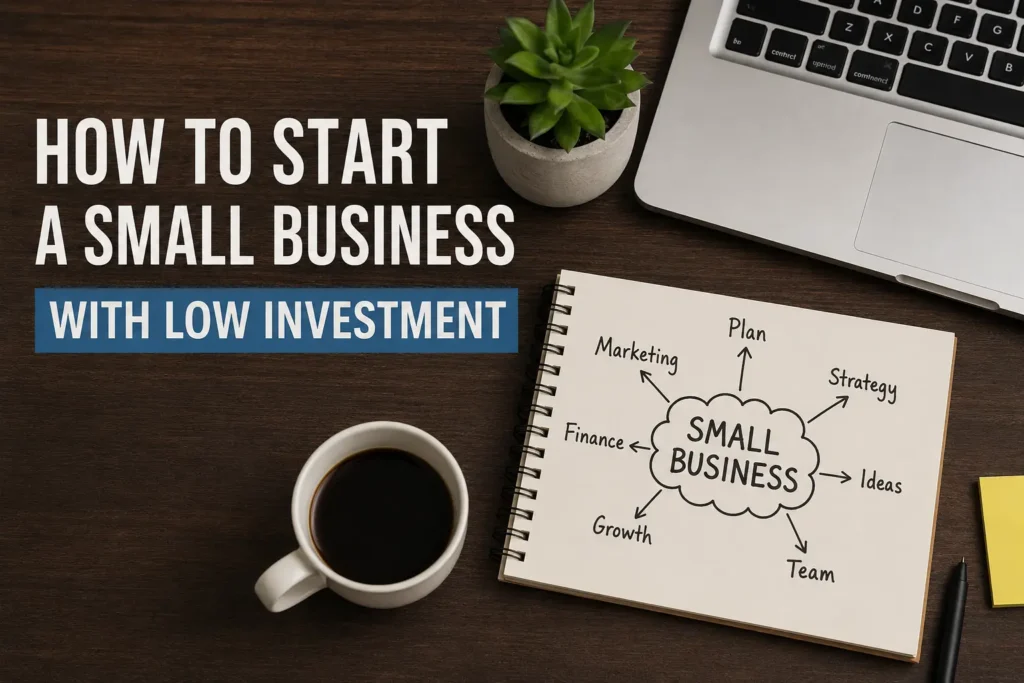

How to Start a Small Business with Low Investment in 2026
Starting a small business no longer requires a huge office, expensive equipment, or massive startup capital. In 2026, digital platforms, AI tools, and remote work opportunities have made entrepreneurship more accessible than ever before. According to data from the U.S. Small Business Administration, nearly 50% of small businesses begin from home, proving that low-cost startups are becoming the preferred model for modern entrepreneurs. Whether you want financial independence, a side income, or a scalable brand, starting with limited investment can reduce risk while helping you build practical business experience over time.
Low-Investment Business Basics
A low-investment business is a startup that requires minimal upfront capital while offering the potential for long-term growth and profitability. These businesses usually focus on digital services, online selling, freelancing, or skill-based work instead of expensive physical infrastructure. The biggest advantage is lower financial risk, making it easier for beginners to enter the market confidently. Modern entrepreneurs often use free or affordable tools for marketing, communication, and operations. Businesses such as content writing, social media management, affiliate marketing, and dropshipping have become popular because they can be launched from home with basic internet access and consistent effort.
Why Small Businesses Are Growing Fast in 2026
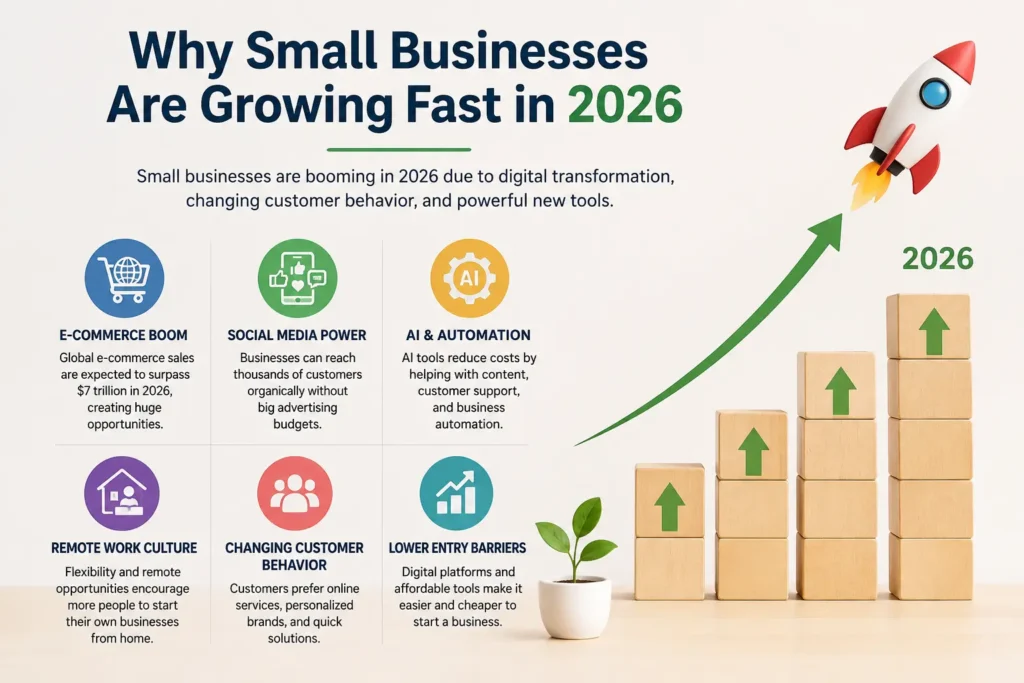
Small businesses are expanding rapidly because consumer behavior has shifted heavily toward online services and personalized brands. Reports from Statista show that global e-commerce sales are expected to surpass $7 trillion by 2026, creating strong opportunities for low-cost startups. Social media platforms now allow businesses to market products without large advertising budgets. In addition, AI-powered tools reduce operational costs by helping with content creation, customer support, and business automation. Many people also prefer flexible work models after the rise of remote jobs, making home-based entrepreneurship an attractive and realistic career option for students, freelancers, and professionals worldwide.
💚 You might also like: Fiverr vs Upwork: Which Is Better in 2026? (Full Comparison Guide)
Choosing a Profitable Business Model
Selecting the right business model is one of the most important decisions for long-term success. A profitable business usually solves a real problem, targets a clear audience, and offers scalable income opportunities. Instead of chasing random trends, successful entrepreneurs focus on industries where demand remains consistent. Service-based businesses often require lower startup costs, while product-based businesses may offer higher scalability over time. Before investing money, business owners should research competitors, market demand, and customer pain points. Using platforms like Google Trends, Reddit discussions, and industry reports can help identify profitable niches with lower competition and better growth potential.
Service vs Product Business
Service-based businesses generate income through skills such as writing, graphic design, consulting, or marketing, while product-based businesses focus on selling physical or digital items. Services are easier to start because they require little inventory and lower operational costs. Product businesses, however, can scale faster once brand recognition and demand increase significantly in competitive markets.
Business Idea Validation
Validating a business idea before investing money reduces unnecessary risk and improves decision-making. Entrepreneurs can test demand through surveys, social media engagement, keyword research, and small-scale launches. According to CB Insights research, lack of market demand is one of the main reasons startups fail. Proper validation helps businesses understand customer expectations before scaling operations.
High-Potential Low-Cost Business Ideas
Many profitable businesses can now be launched with limited investment because digital platforms have lowered entry barriers. Freelancing, affiliate marketing, online tutoring, print-on-demand stores, and social media management are among the fastest-growing low-cost business models today. These businesses require more skill and consistency than capital, making them ideal for beginners. Online marketplaces and freelance platforms also provide instant access to global customers. Entrepreneurs who focus on solving specific problems usually build stronger customer trust and long-term authority. Choosing a business aligned with personal strengths and market demand significantly increases the chances of sustainable success and business growth.
Online Business Models
Online businesses are attractive because they operate with lower overhead costs and reach global audiences quickly. Popular models include affiliate marketing, blogging, digital products, and eCommerce stores. Many online businesses use SEO and social media to generate traffic organically. This approach reduces advertising expenses while building long-term visibility and customer engagement over time.
Home-Based Opportunities
Home-based businesses continue to grow because they provide flexibility and lower operational expenses. Entrepreneurs can manage online stores, freelance services, tutoring, or content creation directly from home. According to Global Workplace Analytics, remote work productivity has increased significantly in recent years, encouraging more people to build businesses without renting offices or commercial spaces.
Scalable Side Hustles
Scalable side hustles allow individuals to start small while gradually increasing income streams over time. Businesses like YouTube automation, blogging, dropshipping, and digital marketing agencies can expand through automation and outsourcing. Many successful entrepreneurs initially treated these businesses as part-time projects before converting them into full-time brands with recurring revenue potential.
Building a Business from Scratch
Starting a business from zero can feel overwhelming, but the process becomes manageable when broken into structured steps. The first phase is understanding your target audience and the problem you want to solve. Successful entrepreneurs don’t start with products; they start with needs.After defining a clear idea, the next step is to focus on planning, budgeting, and putting your strategy into action In 2026, digital tools like AI assistants, website builders, and automation platforms will make it easier to launch with minimal cost. The key is consistency and smart decision-making. Even small actions like creating a basic online presence or testing your idea with a few customers can help you build momentum and reduce early-stage failure risks.
Market Research Strategy
Market research helps you understand demand, competition, and customer behavior before investing money. It includes analyzing competitors, studying trends, and identifying gaps in the market. Tools like Google Trends, keyword planners, and social media insights can show what people are actively searching for. According to Harvard Business Review insights, businesses that invest time in early research are significantly more likely to achieve sustainable growth. The goal is simple: find where demand is high, but supply is not fully meeting customer expectations, then position your business there.
Budget Planning
Budget planning is essential for low-investment startups because it prevents unnecessary spending and financial stress. Instead of investing heavily up front, focus on essential costs like tools, branding, and basic marketing. Many successful startups begin with less than $100–$500 using lean business models. The idea is to test, learn, and reinvest profits gradually. A clear budget also helps you prioritize expenses and avoid distractions. Smart entrepreneurs focus on ROI-driven spending rather than emotional or unnecessary purchases in the early stages of business development.
Brand Setup Process
Building a strong brand is not just about a logo, it’s about creating trust and recognition. A simple but professional identity helps customers remember your business. This includes choosing a business name, creating a logo, setting up social media pages, and building a basic website or landing page. Consistency in visuals and messaging is key. Research from Nielsen shows that consistent branding can increase revenue by up to 23%. Even small businesses benefit from presenting themselves professionally because it builds credibility and improves customer confidence.
Essential Business Tools
Modern businesses rely heavily on digital tools to reduce costs and improve productivity. In 2026, many powerful tools will be available for free or at low cost, making it easier for beginners to compete with established brands. These tools help with website creation, marketing, communication, accounting, and automation. Instead of hiring large teams, entrepreneurs can use software solutions to handle repetitive tasks efficiently. From AI writing assistants to project management platforms, the right tools can save time and money while improving overall business performance. Choosing the right tech stack is a smart way to stay competitive in a fast-changing market.
Cost-Effective Marketing Strategies
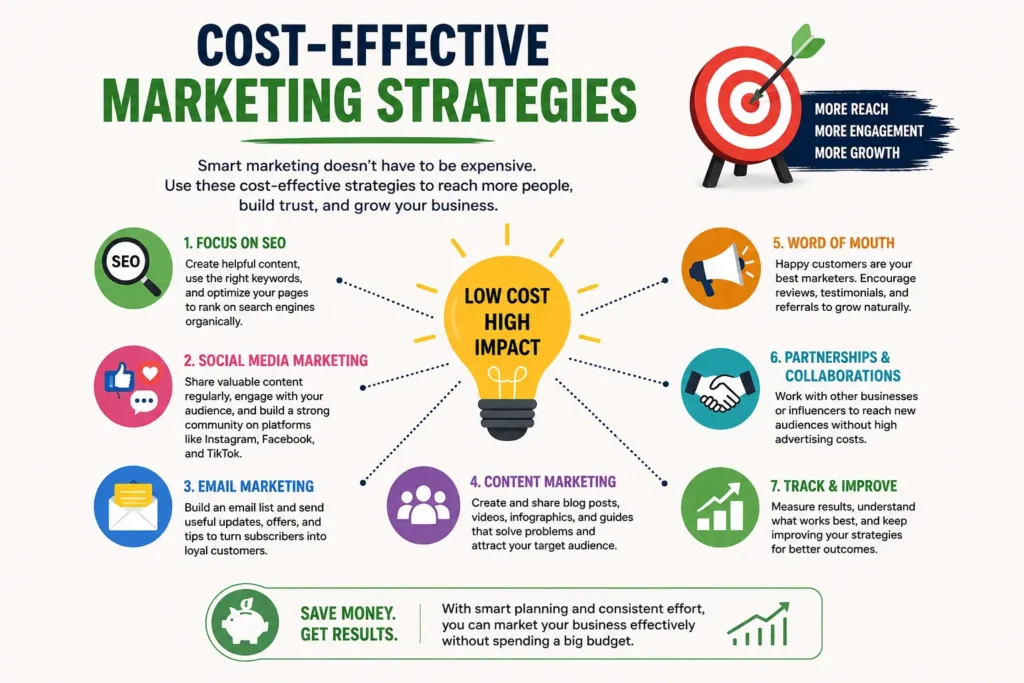
Marketing is one of the most important parts of growing a small business, especially when working with a limited budget. Instead of relying on paid ads, beginners can focus on organic methods like SEO, social media content, and community engagement. Platforms like Instagram, TikTok, and YouTube allow businesses to reach thousands of potential customers without spending money. According to HubSpot research, companies that prioritize content marketing generate 3x more leads than those relying only on paid advertising. The key is consistency, value creation, and understanding your audience’s needs.
💚 You might also like: SEO vs Paid Ads in 2026: Which Strategy Delivers Higher ROI?
Organic Growth Methods
Organic growth focuses on building traffic and customers without paid advertising. This includes SEO blog writing, social media posting, and engaging with online communities. Over time, these methods build trust and authority, which leads to sustainable business growth. While results may take longer compared to paid ads, organic strategies are more cost-effective and long-lasting for small businesses with limited budgets.
Customer Acquisition Tactics
Customer acquisition is about converting potential users into paying customers. For low-investment businesses, this can be done through referrals, social proof, free trials, and strong value-based communication. Simple tactics like offering discounts, showcasing testimonials, and engaging directly with customers can significantly increase conversion rates. Building relationships is often more effective than aggressive selling in the early stages of business growth.
Common Startup Mistakes
Many first-time entrepreneurs fail not because their idea is bad, but because they make avoidable mistakes in execution. One of the biggest errors is overspending in the beginning on branding, tools, or inventory without validating demand. Another common issue is switching ideas too quickly without giving enough time for testing. According to CB Insights startup failure research, poor market fit and lack of customer understanding are leading reasons businesses fail. Beginners should focus on learning, testing, and improving instead of chasing perfection. Consistency, patience, and small iterations often outperform rushed decisions in early-stage businesses.
Online vs Traditional Business
Choosing between online and traditional business depends on your goals, budget, and skill set. Online businesses typically have lower startup costs, allow access to a global audience, and give you the freedom to work from any location Traditional businesses, on the other hand, may require physical location, higher investment, and local customer dependency. However, they can offer stability in certain industries like retail or services. In 2026, digital businesses are growing faster due to e-commerce expansion and remote work culture. Many entrepreneurs now combine both models, creating hybrid businesses that use online platforms to support offline operations and scale revenue efficiently.
Scaling a Small Business Efficiently
Scaling a business means growing revenue without increasing costs at the same rate. For low-investment startups, this is usually achieved through automation, outsourcing, and digital marketing. Once a business starts generating consistent income, profits should be reinvested into growth areas like advertising, product improvement, or hiring freelancers. According to McKinsey insights, businesses that adopt digital tools early tend to scale faster and more efficiently. The goal is not just to grow bigger but to build systems that can operate smoothly without constant manual effort from the owner.
Long-Term Business Potential
A small business started with low investment can grow into a strong, long-term brand if managed properly. Many successful companies today began as simple home-based or side projects. The key is focusing on value creation, customer satisfaction, and continuous improvement. Over time, businesses can expand into new markets, launch new products, or build recurring income streams. Long-term success depends on adaptability, being able to respond to market changes, technology updates, and customer needs. Entrepreneurs who stay flexible and consistent often build sustainable income and financial independence.
Conclusion
Starting a small business with low investment is no longer limited to experts or wealthy individuals. In today’s digital economy, anyone with skills, internet access, and consistency can build a profitable venture. The process requires careful planning, smart budgeting, and continuous learning rather than a large financial investment. From choosing the right idea to scaling efficiently, every step plays a crucial role in long-term success. While challenges exist, the opportunities in 2026 are greater than ever before. With the right mindset and strategy, even a small start can grow into a sustainable and successful business over time.
FAQs
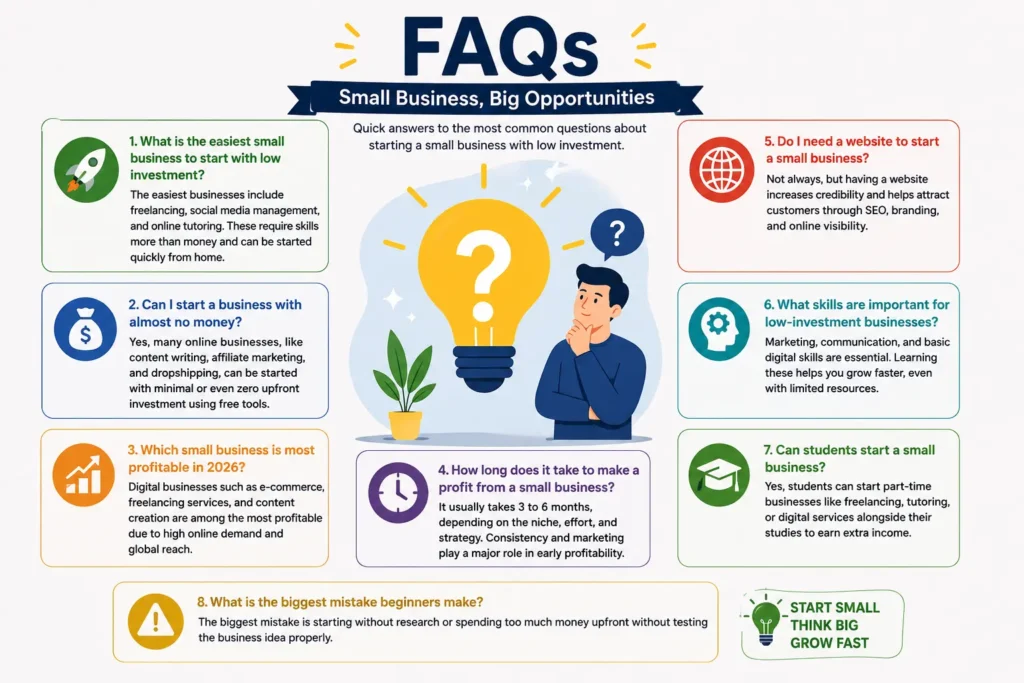
What is the easiest small business to start with low investment?
The easiest businesses include freelancing, social media management, and online tutoring. These require skills more than money and can be started quickly from home.
Can I start a business with almost no money?
Yes, many online businesses, like content writing, affiliate marketing, and dropshipping, can be started with minimal or even zero upfront investment using free tools.
Which small business is most profitable in 2026?
Digital businesses such as e-commerce, freelancing services, and content creation are among the most profitable due to high online demand and global reach.
How long does it take to make a profit from a small business?
It usually takes 3 to 6 months, depending on the niche, effort, and strategy. Consistency and marketing play a major role in early profitability.
Do I need a website to start a small business?
Not always, but having a website increases credibility and helps attract customers through SEO, branding, and online visibility.
What skills are important for low-investment businesses?
Marketing, communication, and basic digital skills are essential. Learning these helps you grow faster, even with limited resources.
Can students start a small business?
Yes, students can start part-time businesses like freelancing, tutoring, or digital services alongside their studies to earn extra income.
What is the biggest mistake beginners make?
The biggest mistake is starting without research or spending too much money upfront without testing the business idea properly.
Read More informative Information At Mypasokey