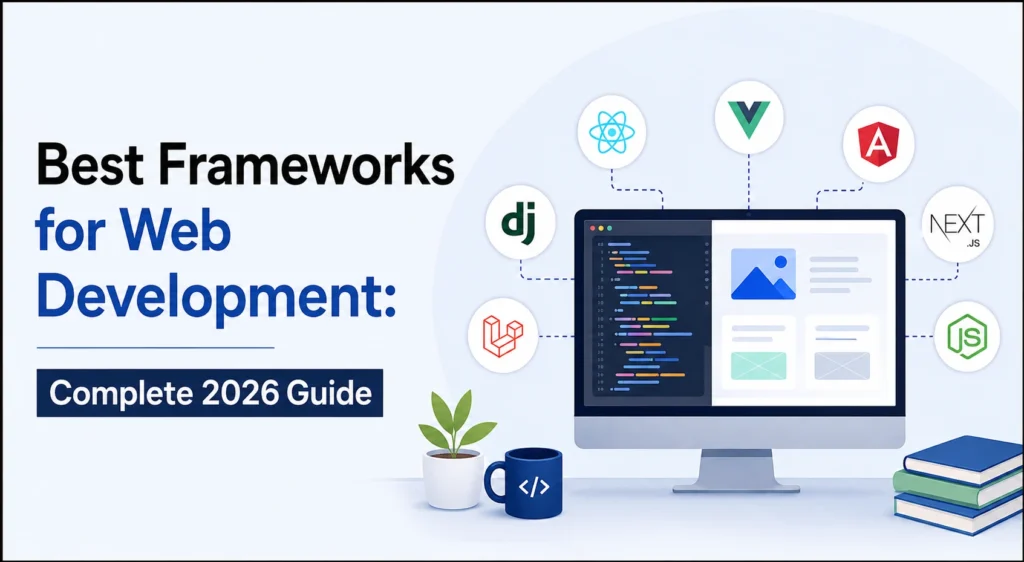

Best Frameworks for Web Development: Complete 2026 Guide
Web development has evolved dramatically over the last decade. Modern websites are no longer simple collections of static pages. Businesses now need fast-loading applications, seamless user experiences, strong security, and the flexibility to scale as demand grows. This is where web development frameworks play a critical role.
A framework provides developers with a structured foundation for building websites and web applications. Instead of writing everything from scratch, developers can use pre-built components, libraries, and tools that speed up development while improving code quality. According to recent industry data, JavaScript powers more than 97% of websites worldwide, making modern frameworks an essential part of today’s development ecosystem.
Whether you are building a simple business website, a SaaS platform, an e-commerce store, or a large enterprise application, choosing the right framework can significantly affect performance, scalability, security, and long-term maintenance. In this guide, we will explore the most important framework concepts, their features, types, and the tools commonly used alongside them before comparing the leading frameworks available today.
What Are Web Development Frameworks?
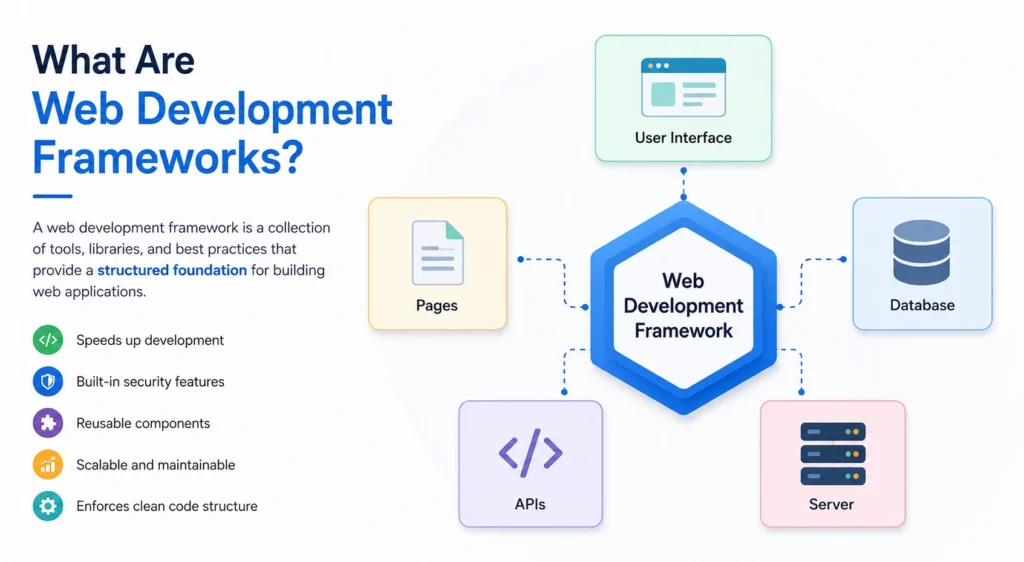
A web development framework is a collection of tools, libraries, architectural patterns, and best practices that simplify the process of building web applications. Rather than creating every function from the ground up, developers can use ready-made solutions for routing, authentication, database interaction, security, and user interface management. Frameworks help teams maintain consistency across projects while reducing development time and minimizing repetitive coding tasks. Modern frameworks also encourage cleaner code structures, making applications easier to maintain, update, and scale. As web applications become increasingly complex, frameworks have become a standard part of professional development workflows.
💚 You might also like: How Small Businesses Compete in 2026
Key Features of Web Development Frameworks
Modern web development frameworks offer much more than code organization. They provide integrated solutions that improve productivity, security, and application performance. The best frameworks allow developers to focus on solving business problems instead of spending time building common features repeatedly. While specific capabilities vary across technologies, most leading frameworks share several core characteristics that make them valuable for projects of all sizes. Understanding these features helps businesses and developers evaluate which framework is best suited for their goals and technical requirements.
Reusable Components and Code Structure
One of the biggest advantages of modern frameworks is code reusability. Developers can create components once and use them throughout an application. This approach reduces development time, improves consistency, and makes future updates easier. Frameworks such as React and Vue are particularly popular because of their component-based architecture.
Security and Performance Features
Most modern frameworks include built-in security protections against common threats such as cross-site scripting, SQL injection, and unauthorized access. They also include performance optimization features like caching, lazy loading, and efficient rendering techniques that help applications load faster and handle larger numbers of users.
Scalability and Maintainability
As businesses grow, their applications must handle increasing traffic and more complex functionality. Frameworks support scalability by providing organized architectures, modular development patterns, and tools that simplify long-term maintenance. This allows development teams to expand projects without creating unnecessary technical debt.
Types of Web Development Frameworks
Web development frameworks can generally be divided into three primary categories based on their role within an application. Each category solves different development challenges and serves unique purposes. Some frameworks focus entirely on creating user interfaces, while others manage server-side logic and databases. There are also frameworks that combine both frontend and backend capabilities into a single development environment. Understanding these categories helps developers choose technologies that align with project objectives, technical requirements, and team expertise.
Frontend Frameworks
Frontend frameworks focus on the visual layer of a website or application. They help developers build interactive interfaces, responsive layouts, and dynamic user experiences. Common examples of these include React, Angular, Vue.js, and Svelte. These frameworks are designed to improve user engagement while simplifying interface development.
Backend Frameworks
Backend frameworks manage server-side functionality, databases, authentication systems, APIs, and business logic. Technologies such as Django, Laravel, Express.js, and Spring Boot allow developers to create secure and scalable web applications with less manual coding.
Full-Stack Frameworks
Full-stack frameworks combine frontend and backend capabilities within a unified development environment. Solutions such as Next.js enable developers to build complete applications more efficiently while maintaining a consistent architecture throughout the project lifecycle.
Most Popular Web Development Frameworks
The popularity of a framework often reflects its community support, ecosystem maturity, documentation quality, and real-world adoption. React remains one of the most widely used frontend technologies, with a market share exceeding 40% among modern frontend solutions. Vue.js, Angular, Next.js, Django, Laravel, and Express.js also continue to dominate professional development environments because of their flexibility and scalability. However, popularity alone should not determine your decision. The ideal framework depends on factors such as project complexity, team expertise, performance requirements, and future business goals.
Web Development Tools Used Alongside Frameworks
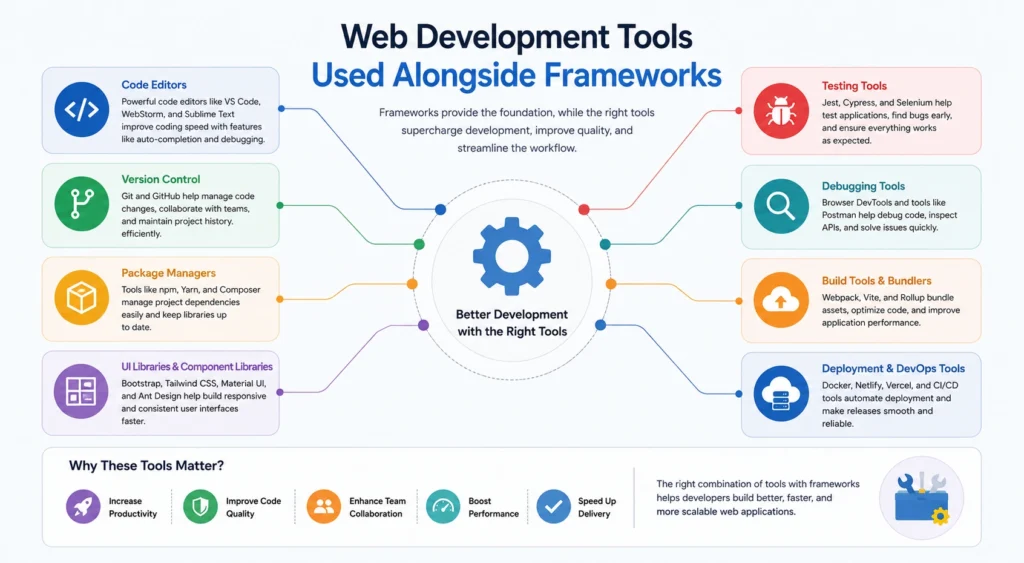
Frameworks rarely operate in isolation. Developers rely on a variety of supporting tools that improve productivity, automate repetitive tasks, and streamline deployment processes. These tools form an essential part of the modern development workflow and often have a significant impact on project efficiency. Understanding the ecosystem around frameworks is just as important as understanding the frameworks themselves because the right combination of tools can dramatically improve development speed and application quality.
Popular Development Tools
Common tools used alongside frameworks include Visual Studio Code for code editing, Git for version control, npm and Yarn for package management, Chrome DevTools for debugging, Sass for advanced CSS development, and testing tools such as Jest and Selenium. Together, these tools create an efficient and professional development environment.
Best Frontend Frameworks
Frontend frameworks are responsible for everything users see and interact with on a website. From navigation menus and dashboards to animations and dynamic content updates, frontend frameworks help developers create responsive and engaging user experiences. The best frontend frameworks offer a balance of performance, scalability, developer productivity, and community support. Today, businesses prioritize frameworks that can deliver fast-loading applications while supporting modern development practices. React, Angular, and Vue.js consistently rank among the most widely adopted frontend technologies because they meet these requirements and power some of the world’s most visited websites. (crossover.com)
React
React is one of the most popular frontend technologies available today. Created by Meta, it follows a component-based structure that enables developers to build reusable UI elements. efficiently. React’s virtual DOM improves rendering performance, making it an excellent choice for large-scale applications, interactive dashboards, and single-page applications.
Angular
Angular is a full-featured frontend framework created by Google. It provides built-in solutions for routing, dependency injection, state management, and testing. Angular is often preferred for enterprise-level applications because it offers a structured development environment that supports long-term scalability and maintainability.
Vue.js
Vue.js combines simplicity with flexibility, making it a favorite among startups and independent developers. Its gentle learning curve allows developers to become productive quickly, while its powerful ecosystem supports the development of complex applications. Vue is widely praised for its clean documentation and developer-friendly design.
Best Backend Frameworks
Backend frameworks serve as the foundation of web applications by handling databases, authentication systems, APIs, server-side logic, and data processing. The right backend framework can significantly improve security, scalability, and development efficiency. Modern businesses increasingly rely on backend frameworks that simplify complex operations while supporting cloud-native architectures and high-performance applications. Django, Laravel, and Express.js continue to dominate the backend landscape due to their mature ecosystems, extensive documentation, and ability to support projects ranging from small business websites to enterprise-grade platforms. (nexus.pk)
Django
Django is a high-level Python framework known for its security, scalability, and rapid development capabilities. It follows the “batteries included” philosophy by providing built-in features for authentication, administration, and database management. Major platforms have adopted Django because of its reliability and efficient development workflow.
Laravel
Laravel is the most widely used PHP framework and is known for its elegant syntax and extensive feature set. It includes built-in tools for authentication, caching, routing, and database management. Laravel simplifies complex development tasks and helps developers create robust applications with minimal effort.
Express.js
Express.js is a minimal backend framework built on top of Node.js. Its minimalist design gives developers complete control over application architecture while maintaining high performance. Express is commonly used for APIs, real-time applications, and scalable web platforms that require fast development cycles.
Best Full-Stack Frameworks
Full-stack frameworks enable developers to manage frontend and backend functionality within a unified architecture. This approach reduces complexity, improves development efficiency, and creates a more consistent user experience. As modern applications become increasingly interconnected, full-stack frameworks have gained popularity among development teams seeking streamlined workflows. Among the available options, Next.js has emerged as a leading solution because it combines frontend rendering, backend functionality, SEO optimization, and performance enhancements into a single framework. Its flexibility makes it suitable for startups, enterprises, and content-driven websites alike. (crossover.com)
Next.js
Next.js extends React by introducing server-side rendering, static site generation, API routes, and advanced performance optimizations. These features improve page speed, search engine visibility, and user experience. As a result, many businesses choose Next.js for e-commerce platforms, SaaS applications, and content-rich websites.
Framework Comparison Table
Choosing a framework becomes easier when key characteristics are compared side by side. Factors such as performance, scalability, learning curve, community support, and SEO capabilities all influence the suitability of a framework for specific projects. While no single framework is perfect for every use case, understanding their strengths and limitations helps developers make informed decisions. The following comparison highlights some of the most important considerations when evaluating popular web development frameworks for modern applications.
| Framework | Type | Learning Curve | Performance | Scalability | SEO Support |
| React | Frontend | Moderate | High | High | Good |
| Angular | Frontend | Steep | High | Excellent | Good |
| Vue.js | Frontend | Easy | High | Good | Good |
| Django | Backend | Moderate | High | Excellent | N/A |
| Laravel | Backend | Easy | Good | High | N/A |
| Express.js | Backend | Easy | High | High | N/A |
| Next.js | Full-Stack | Moderate | Excellent | Excellent | Excellent |
Pros and Cons of Popular Frameworks
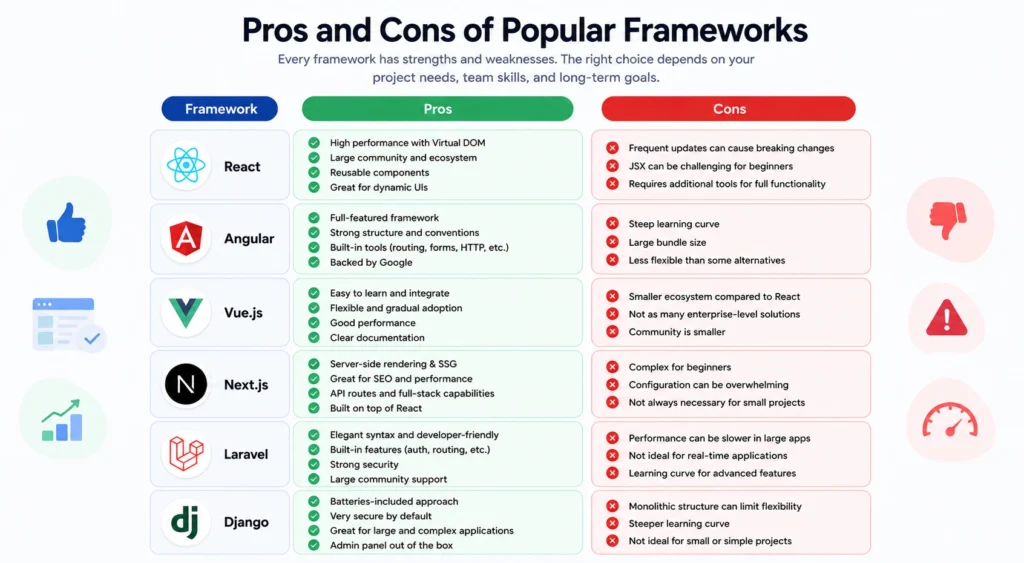
Every framework offers unique advantages and trade-offs. While some prioritize simplicity and developer experience, others focus on scalability and enterprise-level capabilities. Understanding these strengths and weaknesses helps businesses avoid costly technology decisions and select a framework that aligns with their technical goals. Rather than choosing based solely on popularity, organizations should evaluate frameworks based on project requirements, available expertise, long-term maintenance needs, and expected growth. A balanced assessment often leads to better outcomes than simply following industry trends.
💚 You might also like: Top 5 CRM Software Solutions for 2026
| Framework | Pros | Cons |
| React | Large ecosystem, reusable components, strong community | Requires additional libraries for complete solutions |
| Angular | Enterprise-ready, comprehensive feature set | Steeper learning curve |
| Vue.js | Easy to learn, flexible architecture | Smaller ecosystem compared to React |
| Django | Excellent security, rapid development | Less flexibility than minimalist frameworks |
| Laravel | Elegant syntax, developer-friendly | Performance limitations in very large systems |
| Express.js | Lightweight and fast | Requires additional packages for advanced features |
| Next.js | Excellent SEO, strong performance | Can become complex in large applications |
Which Framework Is Best for Different Projects?
The best framework depends entirely on project goals rather than industry popularity. Startups often prioritize rapid development and flexibility, making Vue.js, Laravel, and Next.js attractive choices. Enterprise organizations frequently choose Angular, Django, or Spring-based solutions because of their scalability and structured architecture. E-commerce businesses typically favor Next.js for SEO benefits and fast page loading speeds. API-driven applications often rely on Express.js because of its lightweight nature and seamless integration with Node.js ecosystems. Evaluating project requirements, team expertise, budget, and future growth plans remains the most effective way to select a framework that delivers long-term success.
Common Framework Selection Mistakes
Many developers and businesses choose frameworks based on popularity rather than project requirements, which often leads to technical issues later. A common mistake is ignoring scalability needs in early planning, resulting in performance bottlenecks as traffic grows. Another issue is selecting frameworks with steep learning curves without considering team expertise. Some teams also underestimate ecosystem support, which can slow down development when external libraries or plugins are required but not available.
Future Trends in Web Development Frameworks
The future of web development frameworks is strongly influenced by performance optimization, server-side rendering, and AI-assisted development. Modern frameworks are increasingly focusing on faster build times, better SEO performance, and improved developer experience. Full-stack solutions like Next.js are becoming more popular due to their ability to combine frontend and backend capabilities in one ecosystem. Additionally, the rise of edge computing and serverless architecture is shaping how frameworks are designed and deployed.
Frequently Asked Questions
What is currently the most widely used web development framework?
React is currently one of the most popular frontend frameworks due to its flexibility, large ecosystem, and strong community support. It is widely used in both startups and enterprise-level applications across the world.
Which framework is best for beginners?
Vue.js and Laravel are often recommended for beginners because they offer simple syntax, clear documentation, and a gentle learning curve compared to more complex frameworks like Angular or Spring Boot.
Which framework is best for SEO?
Next.js is one of the best frameworks for SEO because it supports server-side rendering and static site generation, which help search engines index content more effectively and improve page load speed.
Is one framework enough for full web development?
In some cases, yes. Full-stack frameworks like Next.js can handle both frontend and backend development. However, many complex applications still use separate frontend and backend frameworks for better flexibility and control.
What frameworks do large companies use?
Large companies typically use a combination of React, Angular, Django, Spring Boot, and Node.js-based frameworks depending on the specific product requirements and scalability needs.
Conclusion
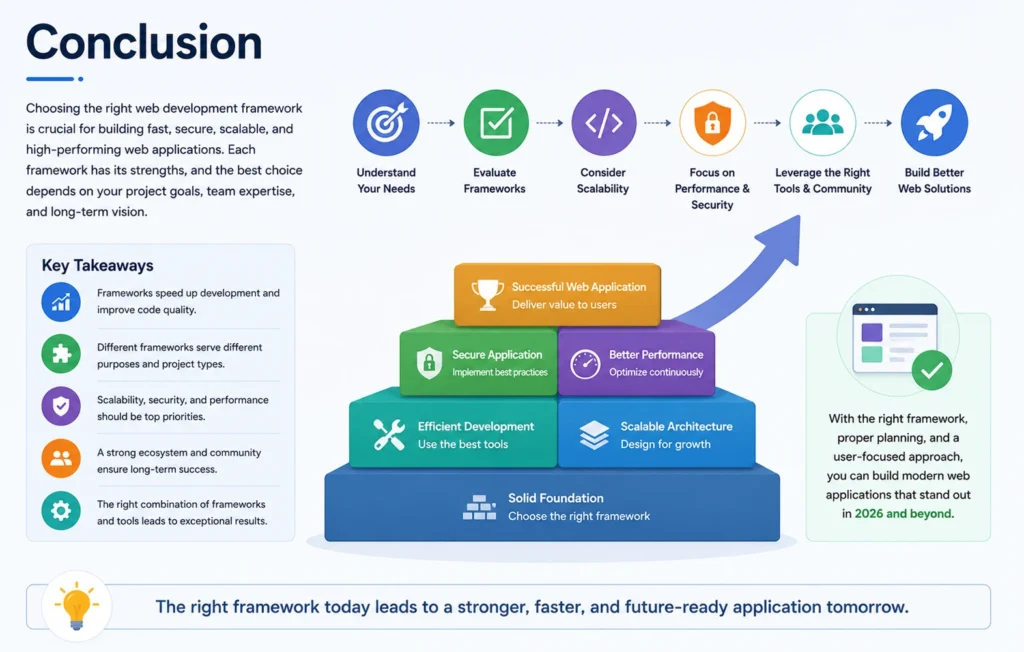
Choosing the best framework for web development depends on your project goals, team expertise, and long-term scalability needs. There is no universal “best” framework, but there is always a best fit for a specific use case. Frontend frameworks like React, Angular, and Vue.js excel in user interface development, while backend frameworks like Django, Laravel, and Express.js handle server-side logic efficiently. Full-stack frameworks such as Next.js bridge both worlds and are becoming increasingly popular.
The key to success is not just selecting a trending technology but choosing a framework that aligns with performance needs, business objectives, and future growth. As web technologies continue to evolve, frameworks will become even more optimized, developer-friendly, and AI-integrated, making modern web development faster and more efficient than ever before.
Read More Informative Information At Mypasokey