
What Is Dropshipping and How Does It Work?
Dropshipping is one of the most accessible ways to start an online business because it eliminates the need to purchase and store inventory upfront. Instead of keeping products in a warehouse, a store owner partners with a supplier who handles storage, packaging, and shipping. When a customer places an order, the supplier fulfills it on behalf of the seller. This business model allows entrepreneurs to focus on marketing, customer service, and business growth. Because of its low startup costs and flexibility, dropshipping continues to attract beginners looking to enter the rapidly expanding e-commerce industry.
Simple Explanation of the Dropshipping Business Model
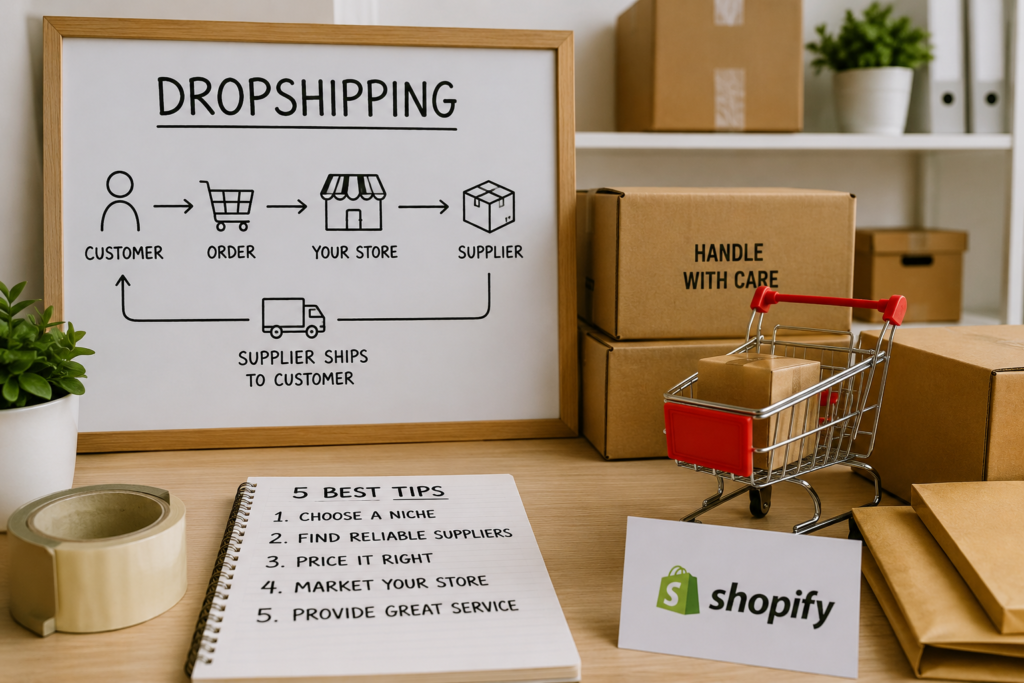
The dropshipping business model works as a middleman system between customers and suppliers. A store owner lists products for sale on an online store without physically stocking them. When a customer makes a purchase, the order details are forwarded to a supplier who ships the product directly to the buyer. The seller earns a profit from the difference between the supplier’s price and the retail price charged to customers.
How Orders Are Processed in Dropshipping
The order fulfillment process in dropshipping is straightforward. A customer places an order through your online store and completes payment. The order information is then automatically sent to your supplier through an integrated platform or application. Tracking details are provided, allowing both the store owner and customer to monitor delivery progress from shipment to arrival.
Pros and Cons of Starting a Dropshipping Store
Dropshipping offers several advantages, including low startup costs, location independence, and reduced operational complexity. However, there are challenges as well. Profit margins may be lower than traditional retail, supplier issues can affect customer satisfaction, and competition can be intense in popular niches. Understanding both sides helps business owners make realistic decisions and develop sustainable growth strategies.
Why Dropshipping Remains a Profitable Business in 2026
Despite increased competition, dropshipping remains profitable because online shopping continues to expand worldwide. According to industry reports, global e-commerce sales are projected to exceed trillions of dollars annually, creating ongoing opportunities for new sellers. Consumers increasingly prefer the convenience of online purchasing, while modern tools make store management easier than ever. Improved supplier networks, automation software, and targeted digital advertising allow entrepreneurs to reach customers efficiently. Success now depends less on simply launching a store and more on selecting the right niche, offering value, and implementing effective marketing strategies.
Growing E-commerce Market Opportunities
The global e-commerce industry continues to experience significant growth, creating favorable conditions for dropshipping businesses. More consumers are shopping online than ever before, driven by convenience, competitive pricing, and broader product selection. Emerging markets are also contributing to online retail expansion. This growth gives entrepreneurs access to larger audiences and increases the likelihood of finding profitable product categories that meet evolving consumer demands.
Low Startup Costs Compared to Traditional Retail
One reason dropshipping remains attractive is its affordability. Traditional retail businesses often require substantial investments in inventory, storage facilities, packaging materials, and logistics. Dropshipping removes many of these expenses by allowing suppliers to handle fulfillment. Entrepreneurs can launch a professional online store with minimal capital, making it easier to test products, refine strategies, and scale operations without taking significant financial risks.
Common Myths About Dropshipping
Many people believe dropshipping is a quick way to generate passive income, but that is far from reality. Successful stores require consistent effort in marketing, customer service, and product research. Another common myth is that the market is oversaturated. While some niches are highly competitive, countless opportunities still exist for businesses that target specific audiences and provide a better customer experience than competitors.
💚 You might also like: Best Frameworks for Web Development: Complete 2026 Guide
Tip #1: Choose a Profitable and Low-Competition Niche
Choosing a profitable niche is one of the most crucial steps in building a successful dropshipping business. A well-chosen niche helps attract a targeted audience, reduces advertising waste, and improves conversion rates. Rather than competing in overcrowded markets, successful entrepreneurs focus on solving specific customer problems or serving passionate communities. The ideal niche combines steady demand, reasonable competition, and products that offer healthy profit margins. Thorough niche research can significantly increase the chances of building a sustainable business while reducing the risks associated with entering highly saturated markets.
Why Niche Selection Matters
Niche selection influences nearly every aspect of a dropshipping business, including marketing costs, competition levels, and customer loyalty. A focused niche allows you to create targeted advertising campaigns and build authority within a specific market segment. Instead of appealing to everyone, successful stores address the needs of a particular audience, making it easier to attract qualified buyers and increase long-term profitability.
Characteristics of a Winning Dropshipping Niche
A strong dropshipping niche typically solves a problem, serves a passionate audience, or fulfills a recurring need. Products should have sufficient demand while avoiding excessive competition. Healthy profit margins, year-round interest, and opportunities for repeat purchases are also valuable indicators. Additionally, niches with unique products often perform better because they reduce direct price competition and encourage customers to purchase based on value.
Best Niche Research Methods
Effective niche research combines multiple data sources. Entrepreneurs can analyze search trends, study social media engagement, explore online marketplaces, and review competitor stores. Tools that track search volume and consumer behavior provide valuable insights into demand patterns. Reading customer reviews also helps identify common frustrations and unmet needs. Combining these methods increases the likelihood of discovering profitable opportunities before competitors enter the market.
Mistakes to Avoid When Choosing a Niche
Many beginners choose niches solely based on personal interests without evaluating market demand. Others enter highly competitive categories where advertising costs are difficult to sustain. Ignoring customer pain points, failing to analyze competitors, and selecting products with weak profit margins can also limit growth. Successful niche selection requires balancing passion with data-driven research and realistic market opportunities.
Tip #2: Find Reliable Dropshipping Suppliers
The success of a dropshipping business depends heavily on supplier performance. Even the best marketing strategy cannot compensate for delayed shipments, poor product quality, or inconsistent customer service. Reliable suppliers ensure orders are processed accurately and delivered on time, helping maintain positive customer experiences. Building strong supplier relationships also improves communication and problem resolution. Before committing to a partnership, business owners should thoroughly evaluate supplier reliability, fulfillment capabilities, and product standards. Taking the time to choose trustworthy suppliers reduces operational risks and supports long-term business growth.
Importance of Supplier Quality
Supplier quality directly affects customer satisfaction and brand reputation. High-quality suppliers consistently deliver products that meet expectations while maintaining reliable shipping times. Positive customer experiences often lead to repeat purchases and favorable reviews. In contrast, poor-quality suppliers can create refund requests, chargebacks, and negative feedback. Selecting dependable partners is therefore essential for building trust and sustaining long-term business success.
How to Evaluate a Supplier
Evaluating a supplier requires careful research and testing. Business owners should review customer ratings, communication responsiveness, fulfillment speed, and product consistency. Ordering sample products is one of the most effective ways to assess quality firsthand. Comparing multiple suppliers also helps identify the most reliable option. Strong suppliers demonstrate transparency, professionalism, and the ability to handle orders efficiently even during busy sales periods.
Red Flags to Watch For
Several warning signs may indicate an unreliable supplier. Poor communication, unclear pricing, inconsistent product descriptions, and unusually long shipping times should raise concerns. Suppliers with numerous negative reviews or limited contact information may also present risks. Additionally, reluctance to provide product samples can signal quality issues. Identifying these red flags early helps prevent customer complaints and operational disruptions.
Popular Dropshipping Supplier Platforms
Many entrepreneurs use established supplier platforms to simplify sourcing and fulfillment. Popular options include AliExpress, CJdropshipping, Spocket, Zendrop, and SaleHoo. These platforms connect store owners with large supplier networks and provide tools for inventory management and order automation. Each platform offers unique advantages, making it important to compare pricing, shipping capabilities, product selection, and integration features before making a decision.
💚 You might also like: Best Courses for Freelancers in 2026 | Top Skills to Learn
Tip #3: Build a Professional and Trustworthy Online Store
Your online store is often the first interaction customers have with your brand, making trust and professionalism essential for success. A well-designed store not only improves user experience but also increases conversions and customer retention. Studies consistently show that consumers form opinions about a website within seconds of visiting it. Factors such as site speed, design quality, navigation, and trust signals can influence purchasing decisions. A professional store should make it easy for visitors to browse products, find information, and complete purchases while feeling confident that their personal and payment information is secure.
Choosing the Right E-commerce Platform
Selecting the right e-commerce platform lays the foundation for your dropshipping business. Popular platforms such as Shopify, WooCommerce, and BigCommerce offer different features, pricing structures, and customization options. Beginners often prefer Shopify due to its ease of use and extensive app ecosystem. The ideal platform should support automation, mobile responsiveness, secure payments, and scalability to accommodate future business growth.
Essential Store Pages Every Website Needs
Every professional online store should include key pages that build trust and improve transparency. These include an About Us page, Contact page, Privacy Policy, Refund Policy, Shipping Information, and Terms of Service. Customers often review these pages before making purchases. Clear and accessible information demonstrates credibility and helps reduce uncertainty, ultimately increasing the likelihood of conversions and repeat business.
Creating High-Converting Product Pages
Product pages play a crucial role in driving sales and influencing customer decisions. Effective pages feature compelling product descriptions, high-quality images, clear pricing, and persuasive calls to action. Highlighting product benefits instead of simply listing features can improve engagement. Including customer reviews, FAQs, and shipping details further strengthens trust and helps potential buyers make informed purchasing decisions with confidence.
Mobile Optimization and User Experience Tips
Mobile optimization is no longer optional because a significant portion of online shopping now occurs on smartphones and tablets. A mobile-friendly store should load quickly, display properly on smaller screens, and offer simple navigation. Streamlining the checkout process can reduce cart abandonment rates. Improving user experience through intuitive design and fast performance increases customer satisfaction and contributes to higher conversion rates.
Tip #4: Focus on High-Demand Products With Strong Margins
Product selection can determine whether a dropshipping business succeeds or struggles. Selling products with strong demand and healthy profit margins provides greater opportunities for sustainable growth. While trendy items may generate short-term sales, long-term success often comes from identifying products that consistently solve customer problems. Market research and data analysis help uncover profitable opportunities while minimizing risks. Business owners should evaluate demand, competition, shipping costs, and customer interest before adding products to their stores. A strategic product selection process improves profitability and helps create a more resilient business model.
How to Identify Trending Products
Finding trending products requires monitoring consumer behavior and emerging market trends. Entrepreneurs often use tools like Google Trends, TikTok trends, social media platforms, and online marketplaces to identify growing demand. Watching influencer recommendations and customer discussions can also reveal opportunities. Products experiencing steady growth rather than temporary spikes often provide more sustainable revenue potential and lower business risk.
Product Validation Techniques
Before investing advertising resources into a product, it is important to validate demand. Product validation can include analyzing search volume, monitoring competitor sales, testing small advertising campaigns, and reviewing customer feedback. Many successful entrepreneurs launch limited tests before scaling. This approach reduces financial risk and provides valuable insights into customer interest, conversion rates, and overall market potential.
Pricing Strategies for Better Profitability
Effective pricing balances profitability with customer expectations. Simply choosing the lowest price is rarely the best strategy because it can reduce margins and devalue products. Instead, business owners should consider perceived value, competitor pricing, shipping costs, and advertising expenses. Offering bundles, discounts, and upsells can increase average order value while maintaining healthy profit margins across product categories.
Avoiding Oversaturated Products
Oversaturated products often attract intense competition, making customer acquisition more expensive. When numerous sellers offer nearly identical items, businesses may struggle to differentiate themselves. Instead of entering crowded markets, entrepreneurs should seek products with unique features, specialized audiences, or untapped demand. Focusing on differentiation allows stores to compete based on value, branding, and customer experience rather than price alone.
Tip #5: Create an Effective Marketing Strategy
Even the best products will struggle to generate sales without effective marketing. A comprehensive marketing strategy. Successful dropshipping businesses use a combination of organic and paid marketing channels to reach their target audience. Rather than relying on a single source of traffic, they diversify their efforts across search engines, social media, email marketing, and content creation. Consistent marketing not only increases visibility but also helps establish credibility and long-term customer relationships in an increasingly competitive online marketplace.
Leveraging Social Media Marketing
Social media platforms provide powerful opportunities to connect with potential customers and promote products. Platforms such as Instagram, TikTok, Facebook, and Pinterest allow businesses to showcase products through engaging visual content. Consistent posting, audience interaction, and trend participation can improve visibility. Social media marketing also enables brands to build communities and generate customer trust through authentic engagement.
Using SEO for Long-Term Traffic
Search engine optimization remains one of the most cost-effective marketing strategies for e-commerce businesses. By optimizing product pages, blog content, and website structure, store owners can attract organic traffic from search engines. SEO requires patience, but the long-term benefits can be substantial. High search rankings generate consistent traffic, reduce advertising dependence, and improve overall brand visibility online.
Paid Advertising Basics for Beginners
Paid advertising allows businesses to reach targeted audiences quickly and generate immediate traffic. Platforms like Google Ads and Meta Ads offer advanced targeting options based on demographics, interests, and behaviors. Beginners should start with small budgets, test multiple creatives, and monitor performance metrics closely. Continuous optimization helps improve return on investment and ensures advertising resources are used effectively.
Influencer and Content Marketing Opportunities
Influencer and content marketing can significantly expand brand reach and credibility. Influencers provide access to established audiences that trust their recommendations. Meanwhile, valuable content such as blog posts, videos, and tutorials helps educate potential customers and improve search visibility. Combining influencer partnerships with quality content creates multiple touchpoints that guide customers through the purchasing journey.
💚 You might also like: WordPress vs Custom Coding: Which Is Better for Your Website?
Common Dropshipping Mistakes Beginners Should Avoid
Many new dropshipping entrepreneurs focus heavily on launching their stores but overlook common mistakes that can limit growth. Avoiding these pitfalls can save time, money, and frustration while improving the chances of long-term success. Most failures occur not because the business model is flawed but because of poor planning, inadequate research, or unrealistic expectations. By understanding the mistakes made by other beginners, entrepreneurs can develop stronger strategies, improve customer satisfaction, and build a more competitive business. Learning from common errors often accelerates progress and helps create a more sustainable foundation.
Choosing Products Without Research
One of the most common mistakes is selecting products based solely on assumptions rather than market data. Without proper research, entrepreneurs may choose items with low demand, weak margins, or excessive competition. Conducting thorough product analysis helps identify profitable opportunities and reduces the risk of investing in products that fail to generate meaningful sales or customer interest.
Ignoring Customer Service
Customer service plays a vital role in building trust and encouraging repeat purchases. reputation. Providing timely support, transparent policies, and helpful solutions enhances customer satisfaction. Positive customer experiences often lead to better reviews, referrals, and long-term loyalty, all of which contribute to sustainable business growth.
Poor Website Design and Branding
A poorly designed website can discourage visitors from making purchases regardless of product quality. Cluttered layouts, inconsistent branding, and confusing navigation create negative impressions and reduce trust. Strong branding helps differentiate a business from competitors while creating a memorable customer experience. Investing in professional design and cohesive branding can significantly improve conversion rates and customer perception.
Depending on a Single Traffic Source
Relying on a single traffic source creates unnecessary risk for any online business. Algorithm updates, advertising policy changes, or platform disruptions can dramatically impact sales. Successful dropshipping businesses diversify traffic through SEO, social media, email marketing, influencer partnerships, and paid advertising. Multiple traffic sources provide greater stability and reduce dependence on any one channel for customer acquisition.
Essential Tools to Help You Start Dropshipping
Running a successful dropshipping business becomes significantly easier when you use the right tools. Modern e-commerce software helps automate repetitive tasks, improve efficiency, and support business growth. From product research and inventory management to marketing and customer support, specialized tools can save valuable time while improving decision-making. According to industry studies, businesses that leverage automation and analytics often achieve higher productivity and better customer experiences. Choosing the right technology stack allows entrepreneurs to focus on strategy and growth rather than manual processes. Investing in reliable tools early can create a stronger foundation for long-term success.
Product Research Tools
Product research tools help entrepreneurs identify trending products, analyze market demand, and evaluate competition. Platforms such as Minea, Sell The Trend, and Google Trends provide valuable insights into consumer behavior and purchasing patterns. These tools reduce guesswork by offering real-time data that helps business owners discover profitable opportunities before markets become saturated, improving the chances of long-term success.
Store Management Tools
Store management tools streamline daily operations by automating inventory tracking, order processing, and supplier communication. Popular solutions such as Shopify, AutoDS, and DSers simplify fulfillment workflows and reduce manual errors. Automation allows entrepreneurs to manage larger product catalogs efficiently while focusing on growth initiatives. Effective store management tools improve operational efficiency and enhance the overall customer experience.
Marketing and Analytics Tools
Marketing and analytics tools help businesses understand customer behavior and optimize campaigns for better performance. Platforms such as Google Analytics, Google Ads, Meta Ads Manager, and Hotjar provide valuable data about traffic sources, conversions, and user engagement. Analyzing these metrics enables entrepreneurs to make informed decisions, improve marketing effectiveness, and maximize return on investment across multiple channels.
Customer Support Solutions
Providing excellent customer support is essential for building trust and encouraging repeat purchases. Customer service platforms such as Zendesk, Tidio, and Gorgias help businesses manage inquiries efficiently through live chat, email, and automated responses. Fast and professional support improves customer satisfaction while reducing negative reviews. Strong customer relationships often contribute directly to increased retention and long-term profitability.
Final Thoughts: How to Build a Successful Dropshipping Business
Building a successful dropshipping business requires more than simply launching a website and listing products. Sustainable success comes from selecting the right niche, partnering with reliable suppliers, creating a professional store, choosing profitable products, and implementing effective marketing strategies. While dropshipping offers a low barrier to entry, it still demands consistent effort, research, and adaptation. Entrepreneurs who focus on delivering value and creating positive customer experiences often outperform competitors. By following proven best practices and continuously improving operations, beginners can transform a simple online store into a profitable and scalable e-commerce business.
Key Takeaways From the 5 Best Tips
The most important lessons include choosing a profitable niche, working with trustworthy suppliers, building a professional website, selecting high-demand products, and creating a strong marketing strategy. These five areas form the foundation of a successful dropshipping business. Focusing on each element systematically helps reduce common risks while improving customer satisfaction, profitability, and long-term business sustainability.
Step-by-Step Action Plan for Beginners
Beginners should start by researching potential niches and validating product demand. The next step involves selecting reliable suppliers and building a professional online store. Once the store is ready, entrepreneurs should optimize product pages and launch targeted marketing campaigns. Monitoring performance metrics and refining strategies based on data helps improve results while supporting steady business growth.
Next Steps to Launch Your First Store
Launching a dropshipping store begins with creating a clear business plan and identifying a target audience. After selecting products and suppliers, entrepreneurs should set up their website, configure payment methods, and establish customer support channels. Consistent marketing and ongoing optimization are essential for attracting customers and generating sales.
Frequently Asked Questions
Is Dropshipping Still Profitable in 2026?
Yes, dropshipping remains profitable in 2026, but success depends on strategy rather than luck. The continued growth of global e-commerce creates opportunities for entrepreneurs who choose profitable niches and market effectively. While competition has increased, businesses that focus on branding, customer experience, and targeted marketing can still achieve strong results and build sustainable revenue streams.
How Much Money Do I Need to Start Dropshipping?
The amount required varies depending on business goals and marketing plans. Many beginners start with a few hundred dollars to cover website subscriptions, domain registration, and initial advertising campaigns. Although dropshipping eliminates inventory costs, entrepreneurs should maintain a budget for testing products and marketing efforts. Proper financial planning improves the likelihood of achieving consistent growth.
How Long Does It Take to Make Sales?
The timeline for generating sales differs for every business. Some entrepreneurs achieve their first sales within days of launching, while others may require several weeks of testing and optimization. Factors such as niche selection, product demand, advertising effectiveness, and website quality influence results. Consistent effort and data-driven improvements typically accelerate progress and improve conversion rates.
Which Platform Is Best for Beginners?
Shopify is widely considered one of the best platforms for beginners because of its user-friendly interface, extensive app marketplace, and strong dropshipping integrations. The best platform is ultimately one that aligns with your budget, goals, and desired level of customization.
Can I Start Dropshipping Without Inventory?
Yes, one of the main advantages of dropshipping is that inventory is not required. This significantly reduces upfront costs and financial risk compared to traditional retail models. Entrepreneurs can focus on marketing, customer service, and business growth without investing heavily in inventory management.
✨ Your daily tech edge starts here. Follow MyPasokey.