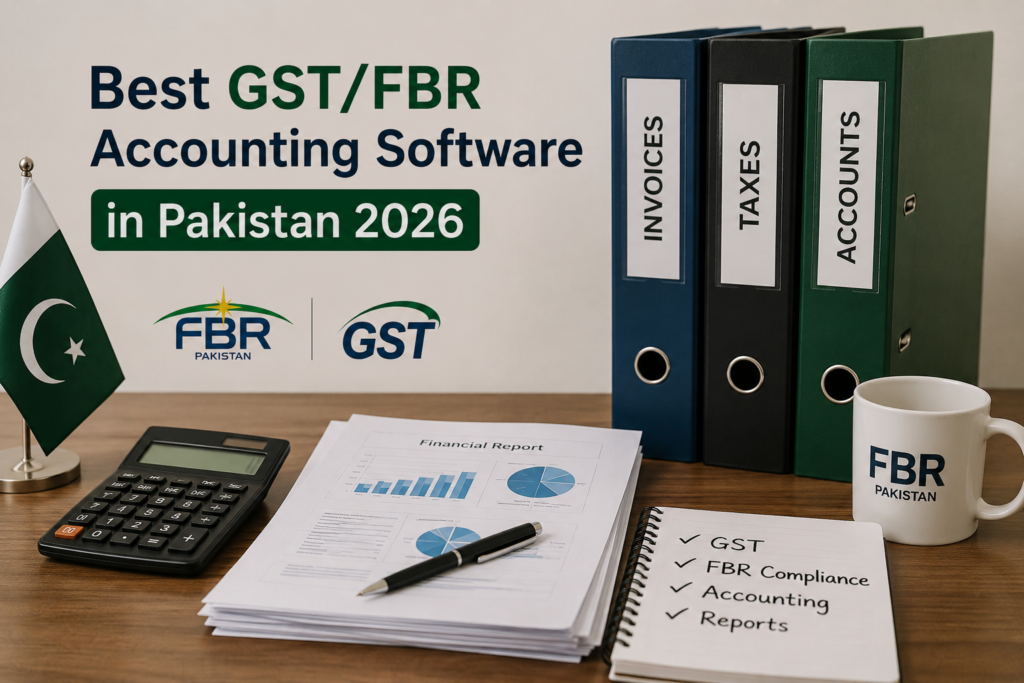

What Is GST/FBR Accounting Software and Why Does It Matter in 2026?
GST/FBR accounting software is designed to help businesses manage bookkeeping, tax calculations, invoicing, inventory, and financial reporting while staying compliant with Pakistan’s tax regulations. Unlike traditional accounting systems that require manual tax handling, FBR-compliant software can automate GST calculations and support digital invoicing requirements. This has become increasingly important as Pakistan continues expanding tax digitization initiatives. For SMEs, retailers, wholesalers, and service providers, using compliant software reduces errors, saves administrative time, and helps maintain accurate records for audits, tax filing, and day-to-day financial management.
Key Features to Look for in the Best GST/FBR Accounting Software
Not all accounting solutions offer the same level of compliance and automation. The best GST/FBR software should include digital invoicing integration, automated GST calculations, and real-time tax reporting capabilities. Businesses should also look for inventory management, financial dashboards, and customizable reporting tools that simplify decision-making. Cloud accessibility is another valuable feature, allowing teams to work from multiple locations securely. Integration with POS systems and ERP platforms can further improve operational efficiency. Choosing software with these capabilities helps businesses streamline accounting processes while meeting evolving FBR compliance requirements in 2026.
Top 10 Best Accounting Software for GST/FBR Compliance in 2026
Several accounting platforms now offer features specifically designed for Pakistani tax compliance. The leading options combine GST management, invoicing, inventory tracking, and financial reporting in a single system. Some solutions are ideal for startups and small businesses, while others provide advanced ERP-level functionality for larger organizations. Comparing features, pricing, scalability, and FBR integration capabilities is essential before making a decision. The following software solutions stand out in 2026 because of their reliability, ease of use, compliance support, and ability to simplify financial management for businesses across multiple industries.
Detailed Review of the Best GST/FBR Accounting Software
PakERP
PakERP is a comprehensive accounting and business management solution built for Pakistani enterprises. It offers GST compliance tools, inventory management, payroll processing, and detailed financial reporting. Businesses that require advanced customization and multi-department management often choose PakERP because it combines accounting functions with broader operational controls.
QuickBooks Online
QuickBooks Online remains one of the most recognized accounting platforms globally. Its cloud-based infrastructure, automated bookkeeping tools, and customizable reports make it attractive for growing businesses. While companies may require additional localization for complete FBR compliance, QuickBooks excels in financial tracking, invoicing, and cash flow management.
Xero
Xero is known for its user-friendly interface and strong cloud accounting capabilities. Businesses can automate invoicing, reconcile bank transactions, and generate detailed financial reports with ease. The platform is particularly popular among startups and service-based companies seeking flexibility, remote access, and streamlined accounting workflows.
Sage Business Cloud Accounting
Sage provides a reliable accounting environment for small and medium-sized businesses. It includes invoicing, expense tracking, bank reconciliation, and financial reporting tools. Its scalability allows organizations to start with basic accounting functions and expand capabilities as operational requirements increase over time.
Zoho Books
Zoho Books offers an impressive balance of affordability and functionality. Features such as workflow automation, inventory management, GST tracking, and customer management make it attractive for growing businesses. Companies already using other Zoho applications can benefit from seamless integration across their operational ecosystem.
TallyPrime
TallyPrime remains a preferred solution for businesses seeking powerful accounting and inventory management capabilities. It supports detailed financial reporting, tax management, and operational tracking. Many wholesalers, distributors, and retail businesses choose TallyPrime because of its efficiency and extensive accounting features.
Wave Accounting
Wave Accounting is popular among freelancers, startups, and small businesses looking for cost-effective accounting software. The platform provides invoicing, expense tracking, and financial reporting tools through a simple interface. Its accessibility makes it a practical choice for organizations with limited accounting budgets.
Oracle NetSuite
Oracle NetSuite is a cloud-based ERP and accounting platform designed for larger organizations. It combines financial management, inventory control, procurement, and reporting in one system. Businesses requiring enterprise-level scalability and advanced automation often consider NetSuite a long-term accounting solution.
SAP Business One
SAP Business One helps businesses manage accounting, inventory, sales, purchasing, and customer relationships from a centralized platform. Its robust reporting and business intelligence capabilities make it suitable for organizations handling complex operations while maintaining compliance and financial transparency.
Microsoft Dynamics 365 Business Central
Microsoft Dynamics 365 Business Central integrates accounting, inventory management, project tracking, and customer management into a single cloud-based platform. Businesses benefit from strong automation, detailed analytics, and seamless integration with other Microsoft products, making it a popular choice for growing enterprises.
💚 You might also like: How to Start Freelancing With No Experience
Best Accounting Software for Small Businesses and Startups
Small businesses and startups often need affordable software that is easy to implement and manage. Cloud-based solutions such as Zoho Books, QuickBooks Online, and Wave Accounting are popular choices because they reduce infrastructure costs while offering essential accounting features. These platforms simplify invoicing, expense tracking, GST management, and financial reporting without requiring extensive technical expertise. Startups should prioritize scalability when choosing software, ensuring that the platform can support future growth. Selecting the right accounting solution early can improve financial visibility, support compliance efforts, and reduce administrative workload significantly.
Best GST/FBR Software for Retail Stores, E-Commerce, and Enterprises
Retailers, e-commerce businesses, and large enterprises have accounting needs that extend beyond basic bookkeeping. They require software capable of handling inventory synchronization, multi-branch operations, POS integration, and high transaction volumes. Enterprise-level solutions such as SAP Business One, Oracle NetSuite, and Microsoft Dynamics 365 Business Central provide advanced automation and reporting features. For retailers, real-time inventory tracking and GST compliance tools are especially important. Choosing software tailored to industry-specific requirements helps improve operational efficiency, strengthen financial control, and maintain compliance with evolving FBR regulations.
GST and FBR Compliance Features Compared
When comparing accounting software for GST and FBR compliance, it is important to look beyond basic bookkeeping features. The most effective solutions provide digital invoicing support, FBR integration capabilities, automated tax calculations, and secure audit trails. These features help businesses reduce manual work while maintaining compliance with tax regulations. Security is equally important, especially when handling sensitive financial data. Cloud-based systems often include advanced encryption and automatic backups, providing additional protection. By comparing compliance-focused features carefully, businesses can choose software that simplifies tax management and minimizes the risk of reporting errors.
Choosing the Best Accounting Software for Your Business Needs
Selecting the right accounting software requires evaluating your current needs and future business goals. Small businesses may prioritize affordability and ease of use, while larger organizations often need advanced reporting and automation features. Industry requirements should also influence the decision, as retailers, manufacturers, and service providers have different operational needs. Budget planning is important, but businesses should also consider scalability, integration capabilities, and customer support quality. Investing in software that can grow alongside your company helps avoid costly migrations and ensures long-term efficiency in financial management and compliance activities.
Common Mistakes to Avoid When Selecting GST/FBR Accounting Software
Many businesses choose accounting software without fully assessing their compliance and operational requirements. One common mistake is focusing solely on price while overlooking essential features such as FBR integration and automation. Another issue is selecting software that cannot scale as the business grows, resulting in expensive upgrades later. Companies also underestimate the complexity of data migration, which can lead to inaccuracies and disruptions. Ignoring customer support quality can create challenges when technical issues arise. Avoiding these mistakes helps businesses achieve better efficiency, compliance, and long-term value from their investment.
💚 You might also like: Top 5 CRM Software Solutions for 2026
Final Verdict: Which Is the Best Accounting Software for GST/FBR in 2026?
The best accounting software depends largely on business size, industry requirements, and compliance goals. For overall functionality and scalability, enterprise-grade platforms offer the most comprehensive features. Businesses with limited budgets may prefer affordable cloud-based solutions that still provide strong GST management tools. SMEs often benefit from software that balances automation with simplicity, while retailers require inventory and POS integration capabilities. Large organizations generally need advanced ERP-level accounting systems for complete operational control. Evaluating compliance features, usability, scalability, and support services will help businesses select the most suitable solution for 2026 and beyond.
Frequently Asked Questions (FAQs)
Which accounting software is best for FBR compliance in Pakistan?
The best accounting software for FBR compliance depends on the size and complexity of your business operations. Solutions that support digital invoicing, automated GST calculations, and seamless reporting are generally preferred. Businesses should prioritize software that stays updated with changing tax regulations and provides reliable compliance management tools.
Is FBR digital invoicing mandatory in 2026?
FBR continues expanding its digital tax ecosystem to improve transparency and streamline tax collection processes. Depending on business category and regulatory requirements, digital invoicing may be mandatory for certain sectors. Companies should regularly monitor FBR updates to ensure compliance with the latest invoicing regulations and reporting obligations.
Can GST/FBR accounting software automate tax calculations?
Modern GST/FBR accounting software automatically calculates taxes using built-in tax rules and real-time transaction data. This reduces manual effort, minimizes calculation errors, and ensures greater accuracy in tax reporting. By automating the process, businesses can save time, maintain compliance with tax regulations, and generate tax-related reports more efficiently when filing returns or preparing for audits. This reduces manual errors, improves reporting accuracy, and saves valuable administrative time. Automated systems also help businesses generate tax reports more efficiently during filing periods and compliance reviews.
Which Accounting Software Is Best for Small Businesses in Pakistan?
Small businesses often benefit from cloud-based accounting software that combines affordability with essential accounting features. Solutions offering invoicing, GST management, expense tracking, and financial reporting are typically the most practical. Ease of use, scalability, and responsive customer support should also be considered before making a decision.
💚 You might also like: Best Frameworks for Web Development: Complete 2026 Guide
How much does GST/FBR accounting software cost?
The cost of GST/FBR accounting software varies depending on features, deployment type, and business requirements. Basic cloud solutions may require affordable monthly subscriptions, while enterprise-level platforms often involve higher implementation and licensing costs. Businesses should evaluate total ownership costs rather than focusing solely on upfront pricing.
Can I integrate accounting software with my POS system?
Many modern accounting solutions support integration with point-of-sale systems, allowing sales transactions to be automatically recorded within accounting records. This improves accuracy, reduces duplicate data entry, and provides real-time visibility into revenue and inventory performance. Integration capabilities vary by software provider and platform.
Is cloud-based accounting software better than desktop software?
Cloud-based accounting software offers advantages such as remote accessibility, automatic updates, enhanced collaboration, and secure data backups. Desktop software may still be suitable for businesses with specific operational requirements or limited internet access. However, many organizations prefer cloud solutions because of their flexibility, scalability, and lower maintenance demands.
✨ Stay ahead of the curve. Follow MyPasokey.