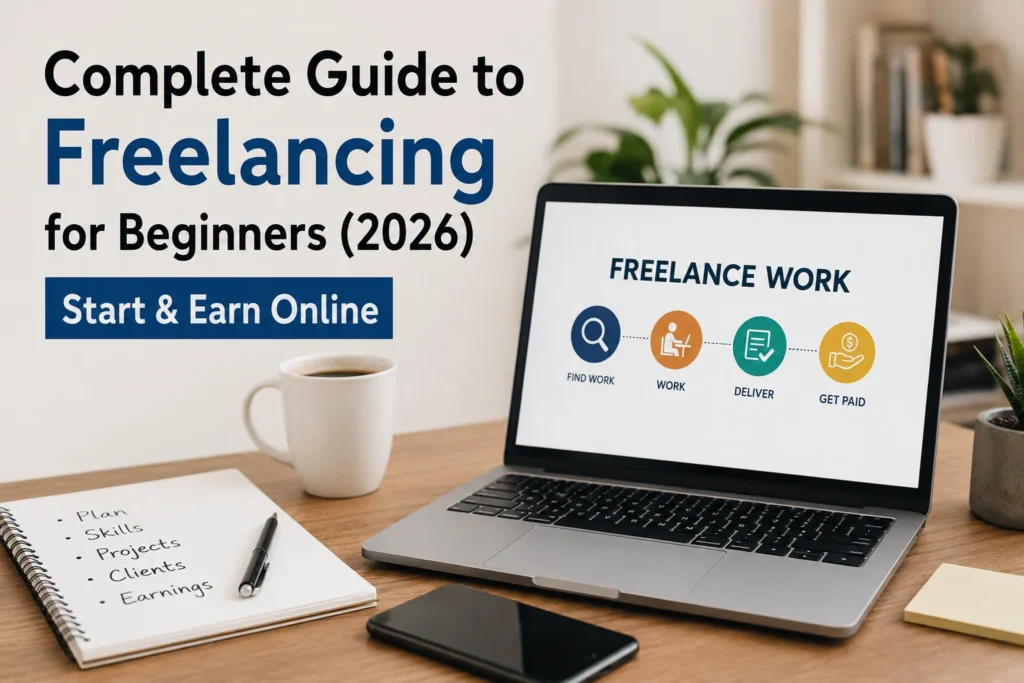

Complete Guide to Freelancing for Beginners (2026) | Start & Earn Online
Freelancing has changed the way people build careers in the digital economy. Instead of relying on one employer, freelancers work independently and provide services to multiple clients across different industries. This model gives professionals more control over their schedules, income sources, and career direction. Over the last few years, remote work and online business growth have accelerated the freelance market worldwide. According to Statista, the global gig economy is expected to exceed $500 billion in value, showing how rapidly freelance services are expanding. From content writing and graphic design to AI automation and web development, freelancing allows beginners to monetize skills without requiring a traditional office job or large startup investment.
Advantages and Challenges of Freelancing
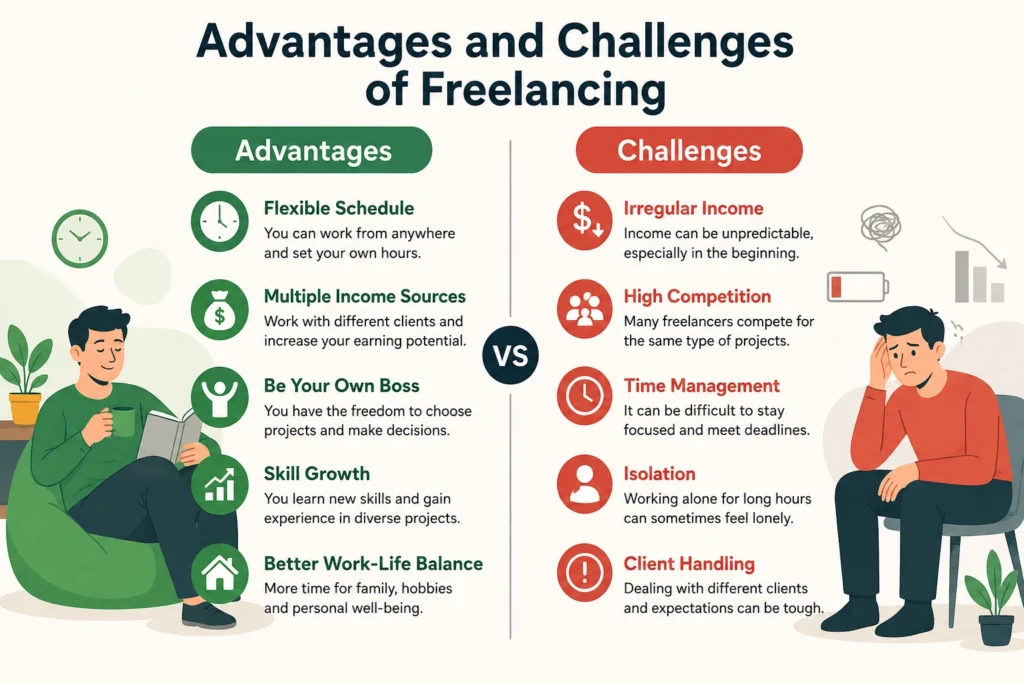
One of the biggest reasons people choose freelancing is flexibility. Freelancers can work from home, select their preferred projects, and create schedules that fit their lifestyle. This freedom makes freelancing appealing for students, parents, and professionals looking for additional income streams. Unlike conventional jobs, freelance income is not limited to a fixed monthly salary, which creates opportunities for long-term financial growth. However, freelancing also requires discipline and consistency. Beginners often face challenges such as irregular income, proposal rejections, and strong market competition. Building authority takes time, especially on platforms where thousands of freelancers compete for the same projects. Learning communication, client handling, and time management becomes essential for sustainable growth.
💚 You might also like: How to Start a Small Business with Low Investment in 2026
High-Demand Freelancing Skills
The freelance industry is driven by specialized digital skills that help businesses improve visibility, automate operations, and increase revenue. Services like SEO, content writing, social media marketing, video editing, web development, and graphic design continue to dominate major freelance marketplaces. Recently, AI-related services have also become highly profitable because companies are integrating automation tools into their workflows. Businesses today prefer freelancers who can deliver measurable outcomes instead of generic services. This shift has increased demand for experts who understand branding, analytics, user experience, and conversion optimization. Choosing a skill with strong market demand improves your chances of attracting clients faster while building a stable and scalable freelance career in the long run.
Beginner-Friendly Service Categories
Some freelance categories are easier for beginners because they require fewer technical barriers and offer consistent entry-level opportunities. Services such as blog writing, virtual assistance, transcription, customer support, and social media management allow new freelancers to gain practical experience while developing communication and organizational skills. These categories also help beginners understand client expectations before transitioning into advanced or higher-paying niches later.
High-Income Freelance Niches
Freelancers who specialize in premium services often command significantly higher rates because clients prioritize expertise and measurable business impact. Skills such as UI/UX design, conversion copywriting, app development, paid advertising, and AI workflow automation are considered high-value freelance niches. Companies are increasingly investing in specialists who can improve sales, streamline operations, and deliver long-term growth through strategic digital solutions.
Selecting the Right Freelance Skill
Selecting the right freelance skill requires balancing personal interest with market demand. Many beginners choose skills based only on popularity, but long-term success usually comes from consistency and genuine interest in the work. A smart strategy is identifying services that businesses consistently hire for while matching them with your strengths and learning ability. Researching freelance platforms can reveal which categories have strong demand and lower competition for beginners. It is also important to focus on mastering one skill before expanding into multiple services. Freelancers who develop expertise in a focused niche often build stronger authority, attract better-paying clients, and create more predictable income opportunities over time.
Leading Freelancing Platforms
Freelancing platforms play a major role in helping beginners connect with clients and build professional credibility. These marketplaces simplify the hiring process by allowing freelancers to showcase skills, portfolios, reviews, and service packages in one place. Platforms like Fiverr, Upwork, Freelancer, and PeoplePerHour attract millions of businesses searching for remote talent every day. According to Upwork, skilled freelancers are increasingly being hired for long-term projects instead of short one-time tasks, reflecting the growing trust in remote professionals. For beginners, freelance platforms provide exposure, secure payment systems, and access to global clients. Choosing the right platform depends on your skill category, pricing strategy, experience level, and long-term freelancing goals.
Fiverr vs Upwork Comparison
Fiverr and Upwork are two of the most competitive freelance platforms, but they operate differently. Fiverr focuses on pre-defined services where freelancers create packages and clients place orders directly. Upwork operates as a job-based platform where freelancers apply to client postings by submitting tailored proposals. Beginners who prefer passive lead generation often choose Fiverr, while freelancers who enjoy pitching and relationship-building usually perform better on Upwork.
Building a Professional Freelancer Profile
A freelancer’s profile works like a digital first impression, and clients often decide within seconds whether they trust a freelancer enough to hire them. A professional profile should clearly explain your expertise, services, experience, and the value you provide to clients. Strong headlines, concise descriptions, and relevant keywords improve visibility on freelance platforms and increase profile discoverability in search results. Profiles with complete information and portfolio samples generally attract higher engagement because they appear more trustworthy and experienced. Adding measurable achievements, certifications, or niche specialization can further strengthen credibility. A well-optimized freelancer profile not only increases clicks but also improves conversion rates from profile visits into paid projects.
Developing a Results-Driven Portfolio
A strong portfolio demonstrates practical ability rather than simply listing skills. Clients want proof that a freelancer can solve problems, deliver quality work, and achieve results. Even beginners without client experience can create sample projects that showcase creativity, technical understanding, and communication style. An effective portfolio should focus on quality over quantity by highlighting only the most relevant work samples. Adding context, project goals, and measurable outcomes makes portfolio pieces more convincing and professional. Many successful freelancers continuously update their portfolios to reflect current trends and industry standards. A polished portfolio increases trust, improves proposal effectiveness, and helps freelancers position themselves as reliable professionals within competitive marketplaces.
Creating Portfolio Projects From Scratch
Beginners often struggle because they lack real client work, but self-created projects can still demonstrate expertise effectively. Writers can publish blog samples, designers can redesign existing brands, and developers can create demo websites or applications. The goal is to show practical problem-solving ability through realistic examples. Strong portfolio projects help beginners compete more confidently, even without long-term freelance experience or client testimonials.
Acquiring Your First Freelance Client
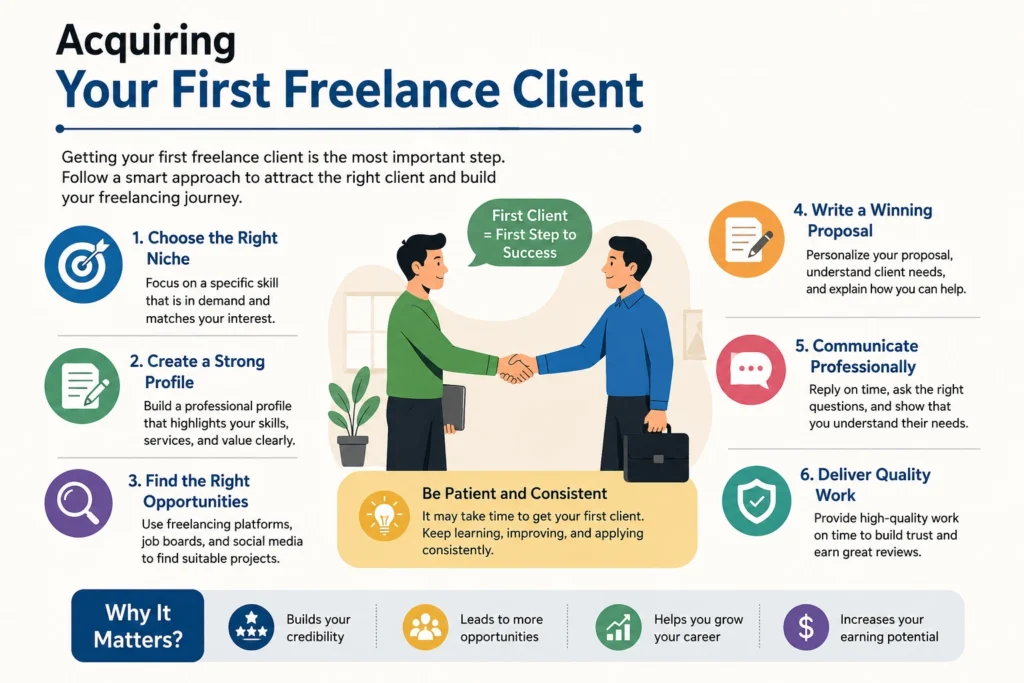
Getting the first freelance client is often the most difficult stage because beginners must build trust without an established reputation. Most clients look for freelancers who communicate clearly, understand project requirements, and present solutions professionally. Instead of applying randomly to every job, beginners should target projects that closely match their skill level and expertise. Personalizing proposals significantly improves response rates because clients prefer freelancers who understand their specific needs rather than using generic templates. Networking through LinkedIn, online communities, and professional groups can also create opportunities beyond freelance marketplaces. Consistency is critical because many successful freelancers secured their first projects only after sending dozens of high-quality applications.
💚 You might also like: Fiverr vs Upwork: Which Is Better in 2026? (Full Comparison Guide)
Crafting High-Converting Proposals
A strong proposal focuses more on the client’s problem than the freelancer’s background. Effective proposals are concise, personalized, and solution-oriented. Instead of writing long introductions, successful freelancers explain how they can help achieve the desired outcome. Mentioning similar work samples, understanding deadlines, and maintaining professional language increase the chances of receiving replies from potential clients.
Professional Client Communication
Clear communication is one of the most valuable skills in freelancing because it directly affects client satisfaction and retention. Freelancers who respond professionally, ask relevant questions, and provide regular updates often build stronger long-term relationships. Miscommunication can lead to delays, revisions, and negative reviews. Maintaining transparency and setting realistic expectations helps create smoother collaborations and improves overall client trust.
Critical Freelancing Mistakes to Avoid
Many beginners enter freelancing with unrealistic expectations and weak strategies, which often slow down their progress. One of the most common mistakes is competing only on low pricing instead of focusing on quality and value. Low pricing can help attract clients at first, but it often results in exhaustion and projects with lower value or quality.. Another major mistake is applying for every available job without understanding project requirements or niche positioning. Inconsistent communication, missed deadlines, and poorly written proposals can also damage a freelancer’s reputation quickly. Successful freelancers treat freelancing like a professional business rather than a temporary side activity. Building credibility, maintaining consistency, and continuously improving skills are essential for sustainable long-term growth in competitive freelance marketplaces.
Growing Your Freelancing Career
Long-term freelancing success depends on continuous improvement, relationship building, and strategic positioning within your niche. Many freelancers struggle to scale because they remain dependent on low-paying projects instead of focusing on specialization and authority building. As experience grows, freelancers should gradually increase their pricing, improve service quality, and target higher-value clients. Developing a personal brand through LinkedIn, portfolio websites, and professional content can significantly improve visibility and credibility. According to LinkedIn workforce studies, professionals with strong online branding often receive more inbound opportunities than those relying only on freelance platforms. Building recurring client relationships is equally important because repeat clients create more stable income streams and reduce the constant pressure of searching for new projects.
Conclusion
Freelancing offers beginners an opportunity to build flexible careers, work with global clients, and develop scalable income sources using digital skills. While the journey may feel challenging in the beginning, consistent effort and strategic learning often create significant long-term opportunities. The most successful freelancers focus on improving one skill deeply, building trust with clients, and delivering measurable value instead of chasing shortcuts. Freelancing is no longer limited to side income because many professionals now operate full-time independent businesses online. With the growth of remote work, AI technologies, and digital entrepreneurship, freelancing is expected to remain one of the fastest-growing career models worldwide. Beginners who start early and stay consistent can build strong competitive advantages over time.
Frequently Asked Questions (FAQs)
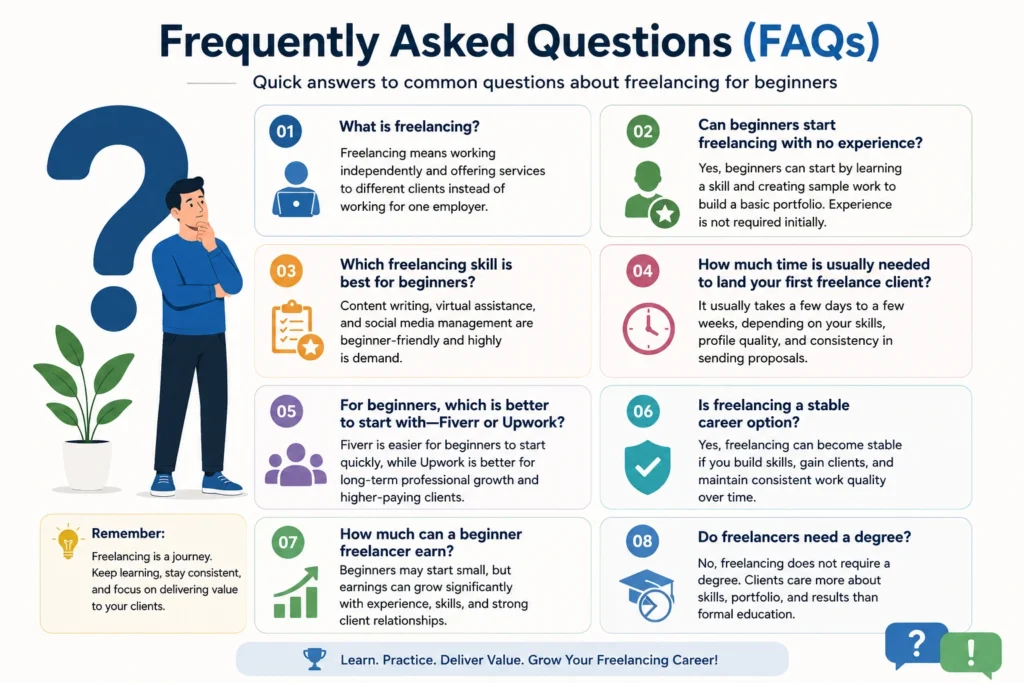
What is freelancing in simple words?
Freelancing means working independently for different clients instead of one fixed employer. You choose your projects, timing, and income sources.
Can beginners start freelancing with no experience?
Yes, beginners can start freelancing by learning a skill and creating sample work to build a basic portfolio. Experience is not required initially.
Which freelancing skill is best for beginners?
Content writing, virtual assistance, and social media management are beginner-friendly because they are easy to learn and highly in demand.
How much time is usually needed to land your first freelance client?
It usually takes a few days to a few weeks, depending on your skills, profile quality, and consistency in sending proposals.
For beginners, which is better to start with—Fiverr or Upwork?
Fiverr is easier for beginners to start quickly, while Upwork is better for long-term professional growth and higher-paying clients.
Is freelancing a stable career option?
Yes, freelancing can become stable if you build skills, gain clients, and maintain consistent work quality over time.
How much can a beginner freelancer earn?
Beginners may start small, but earnings can grow significantly with experience, skills, and strong client relationships.
Do freelancers need a degree?
No, freelancing does not require a degree. Clients care more about skills, portfolio, and results than formal education.
Read More Informative information At Mypasokey