

Introduction
Wearable technology has evolved rapidly over the past decade, moving from simple fitness trackers to powerful devices that integrate seamlessly into our daily routines. While smartwatches once dominated the space, innovation is now shifting far beyond wrist-based devices. Today, users expect smarter, smaller, and more intuitive solutions that blend into everyday life. In 2026 and beyond, wearable technology is no longer just about convenience, it’s about creating immersive, personalized digital experiences. From AI-powered assistants to smart clothing, the future of wearables is expanding into new dimensions that redefine how humans interact with technology.
What is Wearable Technology? (Quick Overview)
Wearable technology refers to electronic devices designed to be worn on the body, often equipped with sensors, connectivity, and software that collect and analyze data in real time. These devices range from fitness trackers and smartwatches to advanced smart glasses and health-monitoring patches. Over time, wearables have evolved from basic step counters into intelligent systems capable of tracking heart rate, sleep, and even stress levels. Today, wearable tech is transforming industries like healthcare, fitness, and productivity by offering real-time insights and personalized experiences that improve both efficiency and quality of life.
Why the Future of Wearables is Moving Beyond Smartwatches
Smartwatches played a major role in popularizing wearable technology, but they come with limitations such as screen dependency, battery constraints, and limited functionality beyond notifications and health tracking. The industry is now shifting toward more immersive and less intrusive devices. According to industry reports, the global wearable tech market is expected to surpass $150 billion by 2030, driven by innovation in non-traditional devices. The future lies in ecosystems of interconnected wearables that work together seamlessly, offering users a more natural, hands-free, and integrated experience beyond a single device.
Key Technologies Driving the Future of Wearables
Advancements in core technologies are fueling the next generation of wearable devices, enabling smarter, faster, and more efficient solutions. From artificial intelligence to next-gen connectivity, these innovations are redefining what wearables can achieve. Modern devices are no longer standalone tools but part of a larger digital ecosystem. Research from IDC highlights that AI-powered wearables are among the fastest-growing segments due to their ability to deliver personalized insights. As these technologies continue to evolve, they are paving the way for more intuitive, responsive, and deeply integrated wearable experiences.
Artificial Intelligence (AI) Integration
Artificial intelligence is transforming wearables into proactive assistants rather than reactive devices. AI enables wearables to analyze user behavior, predict needs, and provide real-time recommendations. For example, AI-powered health wearables can detect irregular heart patterns and alert users before serious issues arise. This level of personalization makes devices more valuable, as they adapt continuously to individual lifestyles and preferences.
Internet of Things (IoT) Connectivity
IoT connectivity allows wearable devices to communicate with other smart devices, creating a connected ecosystem. This means your wearable can sync with your home, car, and workplace systems effortlessly. As a result, users experience seamless automation, such as adjusting home temperatures or receiving alerts based on real-time activity. This interconnected environment enhances convenience and efficiency in everyday life.
5G / 6G and Edge Computing
Faster connectivity through 5G and upcoming 6G networks is significantly improving wearable performance. These technologies reduce latency and enable real-time data processing. Combined with edge computing, wearables can process data locally instead of relying solely on cloud servers. This results in faster responses, improved privacy, and more reliable performance, especially for health-critical applications.
Advanced Sensors & Biometrics
Modern wearables are equipped with highly advanced sensors capable of tracking everything from heart rate and oxygen levels to hydration and stress. These biometric sensors provide deeper insights into user health and behavior. According to research, health-focused wearables are driving over 30% of market growth, highlighting the importance of accurate and real-time data collection in next-generation devices.
Battery and Energy Innovations
Battery limitations have always been a challenge for wearable technology. However, new energy solutions such as solar charging, kinetic energy, and low-power chips are improving battery life significantly. Some prototypes even use body heat as a power source. These innovations are crucial for making wearables more reliable, efficient, and suitable for continuous use without frequent charging interruptions.
Emerging Wearable Devices Beyond Smartwatches
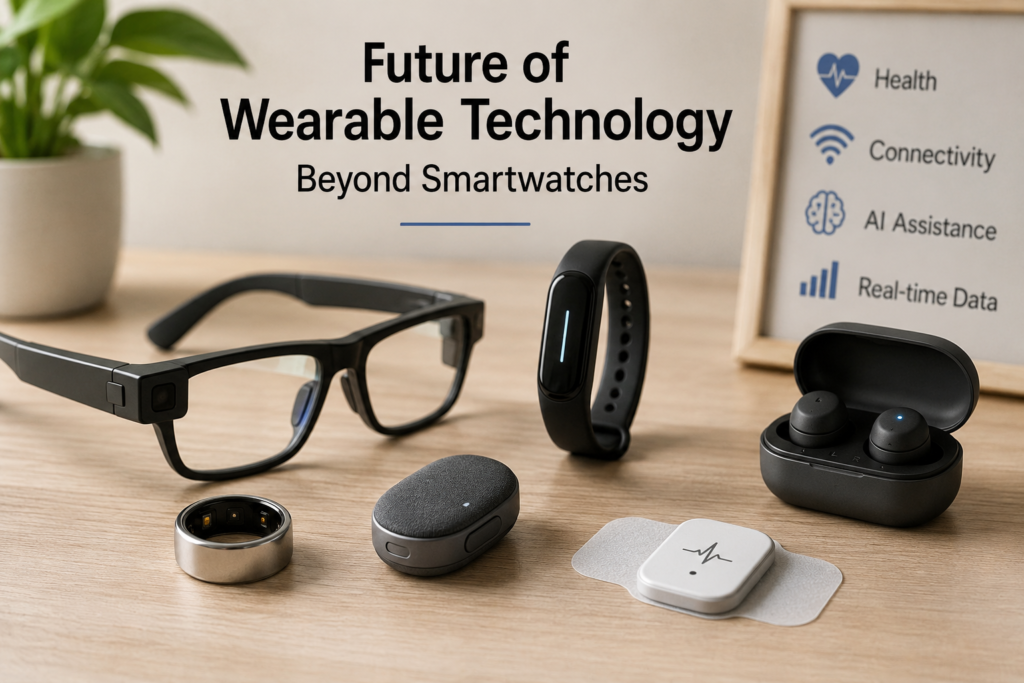
The wearable technology landscape is expanding rapidly with innovative devices that go far beyond traditional smartwatches. These new form factors are designed to be less intrusive, more functional, and seamlessly integrated into daily life. From smart glasses to AI-powered assistants, these devices are reshaping how users interact with technology. Market trends show increasing demand for compact, specialized wearables that offer targeted solutions rather than all-in-one devices. As a result, the future of wearables lies in diversity, where multiple devices work together to create a unified and intelligent user experience.
Smart Glasses and Augmented Reality (AR) Wearables
Smart glasses are emerging as one of the most promising wearable technologies, offering hands-free access to digital information through augmented reality. These devices enable users to navigate, translate languages, and access real-time data directly within their field of vision. As AR technology improves, smart glasses are expected to play a major role in productivity, education, and entertainment industries.
Smart Rings and Minimalist Wearables
Smart rings represent a shift toward minimalist wearable design, offering powerful features in a compact form. These devices can track sleep, heart rate, and daily activity while remaining discreet and comfortable. Their simplicity appeals to users who prefer functionality without the bulk of larger devices, making them increasingly popular in the wearable tech market.
Smart Clothing and E-Textiles
Smart clothing integrates sensors directly into fabrics, enabling real-time monitoring of body movements, posture, and vital signs. These wearables are particularly useful in fitness, healthcare, and even military applications. As textile technology advances, smart clothing is expected to become more affordable and widely adopted, transforming how we think about everyday apparel.
Wearable Health Patches and Biosensors
Wearable health patches are revolutionizing medical monitoring by providing continuous, real-time data. These devices can track vital signs such as glucose levels, heart rate, and hydration without invasive procedures. According to healthcare studies, continuous monitoring significantly improves early diagnosis and patient outcomes, making biosensors a critical component of future wearable technology.
AI Wearable Assistants (Pins, Pendants, Earbuds)
AI-powered wearable assistants are redefining how users interact with technology by focusing on voice-first and screenless experiences. Devices like smart pins and earbuds act as personal assistants, providing information, reminders, and support without requiring a screen. This shift toward ambient computing allows users to stay connected while maintaining a more natural and distraction-free lifestyle.
The Rise of “Invisible Wearables” and Ambient Computing
The next evolution of wearable technology is moving toward devices that are nearly invisible, blending seamlessly into everyday life. Instead of relying on screens or manual interaction, these wearables operate in the background, using sensors and AI to deliver information when needed. This concept, often referred to as ambient computing, focuses on creating a frictionless digital experience. According to industry insights, users increasingly prefer technology that feels natural and unobtrusive. From smart fabrics to AI-powered earbuds, wearables are becoming part of the environment itself, reducing distractions while enhancing productivity and real-time decision-making.
Future Trends Shaping Wearable Technology
Wearable technology is evolving at a rapid pace, driven by advancements in AI, connectivity, and user-centric design. The future is not about a single device but an ecosystem of intelligent tools working together. Research suggests that over 60% of wearable innovation is now focused on health, personalization, and automation. These trends are shaping how devices interact with users and their surroundings. As wearables become more integrated into daily life, they will deliver smarter insights, improved efficiency, and highly personalized experiences, making them essential tools for both individuals and businesses in the coming years.
AI-Powered Personalization and Predictive Insights
AI-driven personalization is transforming wearable technology into intelligent companions that understand user behavior. These devices analyze patterns such as sleep, activity, and stress to provide predictive insights. For example, wearables can recommend lifestyle changes before health issues arise. Studies show that predictive analytics can improve user engagement by over 40%, making AI a key driver of future innovation.
Advanced Health Monitoring and Preventive Care
Wearables are shifting healthcare from reactive treatment to proactive prevention. Advanced sensors can now monitor heart rate variability, blood oxygen levels, and even early signs of illness. According to global health research, continuous monitoring can reduce hospital visits significantly. This makes wearable devices essential tools for improving long-term health outcomes and early disease detection.
Biometric Authentication and Security
Biometric authentication is becoming a major feature in wearable devices, offering secure and convenient access to digital systems. Wearables can use fingerprints, heart rate patterns, and even voice recognition to verify identity. This reduces reliance on passwords and enhances security. As cyber threats increase, biometric wearables are expected to play a critical role in protecting personal data.
Integration with AR/VR Ecosystems
Wearables are increasingly integrating with augmented and virtual reality systems, creating immersive digital experiences. Devices like smart glasses and haptic wearables allow users to interact with virtual environments in real time. This integration is particularly valuable in gaming, education, and remote work, where immersive interaction enhances productivity and engagement.
Hyper-Connectivity and Smart Ecosystems
Future wearables will operate within highly connected ecosystems, communicating seamlessly with other devices. This hyper-connectivity allows for real-time data sharing and automation across multiple platforms. For instance, a wearable device could sync with smart home systems or workplace tools, improving efficiency. Industry reports highlight connectivity as a key factor driving wearable adoption globally.
Sustainability and Eco-Friendly Wearables
Sustainability is becoming a priority in wearable technology development. Companies are focusing on eco-friendly materials, energy-efficient designs, and recyclable components. Some devices are even exploring renewable energy sources like solar power. As consumers become more environmentally conscious, sustainable wearables are expected to gain significant traction in the market.
Real-World Applications of Future Wearables
Wearable technology is no longer limited to personal use; it is transforming industries across the globe. From healthcare to entertainment, these devices are enhancing efficiency, safety, and user experience. According to market research, enterprise adoption of wearables is growing rapidly due to their ability to provide real-time insights and improve decision-making. As technology advances, wearables are becoming essential tools in both professional and everyday environments. Their versatility and adaptability make them valuable across multiple sectors, driving innovation and creating new opportunities for businesses and individuals alike.
Healthcare and Medical Industry
In healthcare, wearable devices are revolutionizing patient monitoring and treatment. Doctors can now track patient data in real time, enabling faster and more accurate diagnoses. Continuous monitoring devices help detect early signs of diseases, improving patient outcomes. This shift toward data-driven healthcare is reducing costs and enhancing overall efficiency in medical systems.
Fitness and Wellness
Wearables play a crucial role in fitness and wellness by providing real-time data on physical activity, sleep, and overall health. These insights help users make informed decisions about their lifestyle. Studies show that individuals using fitness wearables are more likely to achieve their health goals, highlighting the effectiveness of these devices in promoting healthier habits.
Workplace Productivity and Industry Use
In industrial and workplace settings, wearables are improving productivity and safety. Devices such as smart helmets and AR glasses assist workers by providing real-time instructions and alerts. This reduces errors and enhances efficiency. Companies are increasingly adopting wearable technology to streamline operations and improve employee performance.
Gaming and Entertainment
Wearable technology is transforming gaming and entertainment by creating immersive experiences. Devices like VR headsets and haptic wearables allow users to interact with digital environments in new ways. This enhances engagement and realism, making entertainment more interactive and enjoyable. The gaming industry is a major driver of innovation in wearable technology.
Military and Defense Applications
In the military, wearable technology is used to enhance soldier performance and safety. Devices can monitor vital signs, track location, and provide real-time communication. These capabilities improve decision-making and operational efficiency. Wearables are becoming essential tools in modern defense strategies, offering both tactical and strategic advantages.
Benefits of Next-Generation Wearable Technology
Next-generation wearable technology offers numerous benefits that go beyond basic functionality. These devices provide advanced health monitoring, enabling early detection of potential issues and improving overall well-being. They also enhance productivity by offering hands-free access to information and automation. Personalized experiences powered by AI make wearables more relevant and useful for individual users. Additionally, the integration of wearables into daily life increases convenience and efficiency. As technology continues to evolve, these benefits will expand further, making wearable devices an essential part of modern living.
Challenges and Risks of Future Wearables
Despite their many advantages, wearable technologies also come with significant challenges and risks. Data privacy and security remain major concerns, as these devices collect sensitive personal information. The accuracy of health data is another issue, especially when devices are used for medical purposes. Battery limitations and high costs can restrict widespread adoption. Additionally, ethical concerns related to AI and constant monitoring raise questions about user consent and data usage. Addressing these challenges will be crucial for ensuring the safe and sustainable growth of wearable technology in the future.
How Wearables Will Change Daily Life in the Next Decade
Over the next decade, wearable technology is expected to redefine how people interact with digital systems in their everyday lives. The shift from smartphones to body-integrated technology will make interactions faster, more intuitive, and less dependent on screens. Experts predict that by 2030, a significant portion of daily digital interactions will happen through wearable devices. This transformation will create an always-connected lifestyle where users receive real-time insights without actively searching for information. As AI continues to evolve, wearables will act as intelligent companions, seamlessly assisting users in decision-making, productivity, and overall lifestyle management.
From Smartphones to “Body-Integrated Tech”
The transition from handheld devices to body-integrated technology marks a major shift in user behavior. Instead of pulling out a phone, users will rely on wearables embedded in clothing or accessories. These devices provide instant access to information, reducing friction and saving time. This evolution reflects a broader trend toward convenience and seamless interaction.
Always-Connected Lifestyle
Wearables are enabling an always-connected environment where users stay informed in real time. Whether it’s health updates, notifications, or environmental data, information is delivered instantly. Studies indicate that constant connectivity improves productivity but also requires balance. Future wearables will focus on delivering relevant data without overwhelming users.
Human + AI Collaboration
The integration of AI into wearables is creating a new level of collaboration between humans and technology. These devices act as intelligent assistants, helping users make better decisions based on real-time data. From managing schedules to providing health recommendations, AI-powered wearables enhance efficiency and support smarter living.
Future Predictions: What to Expect by 2030 and Beyond
Looking ahead to 2030 and beyond, wearable technology is expected to become even more advanced, blending seamlessly with the human body and environment. Industry experts predict rapid growth in areas such as smart contact lenses, brain-computer interfaces, and self-powered devices. According to research insights, innovation in wearable tech will focus heavily on improving user experience and minimizing device visibility. These advancements will lead to fully integrated digital ecosystems where technology becomes an extension of human capabilities, enabling more natural interactions and redefining how people connect with the digital world.
Smart Contact Lenses and Brain-Computer Interfaces
Smart contact lenses and brain-computer interfaces represent the next frontier of wearable technology. These innovations aim to provide direct interaction between humans and digital systems. For example, users may access information or control devices using thoughts or visual overlays. Although still in development, these technologies have the potential to revolutionize communication and accessibility.
Self-Powered Wearables (Body Heat, Motion Energy)
Future wearables are expected to overcome battery limitations through self-powered technology. Devices that generate energy from body heat or movement are already being tested. This innovation reduces the need for frequent charging, making wearables more practical for continuous use. Energy-efficient solutions will play a key role in the widespread adoption of wearable technology.
Fully Integrated Digital-Human Ecosystems
The future of wearable technology lies in fully integrated ecosystems where devices, environments, and users work together seamlessly. These systems will combine AI, IoT, and advanced sensors to create personalized experiences. As a result, users will interact with technology in a more natural and intuitive way, enhancing both productivity and quality of life.
Smartwatches vs Future Wearables: A Comparative Perspective
Smartwatches have played a crucial role in the growth of wearable technology, but their dominance is gradually decreasing as new devices emerge. While smartwatches offer convenience and multifunctionality, future wearables focus on specialization, minimalism, and seamless integration. According to market trends, users are increasingly adopting multiple wearable devices instead of relying on a single gadget. This shift highlights the evolution from general-purpose devices to a network of specialized tools. As technology advances, smartwatches are likely to evolve rather than disappear, adapting to remain relevant within the broader wearable ecosystem.
Role of Smartwatches in the Future Ecosystem
Smartwatches will continue to play an important role as central hubs within the wearable ecosystem. They provide a convenient interface for managing multiple devices and accessing key information. Despite the rise of new technologies, smartwatches are expected to evolve with improved features and better integration, maintaining their relevance in the market.
Will Smartwatches Become Obsolete or Evolve?
Rather than becoming obsolete, smartwatches are likely to evolve alongside emerging wearable technologies. Manufacturers are focusing on improving battery life, functionality, and integration with other devices. This evolution will allow smartwatches to remain a key component of the wearable ecosystem while supporting new innovations.
Tips for Adapting to the Future of Wearable Technology
As wearable technology continues to evolve, individuals and businesses must adapt to stay ahead of the curve. Understanding emerging trends and developing relevant skills will be essential for success in this rapidly changing landscape. Experts suggest that knowledge of AI, IoT, and AR/VR will become increasingly valuable. Additionally, businesses that embrace wearable technology can gain a competitive advantage by improving efficiency and customer experiences. By staying informed and proactive, users can take full advantage of the opportunities presented by the next generation of wearable devices.
Skills to Learn (AI, IoT, AR/VR)
Learning key technologies such as AI, IoT, and AR/VR can help individuals stay competitive in the evolving tech landscape. These skills are essential for understanding how wearable devices function and how they can be used effectively. As demand for these technologies grows, professionals with relevant expertise will have more opportunities.
Opportunities for Businesses and Developers
Wearable technology presents significant opportunities for businesses and developers. From creating innovative applications to improving customer experiences, the possibilities are vast. Companies that invest in wearable tech can enhance productivity, streamline operations, and gain a competitive edge in the market.
How Users Can Prepare for Upcoming Tech
Users can prepare for future wearable technology by staying informed about new developments and adopting emerging tools early. Understanding how these devices work and integrating them into daily life can improve productivity and convenience. Being open to change will help users adapt quickly to new technological advancements.
Conclusion
The future of wearable technology extends far beyond smartwatches, moving toward a world where devices are seamlessly integrated into daily life. From AI-powered assistants to smart clothing and invisible wearables, innovation is transforming how people interact with technology. As advancements continue, wearables will become more intuitive, personalized, and essential. While challenges such as privacy and cost remain, the potential benefits far outweigh the risks. Ultimately, wearable technology is shifting from standalone devices to immersive experiences, redefining the relationship between humans and digital systems in the years to come.
✨ Tech made simple, follow MyPasokey for more.