
How Air Purifiers Clean Indoor Air | Expert Guide
Indoor Air Quality Fundamentals
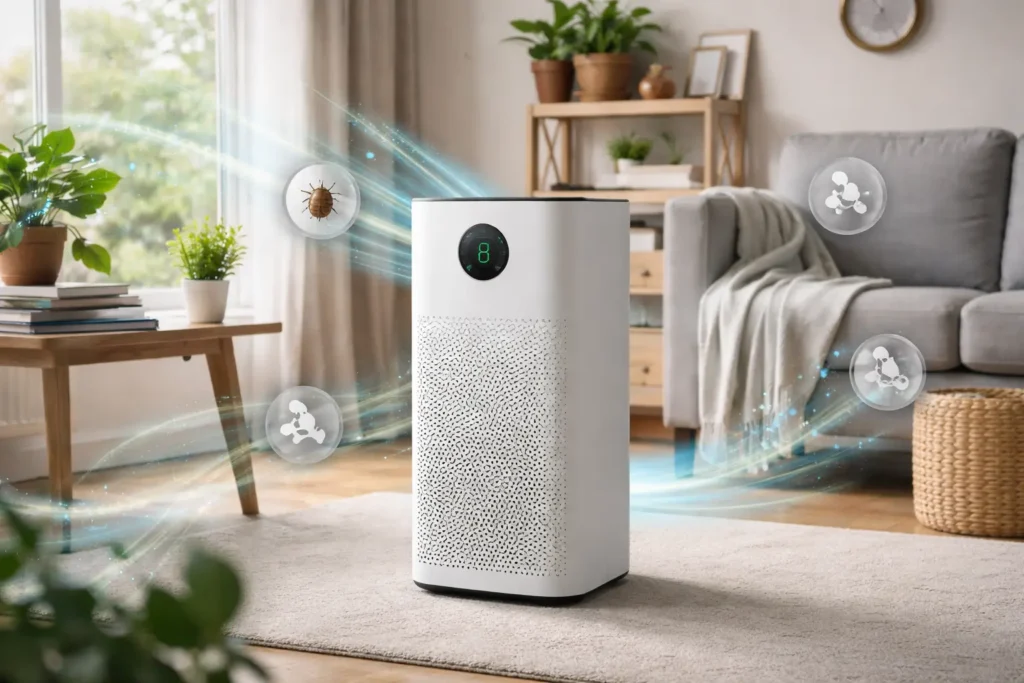
Indoor air quality directly affects how you feel, sleep, and function every single day. In most American homes, indoor air can contain higher concentrations of pollutants than outdoor air due to limited ventilation, synthetic materials, cleaning products, cooking fumes, and pet dander. Over time, these pollutants accumulate and circulate continuously. Poor air quality has been linked to allergies, asthma flare-ups, fatigue, headaches, and long-term respiratory concerns. Understanding how indoor air behaves inside enclosed spaces is the first step toward improving it. This is exactly where modern air purification systems step in to create a cleaner, healthier breathing environment.
Air Purification System Architecture
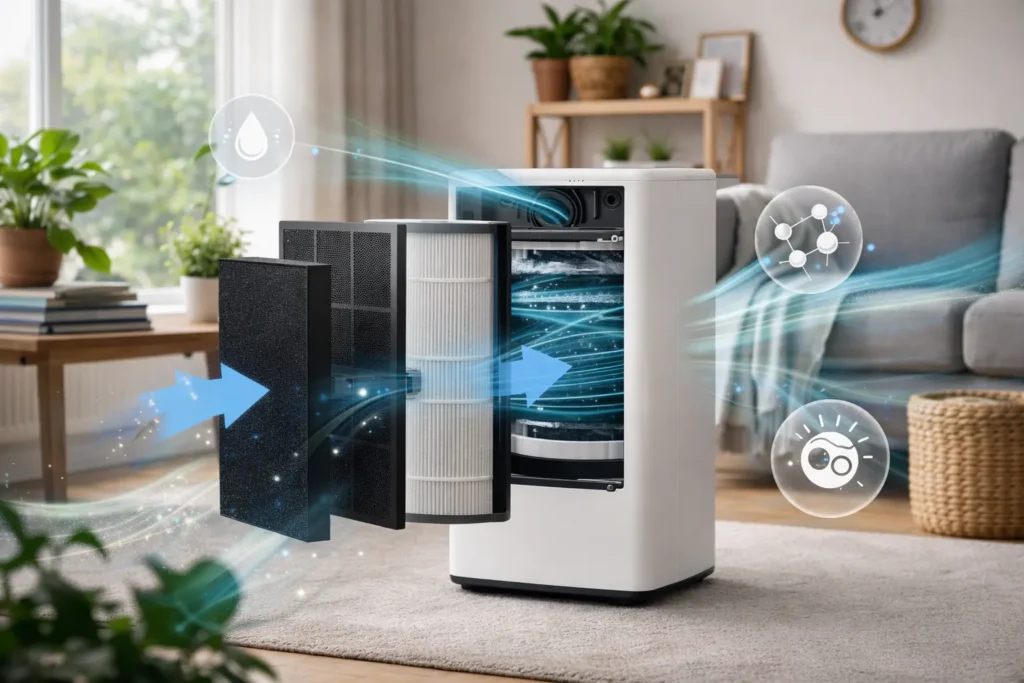
An air purifier may look simple from the outside, but internally it’s built around a structured, multi-stage filtration architecture. Most high-performance systems include a fan, layered filters, sealed housing, and calibrated airflow channels. The fan draws contaminated air inward, forcing it through progressively finer filtration layers before releasing purified air back into the room. Advanced systems are engineered to prevent air bypass, ensuring particles don’t escape around filter edges. This sealed-loop airflow design is critical because even small leaks can reduce efficiency. Proper system architecture determines overall purification effectiveness, energy performance, and long-term reliability.
You Might also Like: Classroom 20x: Next-Level Personalized Learning
Indoor Pollutant Classification
Indoor air pollutants fall into several categories, each requiring a different removal strategy. Particulate matter consists of dust, pollen, pet hair, mold spores, and smoke particles. These are measured in microns and often classified as PM10 or PM2.5. Then there are gaseous pollutants such as volatile organic compounds (VOCs), cleaning chemical vapors, and cooking odors. Biological contaminants include bacteria and certain airborne pathogens. Finally, environmental pollutants like wildfire smoke or urban smog can infiltrate homes. Understanding these categories helps explain why air purifiers often combine multiple technologies instead of relying on a single filtration method.
Core Air Cleaning Mechanism
At its core, an air purifier operates on a continuous circulation principle. Air is pulled into the unit through an intake vent using a powered fan. It then moves through one or more filtration stages that capture or neutralize pollutants. Clean air is released back into the room, gradually reducing the concentration of airborne contaminants over time. The effectiveness of this process depends on airflow speed, filter density, and room size compatibility. Unlike surface cleaning, air purification works invisibly and continuously, improving air quality through repeated air exchanges throughout the day.
HEPA Filtration Standards
High-Efficiency Particulate Air (HEPA) filtration is considered the gold standard for particle removal. True HEPA filters are engineered to capture at least 99.97% of particles as small as 0.3 microns, which includes fine dust, smoke particles, and many allergens. They do not simply act like strainers; instead, they trap particles through interception, impaction, and diffusion. This multi-mechanism capture system allows HEPA filters to remove even smaller particles more efficiently than many people realize. For households concerned about allergies or wildfire smoke, HEPA technology forms the backbone of effective air purification.
Micron-Level Filtration Efficiency
Particles behave differently depending on their size. Larger particles are easier to trap, while ultrafine particles require advanced filtration physics. HEPA filters are specifically tested at the 0.3-micron level because that size is the most penetrating and difficult to capture. If a filter performs well there, it performs even better at other sizes.
HEPA vs Ionization Comparison
HEPA filtration physically captures particles, preventing them from re-entering the air. Ionization technologies, on the other hand, charge particles so they attach to surfaces or collection plates. While ionizers may reduce airborne particles, HEPA systems provide more predictable and measurable removal performance without relying on surface deposition.
Activated Carbon Adsorption
While HEPA filters are excellent for particles, they cannot remove odors or gases. That’s where activated carbon comes in. Activated carbon filters are specially treated to create millions of microscopic pores, dramatically increasing surface area. This porous structure allows the filter to trap gaseous pollutants through a process called adsorption. Unlike absorption, where substances soak in, adsorption binds molecules to the carbon’s surface. This makes activated carbon highly effective at removing cooking smells, pet odors, smoke fumes, and volatile organic compounds (VOCs). In well-designed systems, carbon filtration works alongside HEPA to provide comprehensive air cleaning performance.
UV-C Sterilization Systems
Ultraviolet-C (UV-C) light technology is used in some air purifiers to neutralize biological contaminants. UV-C radiation damages the DNA or RNA of microorganisms, reducing their ability to reproduce and spread. When integrated properly inside a sealed air purification chamber, UV-C can target bacteria and certain airborne pathogens as air circulates through the system. Its effectiveness largely relies on sufficient exposure duration and adequate light intensity.
It is not a standalone solution but rather a supplemental layer of protection. In advanced purification systems, UV-C works in combination with mechanical filtration for enhanced microbial control.
Ionization Technology Overview
Ionization-based air purifiers release negatively charged ions into the air. These ions attach to airborne particles, causing them to clump together and either fall from the air or get captured on collection plates. Some systems use electrostatic precipitation to actively trap charged particles within the unit. While ionization can reduce fine particle concentration, performance varies widely by design quality. Additionally, poorly engineered systems may generate trace ozone as a byproduct. For this reason, consumers should look for certified, ozone-safe devices when considering ionization as part of an air purification strategy.
CADR and Performance Metrics
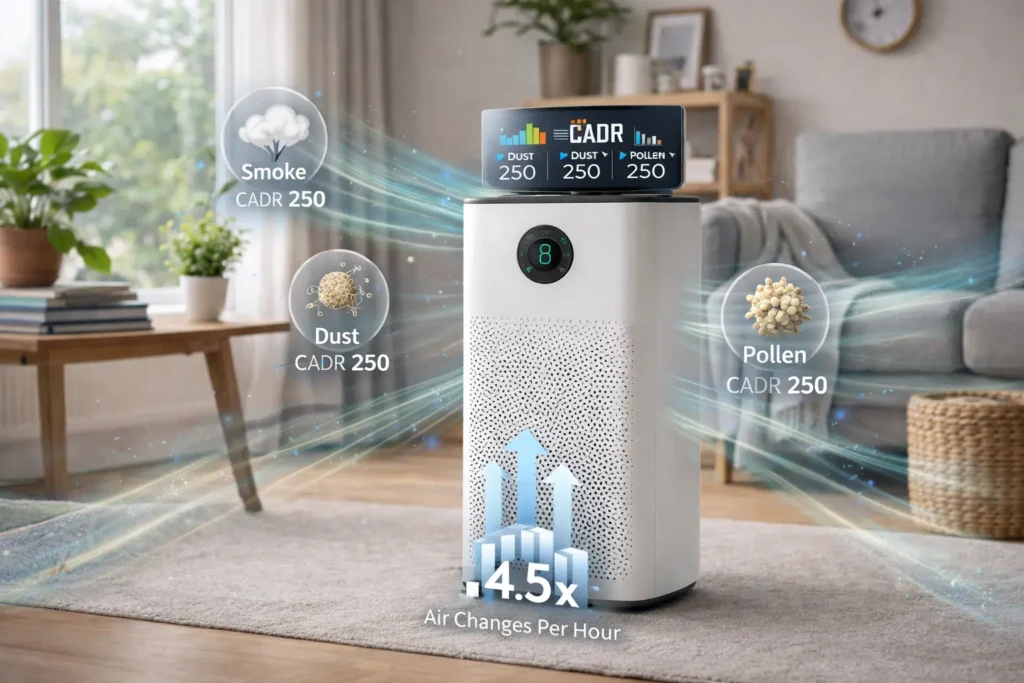
Clean Air Delivery Rate, or CADR, is one of the most important performance indicators when evaluating an air purifier. It measures how quickly a unit can remove smoke, dust, and pollen from a specific room size. A higher CADR means faster air cleaning. However, CADR should always be matched with room square footage for realistic expectations. Air changes per hour (ACH) is another critical metric, indicating how many times the purifier cycles the entire room’s air within sixty minutes. Together, these metrics help consumers compare systems based on measurable performance rather than marketing claims.
You Might also Like: How Electric Scooters Work: Ultimate Complete Guide
Health Impact of Air Purifiers
The primary goal of air purification is to reduce exposure to airborne irritants. Cleaner air can help minimize allergy symptoms such as sneezing, congestion, and itchy eyes. Individuals with asthma may also experience fewer triggers when airborne particles are reduced. Additionally, removing smoke and fine particulate matter supports overall respiratory comfort. While air purifiers are not medical devices, studies consistently show that lowering indoor particulate levels improves breathing quality. For families living in urban areas or wildfire-prone regions, consistent air purification can significantly enhance day-to-day indoor comfort and long-term respiratory wellness.
Carbon Adsorption Mechanism
Activated carbon works through adsorption, where gas molecules adhere to the carbon’s surface. The extremely porous structure creates a vast internal surface area, allowing it to trap chemical vapors and odors effectively. The thicker and denser the carbon layer, the greater its capacity for long-term odor and gas removal performance.
Filter Replacement Indicators
Modern air purifiers often include filter replacement indicators based on time, airflow resistance, or sensor feedback. As filters become saturated with particles or gases, airflow decreases and efficiency drops. Replacing filters at recommended intervals ensures consistent purification performance and prevents strain on the system’s internal fan.
Activated Carbon Adsorption
While HEPA filters are excellent for particles, they cannot remove odors or gases. That’s where activated carbon comes in. Activated carbon filters are specially treated to create millions of microscopic pores, dramatically increasing surface area. This porous structure allows the filter to trap gaseous pollutants through a process called adsorption. Unlike absorption, where substances soak in, adsorption binds molecules to the carbon’s surface. This makes activated carbon highly effective at removing cooking smells, pet odors, smoke fumes, and volatile organic compounds (VOCs). In well-designed systems, carbon filtration works alongside HEPA to provide comprehensive air cleaning performance.
UV-C Sterilization Systems
Ultraviolet-C (UV-C) light technology is used in some air purifiers to neutralize biological contaminants. UV-C radiation damages the DNA or RNA of microorganisms, reducing their ability to reproduce and spread. When integrated properly inside a sealed air purification chamber, UV-C can target bacteria and certain airborne pathogens as air circulates through the system. However, effectiveness depends heavily on exposure time and light intensity. It is not a standalone solution but rather a supplemental layer of protection. In advanced purification systems, UV-C works in combination with mechanical filtration for enhanced microbial control.
Ionization Technology Overview
Ionization-based air purifiers release negatively charged ions into the air. These ions attach to airborne particles, causing them to clump together and either fall from the air or get captured on collection plates. Some systems use electrostatic precipitation to actively trap charged particles within the unit. While ionization can reduce fine particle concentration, performance varies widely by design quality. Additionally, poorly engineered systems may generate trace ozone as a byproduct. For this reason, consumers should look for certified, ozone-safe devices when considering ionization as part of an air purification strategy.
CADR and Performance Metrics
Clean Air Delivery Rate, or CADR, is one of the most important performance indicators when evaluating an air purifier. It measures how quickly a unit can remove smoke, dust, and pollen from a specific room size. A higher CADR means faster air cleaning. However, CADR should always be matched with room square footage for realistic expectations. Air changes per hour (ACH) is another critical metric, indicating how many times the purifier cycles the entire room’s air within sixty minutes. Together, these metrics help consumers compare systems based on measurable performance rather than marketing claims.
Health Impact of Air Purifiers
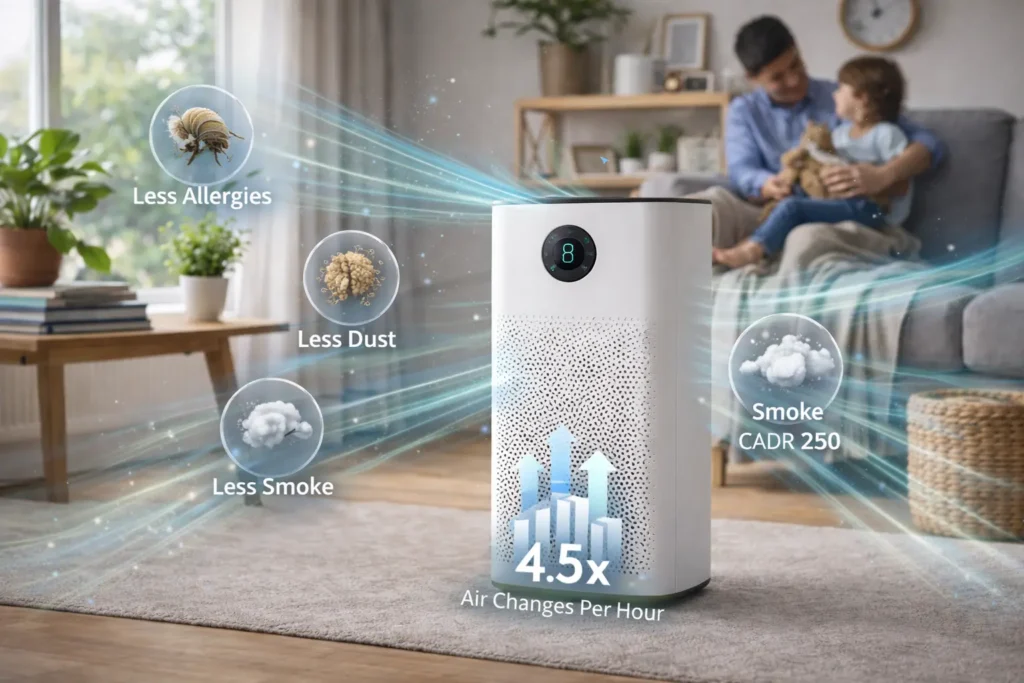
The primary goal of air purification is to reduce exposure to airborne irritants. Cleaner air can help minimize allergy symptoms such as sneezing, congestion, and itchy eyes. Individuals with asthma may also experience fewer triggers when airborne particles are reduced. Additionally, removing smoke and fine particulate matter supports overall respiratory comfort. While air purifiers are not medical devices, studies consistently show that lowering indoor particulate levels improves breathing quality. For families living in urban areas or wildfire-prone regions, consistent air purification can significantly enhance day-to-day indoor comfort and long-term respiratory wellness.
Carbon Adsorption Mechanism
Activated carbon works through adsorption, where gas molecules adhere to the carbon’s surface. The extremely porous structure creates a vast internal surface area, allowing it to trap chemical vapors and odors effectively. The thicker and denser the carbon layer, the greater its capacity for long-term odor and gas removal performance.
Filter Replacement Indicators
Modern air purifiers often include filter replacement indicators based on time, airflow resistance, or sensor feedback. As filters become saturated with particles or gases, airflow decreases and efficiency drops. Replacing filters at recommended intervals ensures consistent purification performance and prevents strain on the system’s internal fan.
Conclusion
Indoor air quality plays a critical role in overall health, comfort, and long-term well-being. As modern homes become more energy-efficient and tightly sealed, airborne pollutants tend to accumulate indoors rather than dissipate naturally. Air purifiers address this challenge by continuously circulating air through advanced filtration technologies such as HEPA filters, activated carbon, and supplemental sterilization systems. When properly selected, correctly placed, and routinely maintained, these systems significantly reduce airborne particles, odors, and certain contaminants. While not a substitute for ventilation or source control, air purifiers remain one of the most practical and effective tools for maintaining cleaner, healthier indoor air.
Read More Informative Information At Mypasokey