
What Does It Mean to Use Ads to Get Customers?
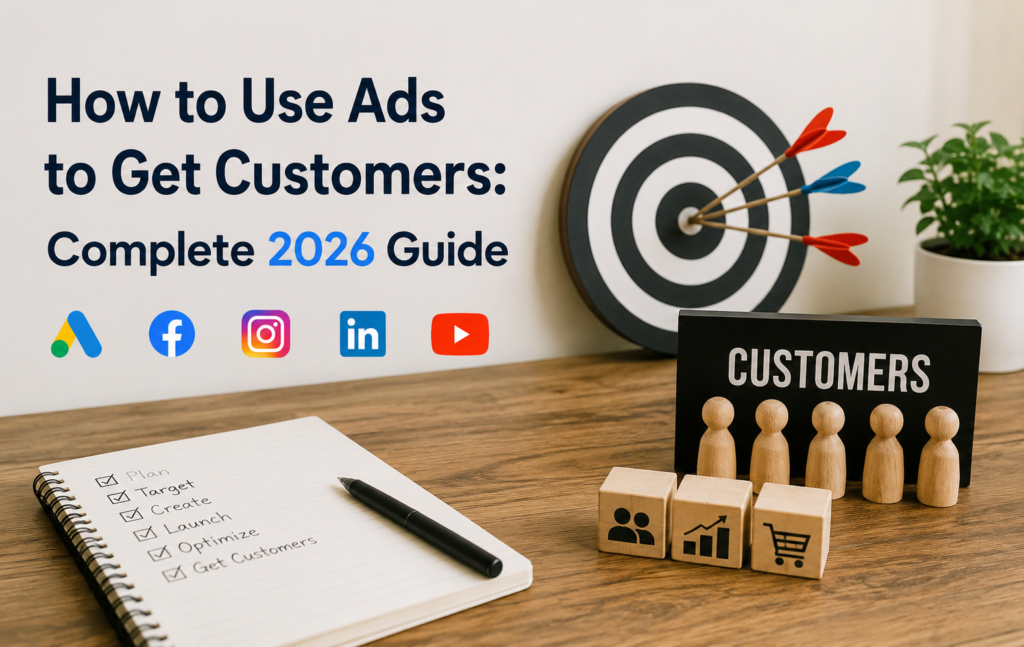
Using ads to get customers means paying to promote your products or services to people who are most likely to buy from your business. Unlike general marketing, advertising focuses on delivering targeted messages that encourage specific actions, such as making a purchase, booking a service, or submitting a lead form. Paid advertising helps businesses generate faster visibility than relying only on organic traffic, especially in competitive markets. According to Google Economic Impact research, businesses make an average of $2 in revenue for every $1 spent on Google Ads, though actual results vary by industry and campaign quality. Successful advertising supports every stage of the customer journey, from awareness to conversion, while helping businesses achieve goals like lead generation, sales growth, brand recognition, and customer retention.
Difference Between Advertising and Marketing
Marketing is the overall strategy for attracting and retaining customers, while advertising is one tactic within that strategy. Marketing includes branding, SEO, email campaigns, and content creation, whereas advertising involves paid promotions across digital and traditional channels. Understanding this difference helps businesses build balanced customer acquisition strategies instead of depending solely on paid campaigns.
How Paid Advertising Attracts Potential Customers
Paid ads place your business in front of people actively searching for products or matching specific interests. Advanced targeting uses keywords, demographics, behaviors, and online activity to reach qualified audiences. This precision increases visibility, attracts high-intent prospects, and improves the likelihood of converting clicks into paying customers while reducing unnecessary advertising expenses.
Why Businesses Use Paid Ads Instead of Only Organic Traffic
Organic marketing delivers long-term growth but usually requires time to produce measurable results. Paid advertising generates immediate exposure, allowing businesses to reach targeted audiences within hours of launching campaigns. Combining SEO with paid ads creates a balanced strategy that captures both short-term leads and sustainable long-term traffic growth.
How Ads Fit into the Customer Journey
Advertising supports every stage of the customer journey. Awareness campaigns introduce your brand to new audiences, consideration ads educate potential buyers about your solutions, and conversion-focused campaigns encourage purchases or inquiries. Retargeting ads reconnect with previous visitors, increasing trust and improving conversion opportunities throughout the buying process.
Common Goals of Advertising Campaigns
Every campaign should begin with a clear objective. Businesses commonly run ads to generate leads, increase online sales, grow website traffic, build brand awareness, promote new products, or encourage app downloads. Defining measurable goals helps optimize campaign performance and ensures advertising budgets produce meaningful business outcomes.
💚 You might also like: Best Digital Marketing Strategies in 2026 | Ultimate Growth Guide
Choose the Right Advertising Platform for Your Business
Selecting the right advertising platform is one of the most important decisions when creating a profitable marketing campaign. Every platform reaches different audiences and supports unique advertising objectives. For example, Google Search Ads capture people with strong buying intent, while social media platforms excel at creating demand and increasing brand awareness. According to Statista, global digital advertising spending continues to grow each year, highlighting how businesses increasingly rely on paid media to acquire customers. Rather than advertising everywhere, focus on platforms where your target audience spends the most time. Matching your goals, audience, and budget with the right advertising channel significantly improves return on investment and campaign performance.
Google Search Ads
Google Search Ads appear when users actively search for products or services using relevant keywords. Because these users already demonstrate buying intent, search campaigns often generate highly qualified traffic. They work exceptionally well for local businesses, service providers, eCommerce stores, and companies seeking immediate customer inquiries.
Google Display Ads
Google Display Ads use visual banners across millions of websites and mobile apps within Google’s Display Network. These ads increase brand awareness, re-engage previous visitors, and introduce businesses to potential customers before they begin searching. Display advertising performs best when combined with effective remarketing strategies.
Facebook Ads
Facebook Ads offer detailed audience targeting based on demographics, interests, behaviors, and online activity. Businesses can generate leads, website traffic, product sales, and local awareness using various ad formats. Its advanced targeting makes Facebook ideal for reaching both new prospects and existing customers efficiently.
Instagram Ads
Instagram focuses on visual storytelling through images, videos, Stories, and Reels. Businesses selling fashion, beauty, travel, fitness, lifestyle, or food products often achieve excellent engagement.
LinkedIn Ads
LinkedIn Ads specializes in reaching professionals, executives, and business decision-makers. They are particularly effective for B2B marketing, software companies, recruitment agencies, consulting firms, and educational organizations. Although advertising costs are generally higher, lead quality often justifies the investment for business-focused campaigns.
TikTok Ads
TikTok Ads help businesses engage younger audiences through short-form, entertaining videos. Creative storytelling, authentic content, and trending formats typically outperform polished corporate advertisements. Brands targeting Generation Z and Millennials frequently use TikTok to increase product awareness and drive online sales.
YouTube Ads
YouTube Ads combine video storytelling with Google’s extensive targeting capabilities. Businesses can educate audiences, demonstrate products, share testimonials, and build trust before asking for a purchase. Video advertising often improves brand recall and influences customer decisions during the consideration stage.
Pinterest Ads
Pinterest Ads target users actively searching for inspiration, ideas, and future purchases. Home décor, fashion, recipes, weddings, crafts, and DIY businesses often achieve strong performance because Pinterest users commonly save products they intend to purchase later.
💚 You might also like: London Gold Centre Guide: Trusted UK Gold Trading Platform
Which Platform Works Best for Different Industries
The ideal platform depends on your business model and audience behavior. Local services typically benefit from Google Search, eCommerce brands perform well on Meta platforms, B2B companies succeed on LinkedIn, while visually driven industries often generate better engagement through Instagram, Pinterest, and YouTube advertising.
B2B vs. B2C Advertising Platforms
B2B businesses usually prioritize LinkedIn and Google Search because decision-makers actively research solutions before purchasing. B2C companies often generate stronger engagement through Facebook, Instagram, TikTok, and YouTube, where emotional storytelling and visual content encourage faster buying decisions and broader audience reach.
Build Landing Pages That Turn Clicks into Customers
Driving traffic through paid ads is only half the job. If visitors land on a poorly designed page, most will leave without taking action. A high-converting landing page bridges the gap between your ad and your offer by delivering exactly what users expect after clicking. According to Google, as page load time increases from one to three seconds, the probability of a bounce rises by 32%, making speed and user experience critical for conversions. A well-optimized landing page combines relevant messaging, trust-building elements, fast performance, and a clear call-to-action to maximize results. Instead of sending paid traffic to your homepage, create dedicated landing pages tailored to each advertising campaign to improve conversion rates and generate more customers.
Why Landing Pages Matter
Landing pages are designed with a single goal, whether it’s generating leads, booking appointments, or selling products. Unlike homepages that offer multiple navigation options, landing pages minimize distractions and guide visitors toward one desired action. This focused approach significantly improves conversion rates and advertising performance.
Matching Ad Message with Landing Page
Consistency between your ad and landing page builds trust and reduces confusion. If your advertisement promises a discount, free consultation, or limited-time offer, the landing page should immediately reinforce that same message. Matching headlines, visuals, and offers creates a seamless experience that encourages visitors to convert.
Essential Landing Page Elements
Every successful landing page includes a compelling headline, engaging supporting copy, high-quality visuals, customer benefits, social proof, and a prominent call-to-action. Keeping the design clean and the message focused helps visitors quickly understand your offer and confidently take the next step.
Trust Signals
Display customer testimonials, online reviews, certifications, security badges, guarantees, case studies, and recognizable client logos whenever possible. These trust signals reduce hesitation and increase confidence, leading to higher conversion rates and improved campaign performance.
Mobile Optimization
With most digital traffic coming from smartphones, your landing page must deliver an excellent mobile experience. Responsive layouts, readable text, easy-to-click buttons, and simplified navigation ensure visitors can interact comfortably regardless of screen size, helping reduce abandonment and increase conversions.
Fast Loading Speed
A slow website can waste valuable advertising dollars because users often leave before the page fully loads. Compressing images, reducing unnecessary scripts, enabling browser caching, and choosing reliable hosting improve loading speed. Faster pages create better user experiences while increasing conversion opportunities.
Lead Forms
Keep lead forms short and simple by requesting only the information you truly need. Long forms often discourage users from completing submissions. Asking for essentials such as name, email address, and phone number typically increases form completion rates while still providing valuable sales leads.
Clear CTAs
Your call-to-action should clearly tell visitors what to do next. Action-oriented phrases like “Get Your Free Quote,” “Book a Free Demo,” or “Start Your Free Trial” create urgency and eliminate uncertainty. Place CTAs prominently throughout the landing page for maximum visibility.
Reducing Bounce Rate
Lower bounce rates by delivering relevant content, improving page speed, matching visitor intent, simplifying navigation, and maintaining clear messaging. The easier visitors can find what they expected after clicking your ad, the more likely they are to stay, engage, and ultimately become customers.
💚 You might also like: Smart Marketing Strategies for Business Growth in 2026
Use Targeting and Retargeting to Increase Conversions
Even the best advertisement will struggle if it’s shown to the wrong audience. Modern ad platforms use powerful targeting capabilities to reach potential customers by analyzing factors such as demographics, interests, search intent, browsing behavior, and previous engagement. interactions. According to Think with Google, consumers use multiple devices and touchpoints before making purchasing decisions, making audience targeting and remarketing more valuable than ever. Retargeting keeps your business visible to people who have already shown interest, increasing familiarity and encouraging them to return when they’re ready to buy. Combining smart targeting with effective remarketing campaigns allows businesses to maximize advertising budgets while improving conversion rates and customer acquisition.
Interest Targeting
Interest targeting reaches users based on their hobbies, preferences, lifestyle choices, and online activities. Platforms like Facebook and Instagram analyze user behavior to display relevant advertisements. This approach works well for introducing products to audiences likely to engage with your business before actively searching.
Keyword Targeting
Keyword targeting focuses on people searching for specific words or phrases related to your products or services. Google Search Ads use keywords to match ads with user intent, helping businesses reach high-quality prospects who are already looking for solutions and ready to take action.
Behavioral Targeting
Behavioral targeting analyzes users’ browsing habits, purchase history, app usage, and online engagement to deliver personalized advertisements. By understanding customer behavior, businesses can create highly relevant campaigns that improve click-through rates, conversions, and overall advertising efficiency.
Remarketing Campaigns
Remarketing reconnects with users who previously visited your website but didn’t convert. These campaigns remind potential customers about your products, services, or offers while keeping your brand top of mind. Remarketing often produces higher conversion rates than campaigns targeting completely new audiences.
Website Visitors
Targeting previous website visitors allows businesses to re-engage users already familiar with their brand. Since these individuals have demonstrated interest, they’re more likely to complete purchases after seeing relevant follow-up advertisements featuring promotions, testimonials, or limited-time offers.
Cart Abandonment Ads
Many online shoppers add products to their carts but leave without checking out. Cart abandonment ads remind these users about unfinished purchases and often include discounts, free shipping, or urgency-based messaging to encourage them to complete their transactions.
Email List Retargeting
Uploading your customer email list allows advertising platforms to display personalized ads to existing subscribers or previous buyers. This strategy supports repeat purchases, cross-selling, upselling, and customer retention while strengthening long-term relationships with your audience.
Customer Match
Customer Match enables businesses to use first-party customer data for highly targeted advertising campaigns. Platforms like Google Ads match uploaded customer information with user accounts, allowing advertisers to reach valuable audiences across Search, Gmail, YouTube, and Display campaigns.
Dynamic Retargeting
Dynamic retargeting automatically shows users the exact products or services they previously viewed on your website. This personalized experience increases relevance and often generates higher conversion rates because visitors see items they have already expressed interest in purchasing.
Frequency Control
Showing the same advertisement too often can annoy users and reduce campaign effectiveness. Frequency control limits how many times someone sees your ads within a specific period, helping maintain positive brand perception while preventing unnecessary advertising spend.
✨ Tech made simple, follow MyPasokey for more